

Maybe it’s a false impression, but it seems capitalists and businessmen are often painted as villains in literature. Barnes & Noble CEO James Daunt deserves a different description. The New Yorker has a fabulous story about Daunt and—despite all the grim pieces on postliteracy glutting our feeds—the surprising resilience of the book market and reading.
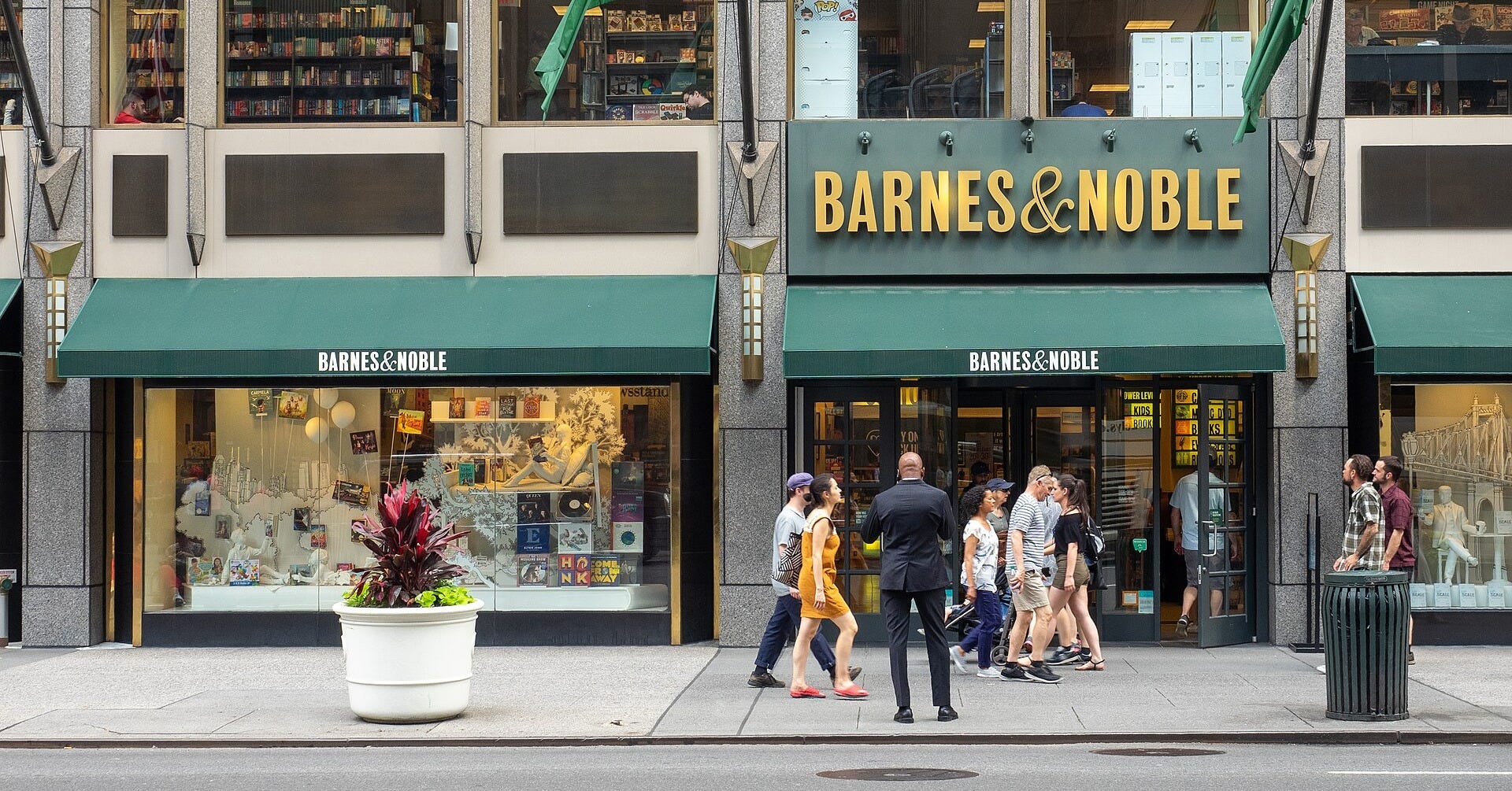
I had the pleasure of hearing James Daunt speak at the ECPA C-Suite Symposium in September. He was brilliant. Anyone who could pull B&N out of its nosedive must be, and Daunt had worked similar magic before with Waterstones in the UK after launching his own successful bookstores, Daunt Books. The man is a force.
I’m thinking of writing up my reflections on Daunt’s talk. I think y’all would enjoy hearing his thoughts on the bookstore’s cultural role and successful bookselling. But in the meantime read Nathan Heller’s profile of Daunt, which far outstrips anything I could offer. Heller’s vibrant prose and robust reporting (the article is more than 10,000 words long) guide the reader down a meandering path through Daunt’s life from childhood to bookseller.
It’s not an easy trade. I’ve worked in two bookstores and, though I disclaim any responsibility, both have since gone belly up. But Daunt is a rare bird: someone obsessed with literature and possessed of remarkable business savvy and managerial ability. Those last two qualities might lack sex appeal, but they make a lot of good happen in the world, including resuscitating a dying national book chain.
Maybe I’m a sucker for a story that improbably combines innovation, capitalism, and literature, but I found Heller’s profile of Daunt . . . exciting. Here’s one bit out of the many that struck me:
Daunt holds that a literary culture is something booksellers are well placed to build. “Books aren’t a fixed market,” he told me in his office. “The more bookshops there are, the more people will read. The better bookshops are, the more people discover things. Online is an efficient place, but it’s not a place that can excite in itself.” He paused, and added, “I believe that we make our own luck.”
And, at the risk of sounding too self-pluggy, Heller quotes me in the piece! We talked about the non-decline of nonfiction sales and the threat posed to publishing by AI—the focus of my ECPA talk. If you haven’t already clicked, here’s Heller’s piece.

¶ Paperback writer, RIP. Jared Henderson continues doing the Lord’s work in correcting specious stories about the reading crisis, most recently Ned Rust’s article in Jacobin blaming a decline in reading on publishers. How so? For killing the most affordable format around: mass market paperbacks. “Unfortunately,” says Henderson, “Rust’s article is not particularly convincing.”
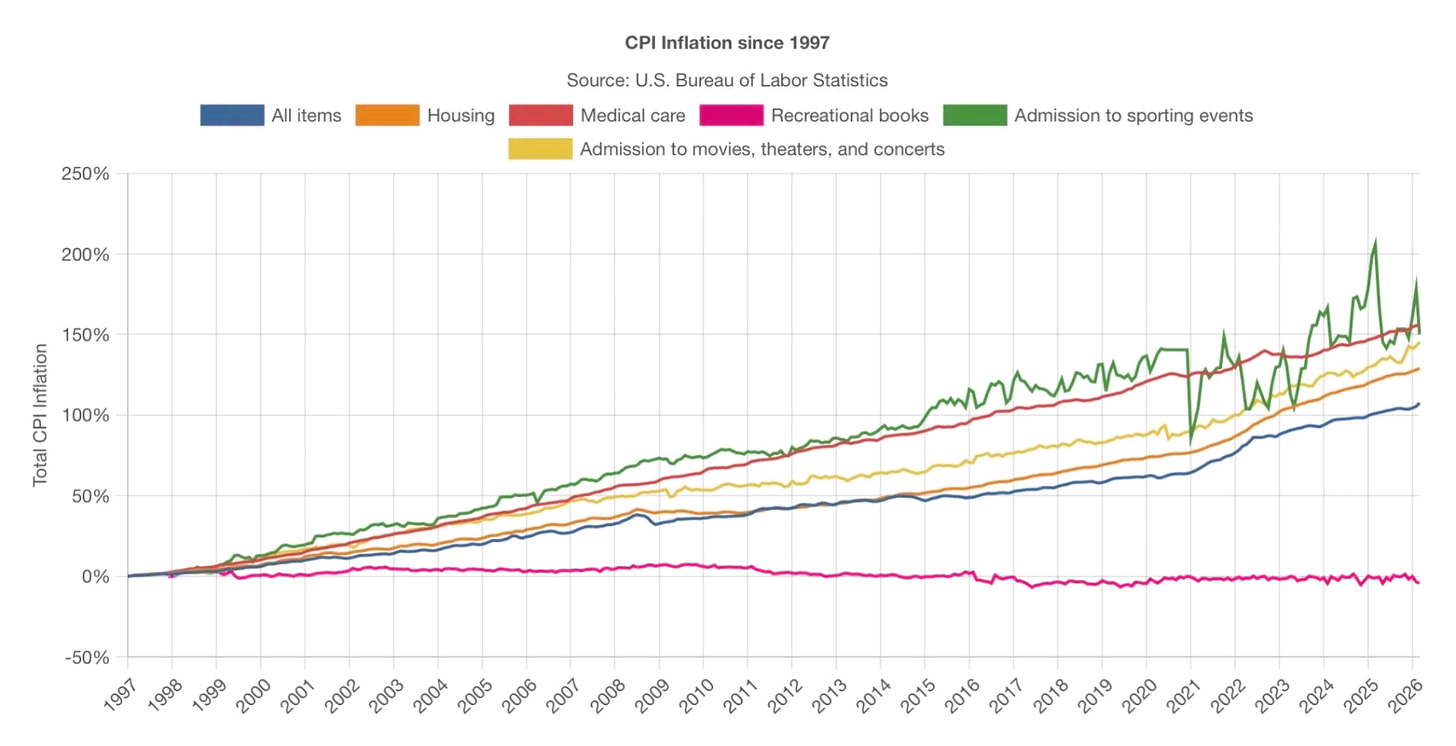
As I’ve argued before, books are in many ways quite cheap when you account for inflation.
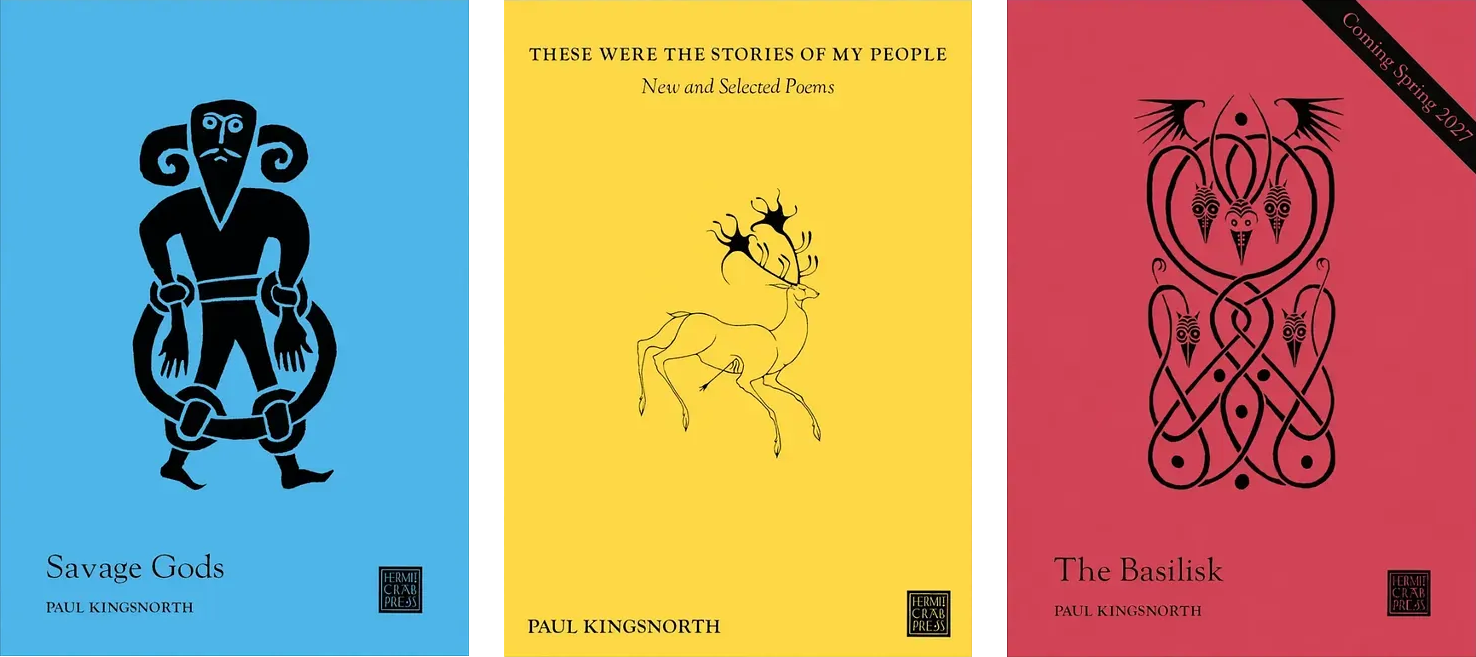
¶ Cottage industry. As I’ve made clear before, I’m not a fan of Paul Kingsnorth’s framing of our contemporary challenges around technology, economics, and cultural decay. But I’d like to pause the gripe long enough to register my enthusiasm for his new publishing venture, Hermit Crab Press, which almost literally puts the cottage back into industry. Here’s his description:
Our little home publishing house is based in our garden cabin here in County Galway. It’s a family operation: a home economy. My wife Navjyoat and I will be running it, while my daughter Leela, who is currently studying for a degree in bookbinding, will be our in-house binder and leatherworker, making us special editions, bookmarks and other goodies to come . . . We try to produce really good-looking—and good-feeling, and good-smelling—books. All our books are printed on high quality paper, with woodcut cover illustrations by the Abbey’s in-house artist Ewan Craig. They’re old fashioned, like us.
How old fashioned? If Jeff Bezos wants to take one on his next Blue Origin flight, he’ll have to buy it direct from Kingsnorth’s website; Hermit Crab Press eschews Amazon. They’re even eschewing ISBNs.
I love things quirky and idiosyncratic, especially when driven by a clear vision and done with excellence. That’s exactly what’s on offer from Hermit Crab Press. I wish Kingsnorth gobs of luck with this.
¶ Indie indeed. And speaking of great news out of indie publishing land, Peco Gaskovski’s new book, The Last Upheaval, is out. I’m eagerly awaiting my copy. If you missed my review, you can read it here, along with some reflections about what makes sci-fi (and speculative fiction more broadly) so rewarding. If you want to support indie publishing ventures, one easy way is to buy Peco’s book!


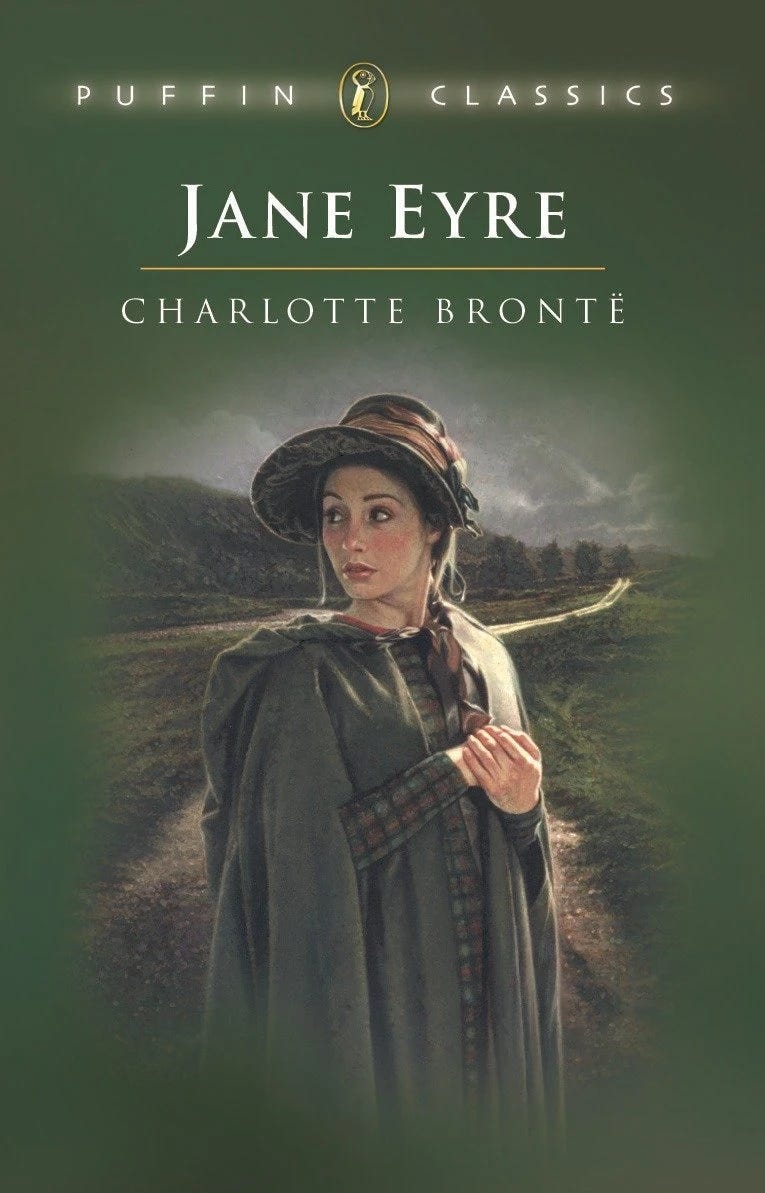
¶ Clearing the Eyre? The People’s Republic of China is a totalitarian regime that actually warrants the label machine, but at least the tyrants have good taste. No, that’s giving them too much credit. But they do have a thing for Charlotte Brontë.
“This fall,” according to the New York Times, “ninth-grade students across the country are being required to read [Jane Eyre] in full, according to Chinese state media. One report in an official newspaper held it up as an anti-materialistic love story that young people could learn from.”
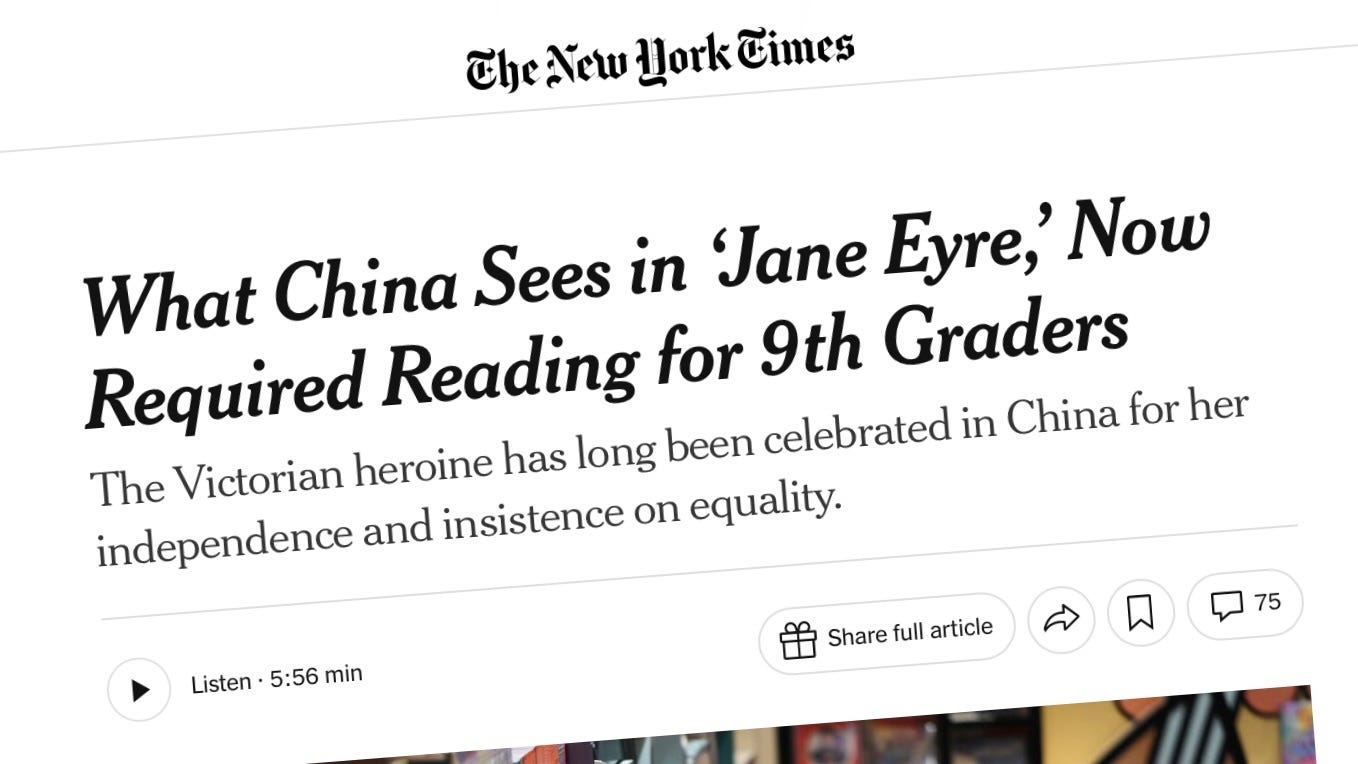
First translated into Chinese in 1925, Brontë’s Victorian classic has long been popular in the country and approved for students. But why make it mandatory, and why now? More from the Times:
Ping Zhu, a literature professor at the University of California, San Diego, who researches Chinese feminism and literature, said the novel is compatible with the Chinese government’s vision of women’s equality—one that can coexist with traditional gender roles and the heterosexual nuclear family. Its inclusion in the ninth grade textbook comes as China struggles with population decline and the government encourages young people to marry and have children, she said.
I guess it might be worth passing that message along to another republic, that of Texas, where schools have placed the book on their restricted lists. Sorry. If you need to clean up after spitting out your coffee, I’ll wait.
Ready? Four Texas school districts have taken a stand for decency and the protection of our kids by canceling Jane Eyre. Perhaps not surprising since, as most people know, it’s riddled with sex, violence, mayhem, and other horrors; MBR readers love that kind of smut, ranking it No. 7 of the best English novels ever. But since none of that is true (except the excellent ranking), what could possess a school district to keep young eyes off one of the greats?
“The 19th century’s favorite orphan is likely a casualty of the Texas legislature,” according to PEN America,
Since the passage of the SB 13 law in 2025, school administrators and librarians have found it impossible to confidently interpret the labels “profane” and “indecent”—part of the new, lower bar for what makes a book bannable in Texas. As a result, some districts have placed restrictions on anything written for adults, including classics.
PEN told Newsweek that schools have started using AI to decide what books to restrict: “Public records reviewed by PEN show that some AI systems were recommending books for removal simply because they had already been banned in other districts, rather than because they failed to meet the legal standard for obscenity.” What could possibly go wrong?
Thanks for reading! Get a conversation going. If anything struck you, leave a comment below.
If you found this post interesting, helpful, or only mildly aggravating, please 🔄 restack it, hit the ❤️ below, and share.
And consider subscribing: Free subscribers get two-week access to all new posts. Paid subscribers get the run of the complete archive, plus bonus content.
Thanks for all the useful tidbits and links. I know nothing about James Daunt but can vouch for his effectiveness - at least, based on the sheer volume of Daunt Books bags I see every day on the tube!
As far as I’m concerned, James Daunt is a bona fide hero. And Daunt Books, where he started, is wonderful.