

Earlier this year ECPA president Jeff Crosby read my book The Idea Machine and invited me to speak at the the organization’s C-Suite Symposium, held last week in Asheville, North Carolina. I thought y’all might want see what I covered. The following article is adapted from my presentation.
In the first quarter of 2026, adult nonfiction print sales dropped almost 9 percent. It was a bloodbath in self-help, which fell 26.3 percent (and maybe not surprising, as we’ll see). Only two of sixteen subcategories grew: religion and crafts and hobbies. Through the first half of the year, U.S. print sales stayed basically flat, but adult nonfiction dropped 5.8 percent. And the steepest losses have come from books readers buy for advice and instruction.
In June, bestselling behemoth Tim Ferriss opened his royalty statements and revealed the carnage. His domestic print sales—declining since 2022—cratered in 2025. If the trend persists, he’ll end 2026 at just one fifth of his 2022 numbers.
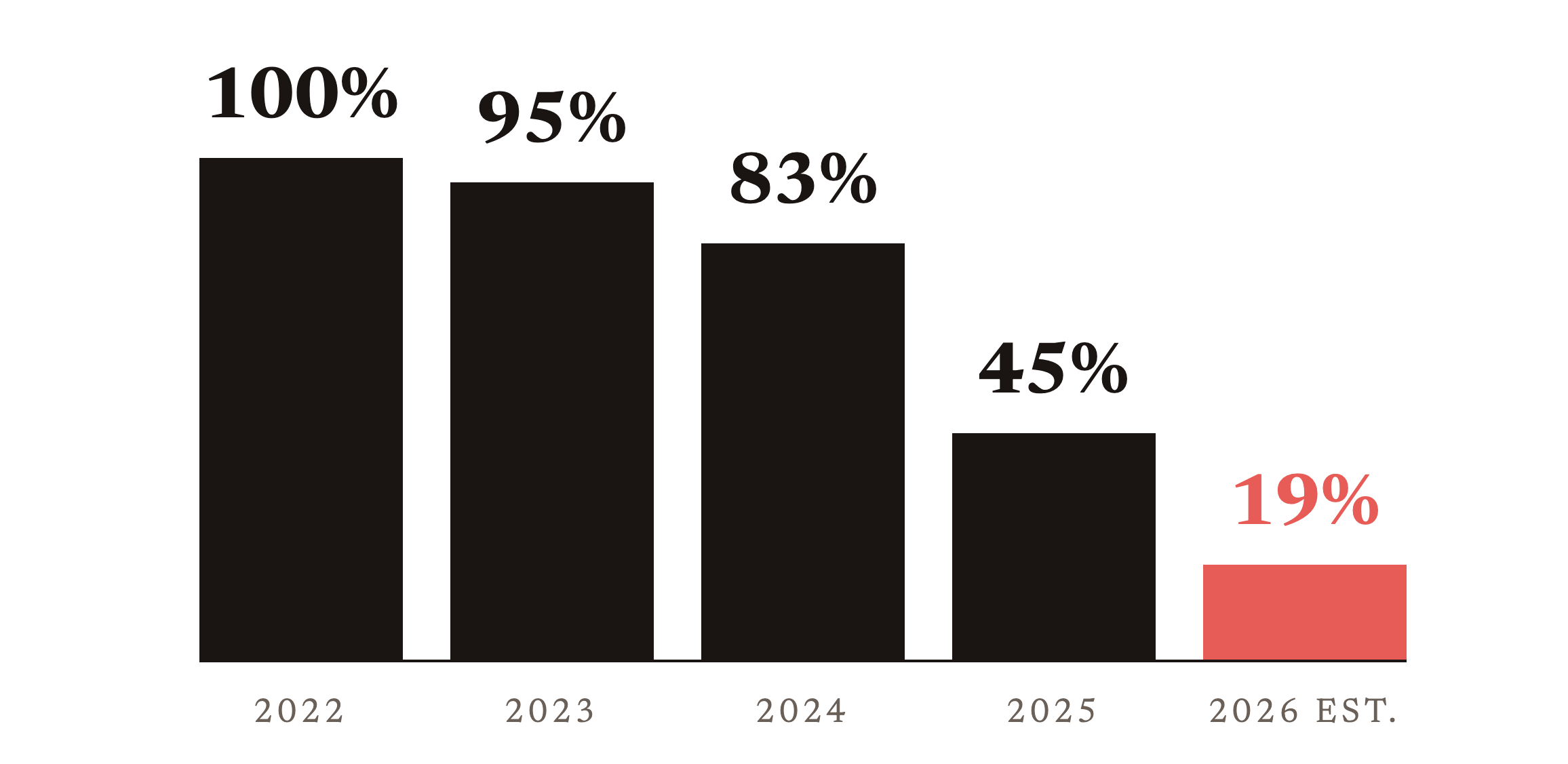
We can posit several contributing factors, including an aging backlist, but here’s another: It’s the robots! Indeed, Ferriss’s agent pinned blame on “the acceleration of AI.” Prescriptive nonfiction is experiencing “a near-vertical drop,” says Ferriss because LLMs can offer faster, cheaper, more personalized advice.
I don’t know if I buy that explanation entirely; as I said, there are several contributing factors here. But let’s take Ferriss and his agent’s claim seriously. How would AI affect nonfiction sales? Ferriss has a distinctive voice, possesses an enormous platform, and has attracted readers who trust him. But the central value of many of his books is highly extractable: hacks, tactics, shortcuts, and protocols that require neither author nor book to deliver.
There’s a philistine version of this impulse. Publishers have been dealing with it for ages. In a recent expression of it, the founder of the cryptocurrency exchange FTX—and now infamous jailbird—Sam Bankman-Fried said he would never read a book. It just wasn’t worth the trouble for the information it offered. “If you wrote a book,” he said, “you f—d up . . . it should have been a six-paragraph blog post.”
Now the philistines have large language models like ChatGPT, Claude, Gemini, and Grok. And even non-philistines recognize the efficiency of a query. “Advanced AI models are substitutes for reading longer books,” said economist Tyler Cowen in a recent piece for the Free Press, ominously titled “Goodbye to the Age of the Book.”
An LLM can turn any subject into a user-directed chat. No need to submit to an author’s particular vision or scheme. Got a question? No worries. Drop it into your clanker of choice, get an answer, go back and forth as long as you like, and then carry on with your life.
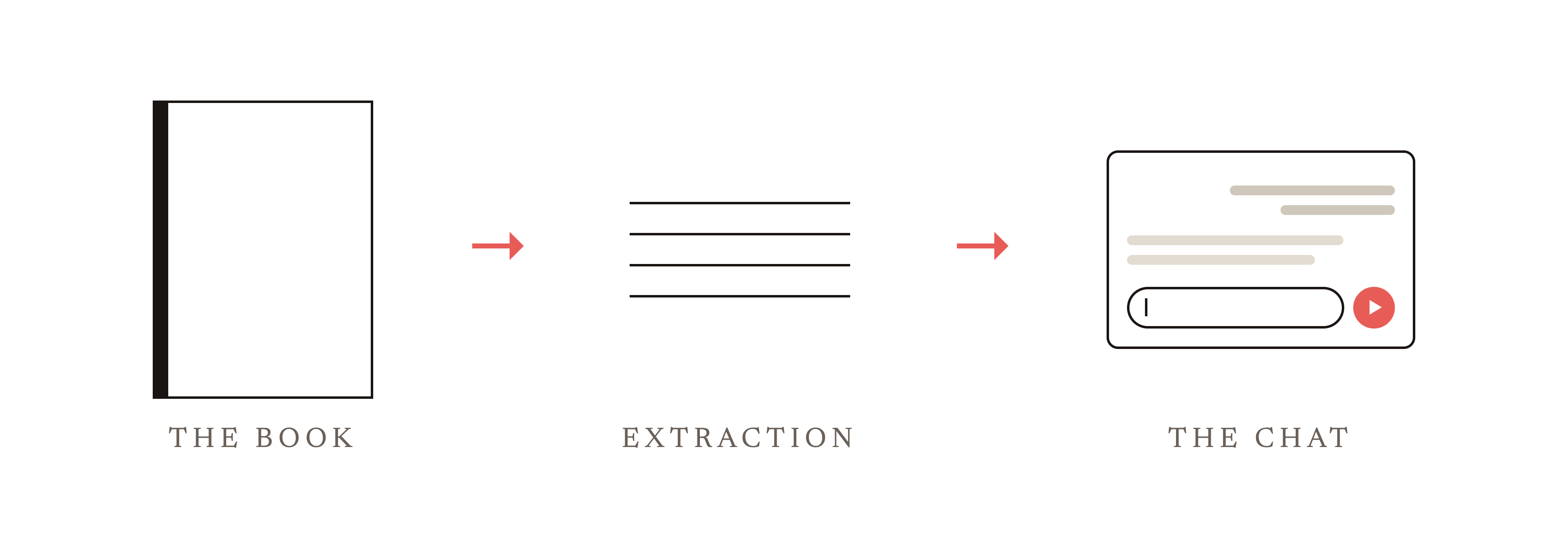
If a book is primarily a container for extractable information, AI offers a faster, friction-free interface to what’s inside. But claims that LLMs herald the end of the book depend on a bogus assumption: that everything of value in a book can be extracted and delivered by other means.
As I see it, publishers aren’t in that business and never have been—a lesson we should have learned during the last technological panic, because we’ve been here before.
We’ve Been Here Before
In November 2007, Amazon launched the Kindle. It had too many buttons, an unimpressive display, and made a glacial blink at the turn of every page. But it combined device, bookstore, and wireless delivery—and buyers went nuts. It sold out in just five and a half hours.
Yet the unease of the period extended well beyond the Kindle. If you were in publishing at the time, you might have suppressed the memory by now, but the digital revolution made the entire enterprise feel imperiled. I was at Thomas Nelson at the time, as vice president of editorial and acquisitions. The chatter in the halls and the headlines in the trades told the same story: We are the music business, and this is our iTunes.
The rhetoric seems hysterical in retrospect, but we acted as if the newest critter covered by the Endangered Species Act was the 256-page hardcover. In 2010 MIT Media Lab founder Nicholas Negroponte pronounced the physical book dead within five years. Forrester analyst James McQuivey prophesied that digital would become publishing’s “default,” orphaning physical publishing as an “adjunct activity.”
At the dawn of 2011 Publishers Weekly said the industry was “rushing headlong into the digital future, a process that is changing everything about how books are acquired, manufactured, sold, and read.” As you can tell by that sweeping claim, the moment seemed to call for a total reappraisal. We might not survive as traditional publishers, but perhaps—we comforted ourselves—we could thrive as “content providers.” The term metastasized through strategy decks and conference panels.
Once everything became content, a chapter began to look no different than a song—one more distinct unit to sell à la carte. Amazon pushed Singles, and publishers talked about unbundling books into individual chapters. And that was just the start.
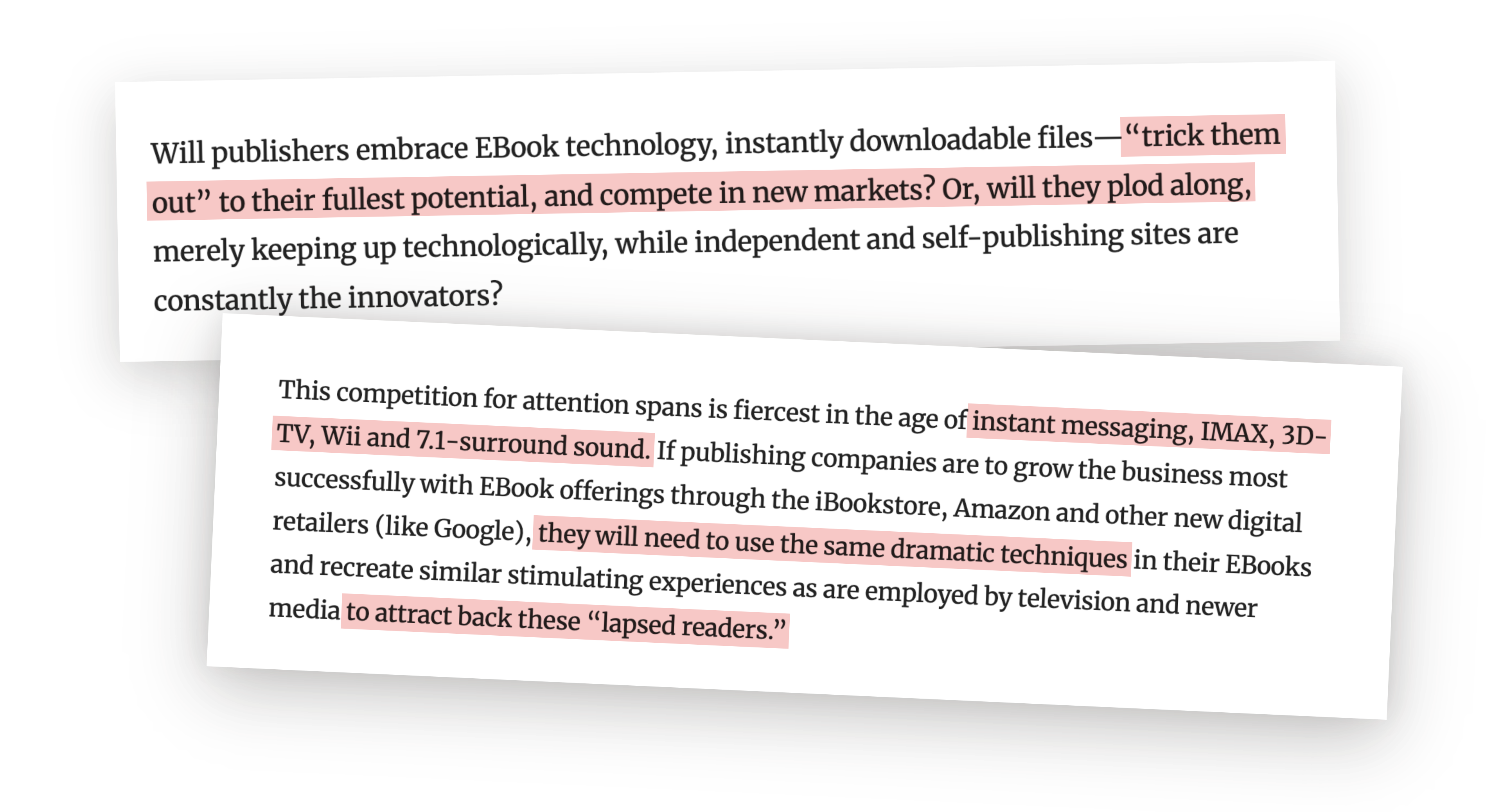
In 2011, Sam Hollander asked in Publishing Research Quarterly whether publishers would “trick out” their ebooks to compete in new markets, or just “plod along.” In an age of IMAX, TV, video games, and surround sound, he urged publishers to adopt “the same dramatic techniques” to lure back “lapsed readers.”
Publishers began experimenting with video, alternate endings, deleted scenes, and bonus content. Early on, Simon & Schuster partnered with Vook to create text-and-video hybrids. Chief digital officer Ellie Hirschhorn called the vook “a game-changing model for reading . . . that addresses today’s multitasking audience and how it absorbs information and entertainment.”
But, no. Except for the PTSD flashbacks, most of this experimentation vanished without a trace. The digital panic did, however, expose a recurring weakness. When a new technology arrives, we’re tempted to borrow its categories and then redescribe our work until we can no longer see what our own product does. We had confused one feature of the book with the book itself. Content matters, but so does the format that carries it and the use readers make of it.
So what should publishers do when AI can deliver so much of a book’s utility without the book? And how do content, format, and use create a marketable experience that extraction can’t usurp? To answer, we have to begin with a stupidly simple question . . .
What Is a Book?
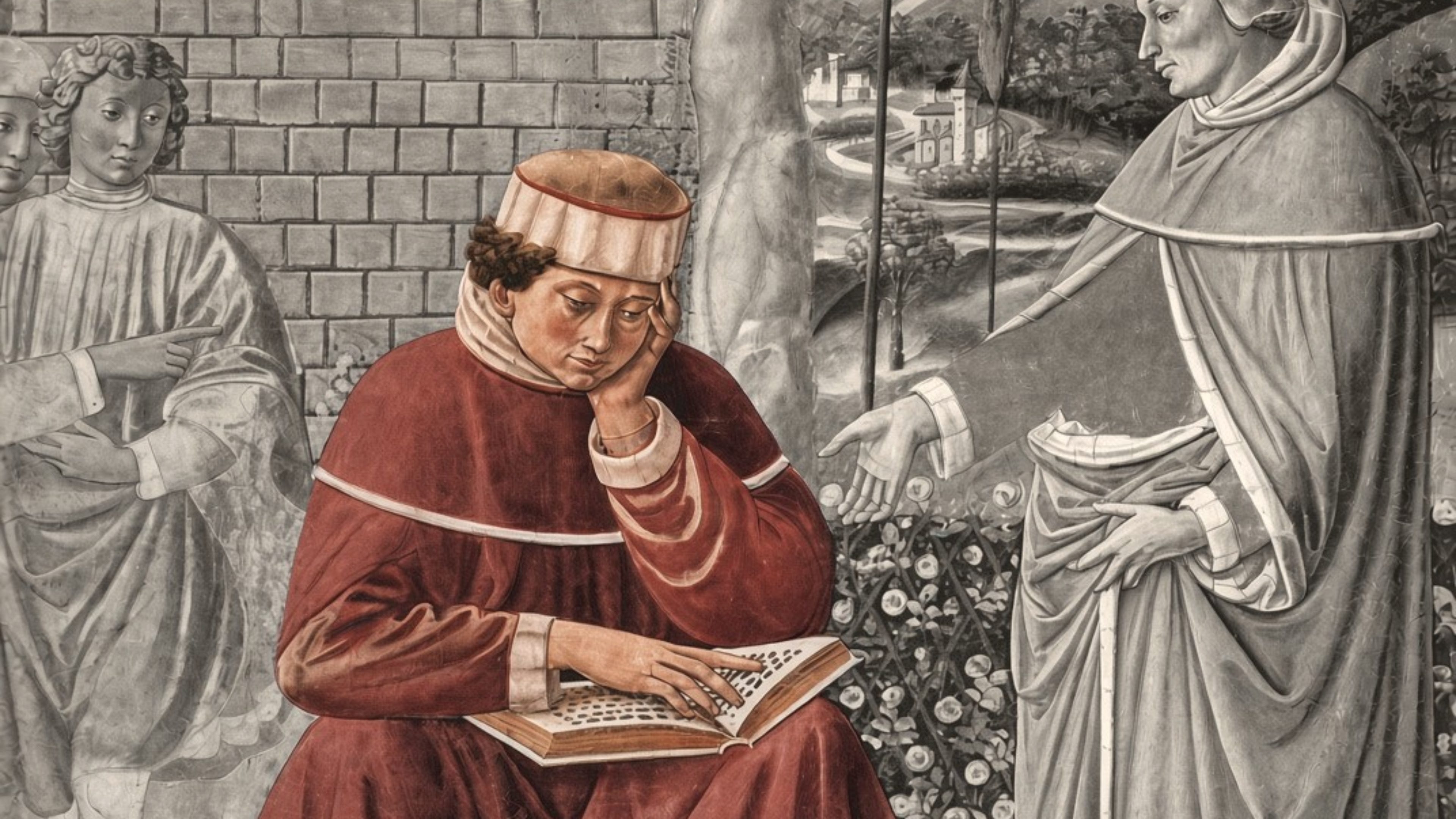
In a pivotal scene of his Confessions, Augustine retreats to a garden. Distraught, he carries with him a book. His friend Alypius follows. But Augustine, inconsolable, wanders off alone. He collapses beneath a fig tree and sobs. Then a child’s singsong voice carries over the garden wall. “Tolle lege,” he hears. “Take and read.” Augustine races back, grabs his book, opens it at random, and lands on a passage that immediately salves his troubled spirit. Then, just as consequentially for us, he marks the page to show his friend Alypius.
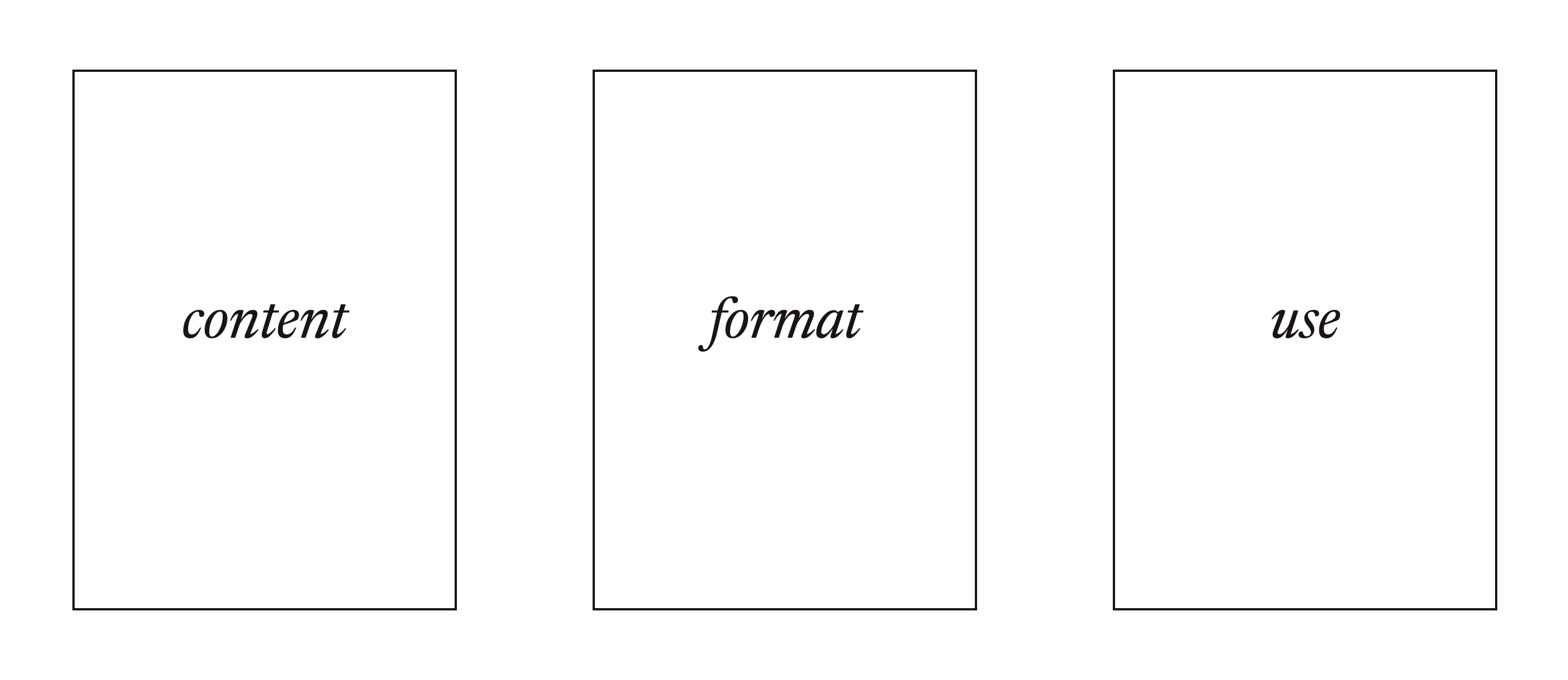
The single episode highlights three primary features of the book:
Content. Here I mean the ideas, opinions, stories, arguments, and insights the book contains. But content also refers to the way the author selects and arranges the elements, the style and voice of the narrative, and the scope and scale of the presentation. We can think of content as existing on a sliding scale. At one end are bare facts and data; at the other is a unique, stylized vision of the world filtered through the author’s experience, research, and compositional labor.
Format. Books have been written on clay, papyrus, parchment, paper, and screens, and produced as both scrolls and as codices. A format’s affordances and limitations shape what the content can become. You can inscribe a poem on wax tablets; you can’t really do that with War and Peace.
Use. A reader submits to the author’s arrangement and encounters another consciousness—what they know and think, how they see and feel—and sometimes a new way of apprehending the world and even themselves. The result might be entrancing, consoling, enlightening, unsettling, or even aggravating.
The point is the interplay. The alchemy of the three creates the book’s unique value proposition: not information alone, but this content in this format, encountered through this use. Change any one, and you change the experience.
In Augustine’s story, the content is a passage from Paul’s collected epistles (Romans 13, as it happens). The format is a codex—something he can open, mark, close, and carry to a friend. The use is an encounter that alters the trajectory of his life.
Augustine’s book was not a slot machine that suddenly dispensed a useful verse. Augustine had Paul’s letters handy because he’d been reading the book. Paul’s words came in a form Augustine could open, mark, share, revisit, and place within everything he’d already learned. And suddenly, what was inside the book moved inside Augustine.
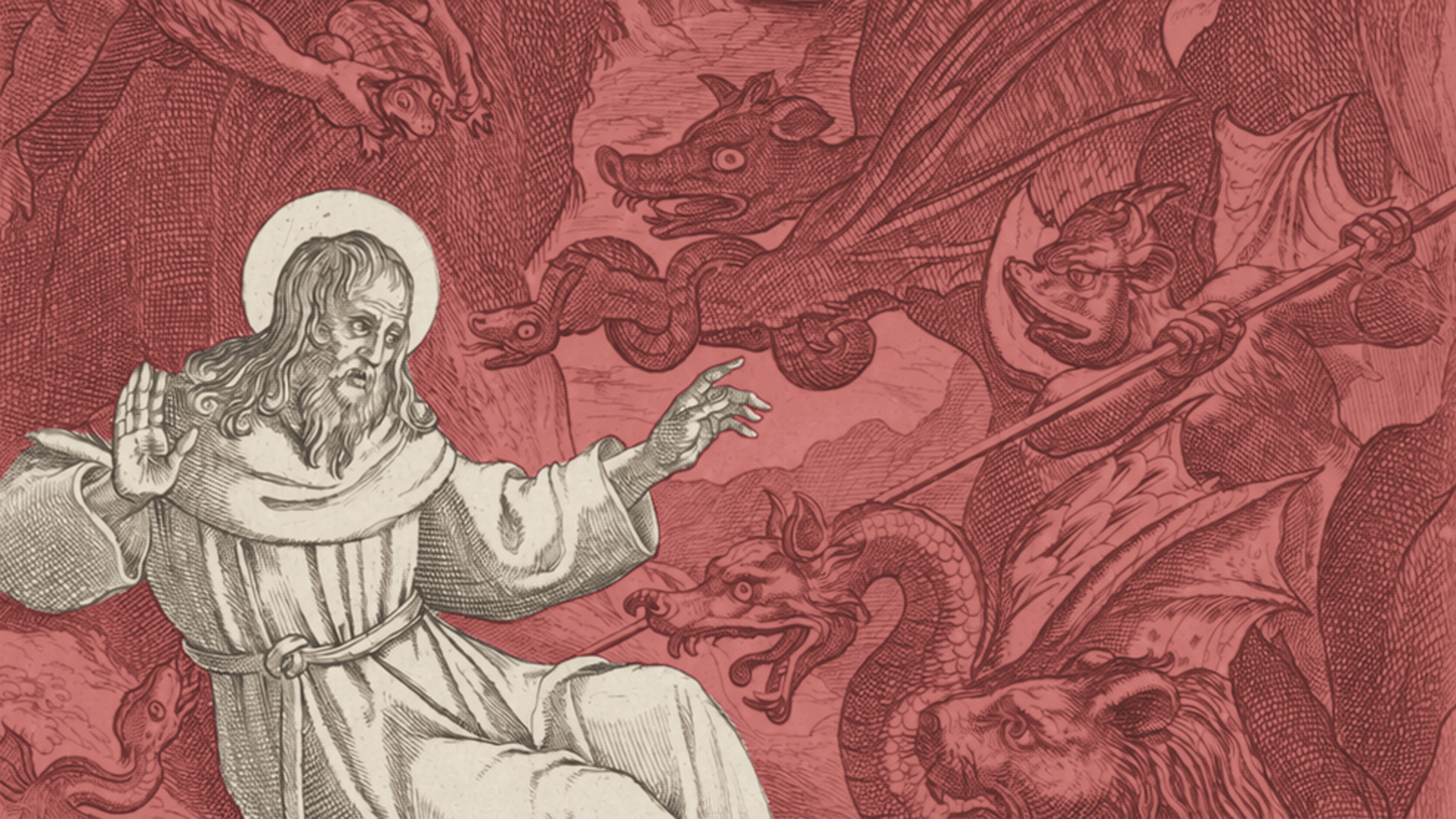
Augustine also tells the story of an official reading Athanasius’s Life of Antony, the late classical world’s idea of a bestseller. Antony was a monastic pioneer who withstood the demons of the desert. As the man read, says Augustine, “a change began to occur in that hidden place within him.” A life he never lived, nor even witnessed, for himself reached him anyway—through the page.
A book is, as I define it in The Idea Machine, “a portable collection of written ideas, designed to elevate the human mind beyond its natural limits of experience, memory, distance, and time.” Books skewer those limitations. Paul had been dead for more than three hundred years when Augustine found solace in his words, and we are sixteen hundred years removed from Augustine’s account. Yet both voices are with us now.
Human beings took the mind, hemmed in by biological and practical constraints, and built an external technology that radically expanded what it could know, remember, compare, and imagine. The book is so familiar, so commonplace, we forget it is, as Stephen King said, “a uniquely portable magic.”
Thanks to books, Augustine heard from Paul, Aquinas wrestled with Aristotle, Copernicus consulted Ptolemy, Luther conversed with Augustine, and Jefferson borrowed from Locke. Frederick Douglass encountered arguments about liberty written by men who denied his people freedom and weaponized those words for their liberation.
Civilization produces books, but books are one of the technologies by which civilization produces itself. That civilizational force extends from this humble alchemy of content, format, and use.
A Living Encounter
A good book creates an immersive, extended encounter with a consciousness other than our own. Steven Pinker called reading a “technology for perspective-taking,” observing the world from another person’s vantage. C.S. Lewis identified the desire behind that experience: “We want to be more than ourselves,” he said. “We want to see with other eyes, to imagine with other imaginations, to feel with other hearts, as well as with our own.”
The quality of the encounter depends not only on who the author is but on what they do with the content. Authors have their own quirks and biases, their own passions and obsessions, their own questions and agendas. They make claims, qualify them, tell stories, anticipate objections, return to earlier premises, and alter our sense of a concept. They reveal, hold back, then reveal more. It’s a form of intentional disclosure designed to elicit a response.
As in any encounter, both parties must participate for it to be meaningful. As Flannery O’Connor said, “It takes readers as well as writers to make literature.” The author supplies the content, but through their interaction with the text the reader supplies attention, curiosity, memory, imagination, judgment, emotion, and—another critical ingredient—their time.
This is where Sam Bankman-Fried misunderstood the calculation. The book’s apparent inefficiency creates part of the experience, part of the encounter. It doesn’t detract from its value; it’s a key aspect of the unique value proposition.
A book may take six hours to communicate information that fits in six paragraphs, but those hours represent more than the cost of receiving it; they are part of the means by which the encounter occurs—something that transcends mere information.
A padded or badly composed book wastes time, and AI may reveal how many of those publishers have published. But immersion and duration can perform intellectual, emotional, and even spiritual work. Brown University literature professor Arnold Weinstein said, “Books do not take time, they give time.” Philosopher Martha Nussbaum explained why: “We have never lived enough.”
Reading is an investment in alternative longevity. Literature compresses years of another life into just hours of attention. AI can compress too, but you lose the personality that enlivens the knowledge. All this, however, comes down to tradeoffs because readers don’t always need the whole encounter.
Extracting the Good Stuff
Sometimes we need one fact, anecdote, quotation, or a single train of thought. Extraction is not a betrayal of reading; tables of contents, indexes, anthologies, concordances, and commonplace books are old tools. And extraction is especially necessary now—has been for a long while.
By the late nineteenth century, industrial publishing outran the ability of any reader to keep up. The problem was finding one fact or connection under a mountain of print.
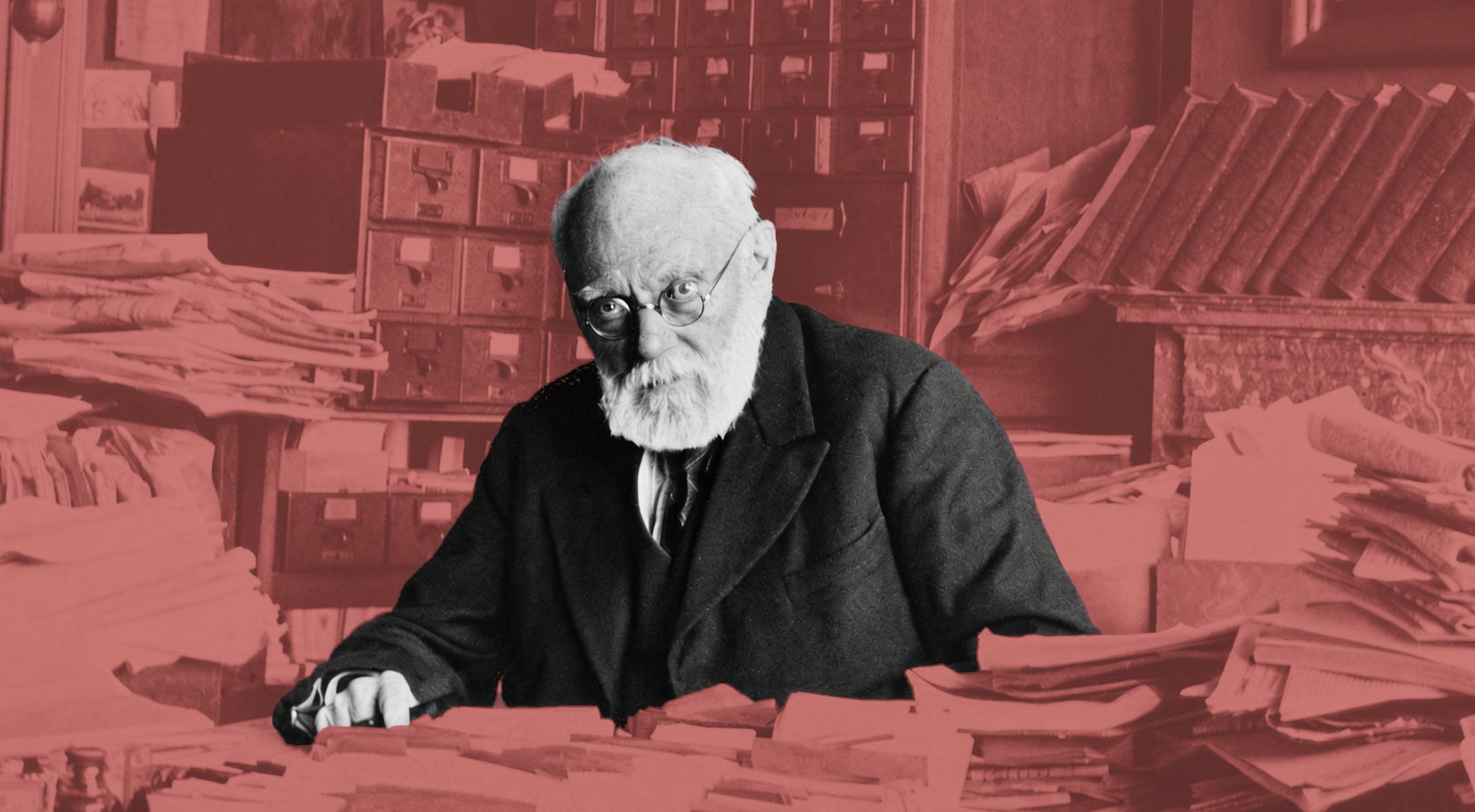
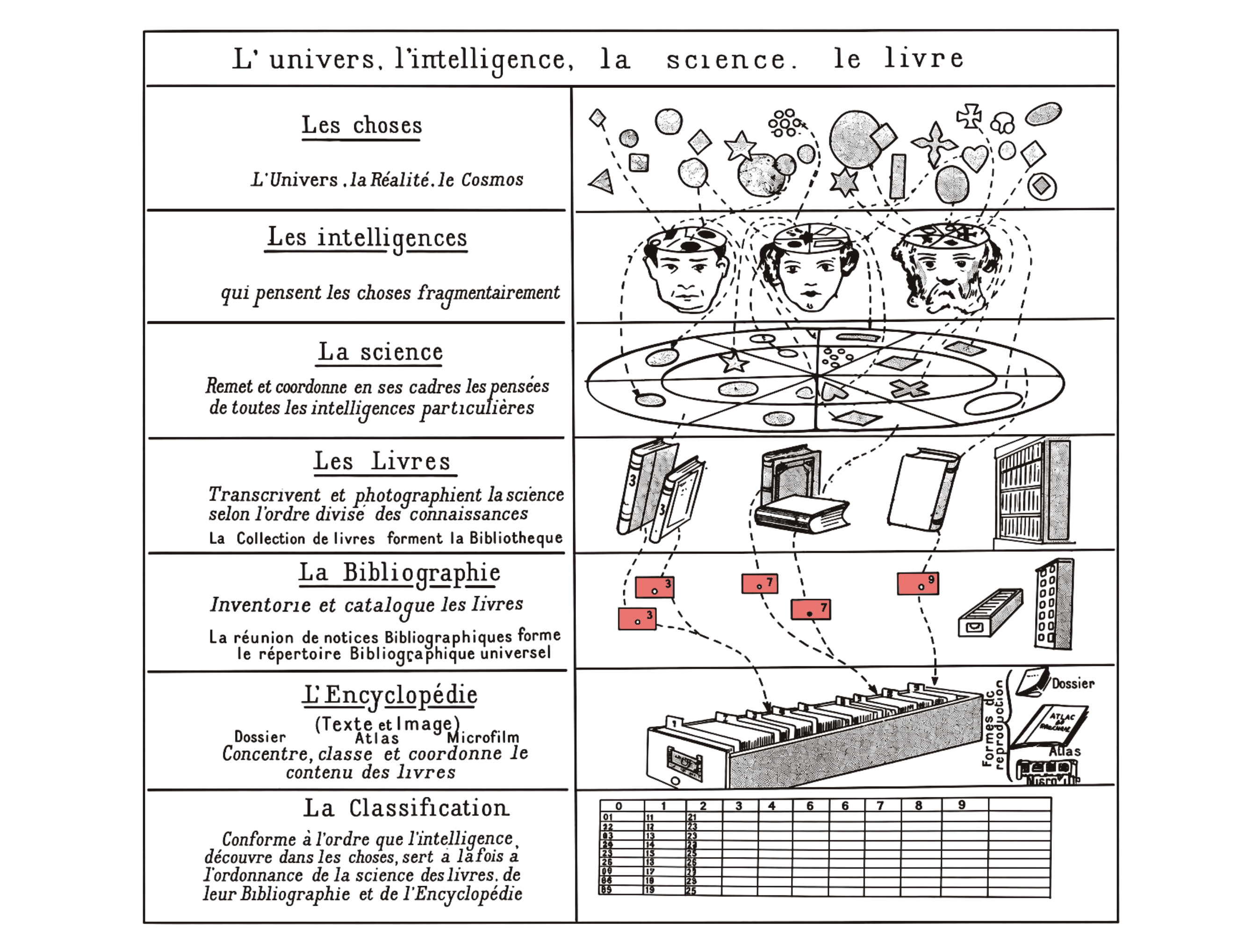
The Belgian bibliographer Paul Otlet devoted his life to solving that problem. His biggest idea was to break down books and articles into facts, interpretations, statistics, and sources. At first, he literally cut up books and pasted passages on catalog cards. By 1900 he had more than three million cards. He eventually reached 15 million. He imagined a universal repository: submit a question and get answers from the cards—an analog internet with a human search engine.
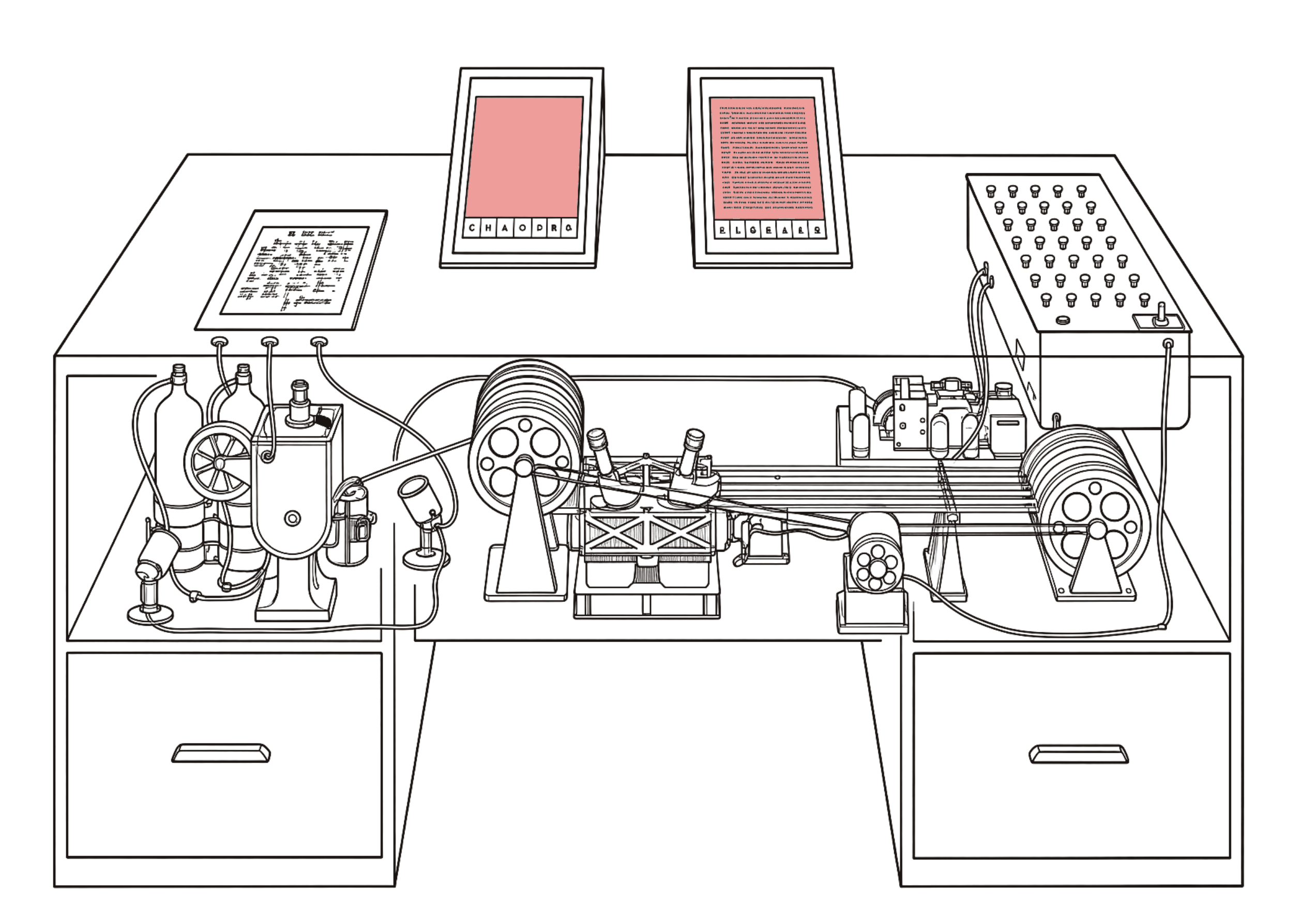
Later, American engineer Vannevar Bush faced the same “growing mountain” of research; only, the situation was worse by then. In 1945, he published an article in the Atlantic, “As We May Think,” subsequently picked up by LIFE magazine, in which he imagined the Memex: a personal analog computer equipped with a microfilm library. The Memex would let you search, retrieve, annotate, and combine information from books, articles, and research papers.
Then, in the early 1960s the Council on Library Resources asked J.C.R. Licklider how libraries should evolve. He estimated about 85 percent of his thinking time went to preparing to think—searching, calculating, comparing, and transforming data for whatever project he was working on. Some of that work, he knew, could be eliminated by a computer. So Licklider proposed what he dubbed a “procognitive system” that would shoulder low-cognition grunt work. A person could, as he imagined, prompt the computer, evaluate its result, and then follow up with additional queries and commands.
Otlet, Bush, and Licklider would be flabbergasted at what today’s LLMs can do. AI can search, compare, extract, summarize, and recombine at scales and speeds that would leave human neurons smoking in our skulls.
The average clanker represents the greatest index ever built for extracting information. And AI is, of course, far more than just an index. LLMs can sustain a conversation, provide explanations, respond to pushback, tell stories, ask questions, and endlessly adapt. And there’s tremendous upside there, if you use it well. Some don’t.
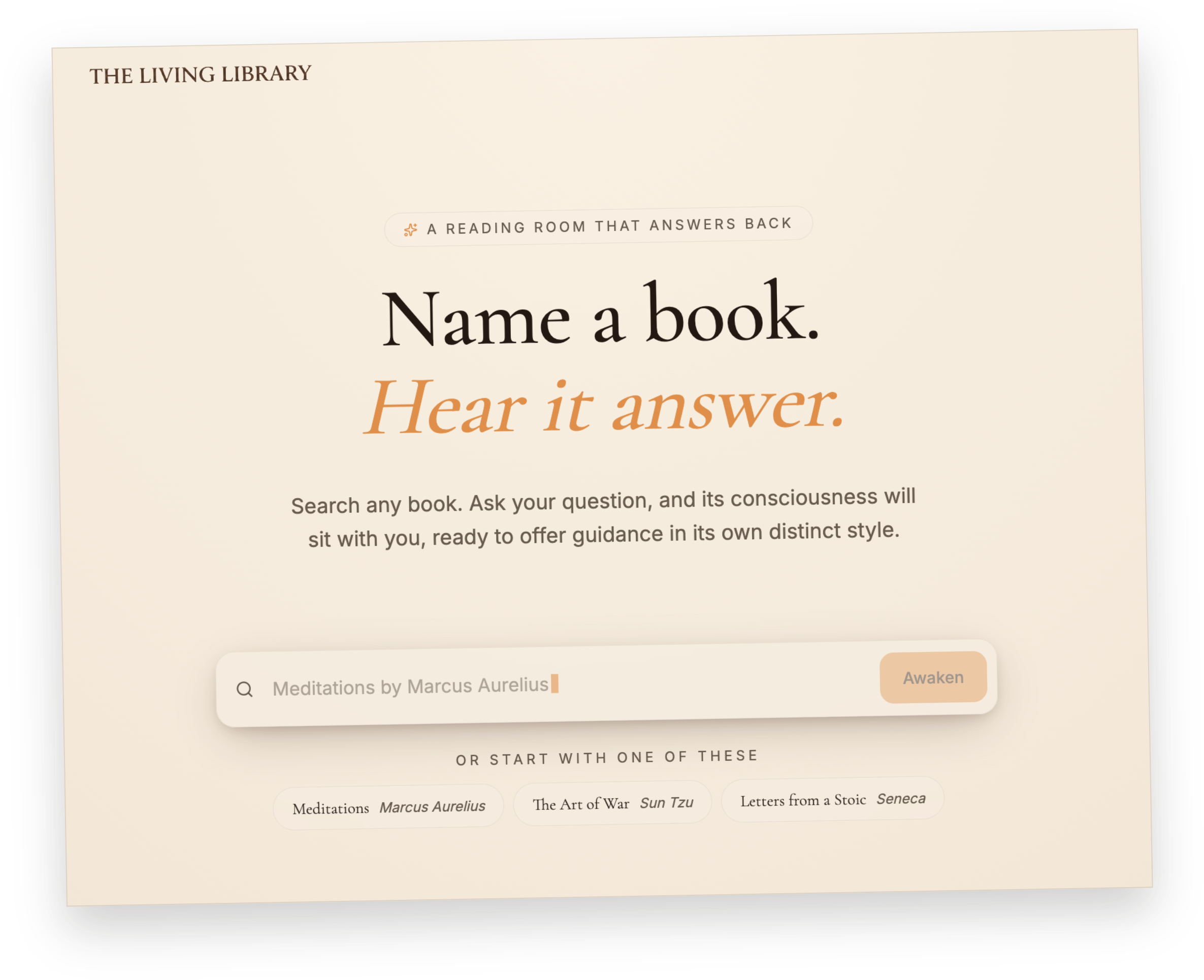
The new service Living Library encourages users to start chatting, instead of reading. Why read Marcus Aurelius and Seneca when you can chat with them? The appeal is obvious, especially for those who don’t enjoy reading. But this transformation radically alters the encounter.
A model trained on Seneca’s work gives me a synthetic conversation shaped by what Seneca thought as applied by the model to my questions. Could be cool. But reading Seneca means meeting him on his own terms in a fixed work that preserves his intentions. Those are different products for different desires.
The fixedness of a book also pins the words and ideas to an identifiable person who can be held accountable for them, while a publisher puts their judgment and reputation behind the work. Readers can engage, critique, and ask who said what and why. And because the book holds still, it creates an encounter that can be shared, around which conversations can occur among friends, communities, and far beyond. A book allows an idea to scale.
It provides sustained access to another mind and perceptions we do not possess on our own. If those perceptions apprehend parts of reality we would otherwise miss or disclose truths otherwise unavailable to us, we can begin to see differently.
But if we simply extract the answers, the encounter vanishes, and the real magic disappears, even if the propositions and takeaways survive. We get information but likely less formation. And that offers publishers a helpful substitution test.
The Substitution Test
No book is immune from extraction. Plots, facts, and arguments can be yanked from almost anything. The important question is how much of the product survives the extraction process.
Unfortunately, nonfiction made itself ripe for AI disruption decades ago. Self-help—the genre most susceptible to extraction—was once a lowly and unvalued genre. Serious writers and readers looked down on it, and it was quarantined to its own area of the bookstore.
But in the late 1990s, outlier successes in the category began shaping acquisitions for other shelves, as Boris Kachka details in a 2013 article for New York magazine. “Like a virus,” says Kachka, “self-help has infiltrated and commandeered other fields in its drive to reproduce.” Suddenly, all sorts of categories—history, medical science, social science, neuroscience, psychology, business, memoir, so-called “big idea” books, and others—found themselves repositioned with self-help messages in mind, leading to “a nonfiction landscape in which every goal is subjugated to the self-improvement imperative.”
This proved to be a brilliant strategy at the time and made nonfiction books easier to market. But everything that made those books easier to market then makes them easy for AI to poach now. Ferriss’s books, as one example, have a unique voice, experience, and recognizable intelligence. But many of his readers come solely for his tactics and takeaways, and the value of his books is unusually easy to atomize and extract.
That’s not true of every book, as info innovators Otlet and Licklider both understood. While slicing and dicing up his pages, Otlet explicitly exempted fiction and other works of art from his plan to dismantle books into their most useful tidbits. Licklider likewise confined his scheme to data rather than art. You can’t atomize Shakespeare, Jane Austen, and Hemingway without ruining their work.

So which books are most resistant to AI substitution? Those whose value comes from the entire encounter, not the bits and pieces that can be squeezed out by an LLM. Remember our content sliding scale: bare facts and data on one end; a unique, stylized vision of the world on the other. You can guess which side is most vulnerable. But let’s get specific.
Fiction presents an obvious case of immunity. AI can extract plot and themes, but that’s not the novel. A summary can tell you what happens in Middlemarch, but it can’t give you Middlemarch—George Eliot’s moral vision, language, psychology, pacing, atmosphere, and the ordered experience of reading it.
Biography and memoir possess a similar strength. An author illuminates a life through their choice of what to include, the choreography of events, and their own interpretations and voice.
Narrative history and narrative nonfiction work much the same. You can extract the facts, but you can’t extract the experience of following a writer weaving all that material into a story that culminates in understanding. An LLM can tell me all about the Renaissance. But not like Ada Palmer.
Books of original investigation, reporting, and research are also somewhat protected. If it hasn’t already been discovered, the LLM doesn’t know it. AI can offer tremendous help with research and uncovering patterns in data, but it doesn’t have the human curiosity required to uncover stories that have never been told.
Any book with a complex, sustained argument resists extraction as well. An LLM can spit out a thesis and explain the rationale. But a serious argument takes the reader on a journey through an interlocking series of claims, evidence, qualifications, interpretations, conjecture, and more. The end product is more than the conclusion; it’s the sense of discovery and revelation the readers feels by walking with the author through the material.
Then there are authors whose books depend on the expression of their unique voice and experience—cultural criticism, essays, and practical nonfiction based on everything they’ve earned or learned through life. In those cases, readers want more than information; they want to understand how the author knows what they know, and they want to savor their expression of it. Humor, candor, suffering, opinion, and style are part of the content and shape the reader’s experience. An LLM can, for instance, explain the entire U.S. government, but not like P.J. O’Rourke.
So the acquisitions process has to include an additional set of questions, starting with: What remains after an LLM supplies the summary, distills the framework, lists the five steps, and regurgitates the best quotes (or just fabricates something that sounds plausibly close)? If the reader can get the goods with just a few prompts, that’s a lousy acquisition.
Where, then, does this leave publishers?
Prospects for Publishing
When the last tech panic arrived, too many of in publishing responded by essentially unbooking the book. What can we do differently this go round? Given the contrast between an encounter and extraction, it seems to me publishers’ response should take the same shape as the book itself, focused on content, format, and use.
Content. Every book that publishers acquire begins as a bet on a mind and whatever part of the world it’s processed. Any book worth reading comes out of years of observation, thinking, probing, study, struggle, or a truth life forced the author to articulate.
Having a platform matters because it lowers the discoverability risk, but it does something else: It demonstrates that other people already regard this person as worth their time and attention. At its best, a platform provides evidence that readers value the mind, not just the material. Not always, of course, as the Ferriss example shows. He’s got one of the biggest platforms in nonfiction, and it hasn’t saved his sales.
So the question isn’t whether the author has an audience. It’s whether the book would collapse without the author. If anyone could deliver comparable content from the same outline, so can a clanker.
The proposal can help tease that out. The more singular and surprising the approach, the better; the more original and novel the better; the more present the personality in the prose, the better. If the sample chapters don’t leave you begging for the rest, think twice before you buy, because if readers don’t have the same feeling, they’ll put down the book and fire up the chat. And when you read the samples, ask how much of the author is on the page. An LLM can synthesize data, compile stories, and spit out readable passages. But it can’t be a person, and it can’t do what only a person can do.
A book that testifies to its author’s experience has no competitor. What the author saw, what they suffered, what they learned, what they unlearned, what they experienced—that’s a dataset the AIs can’t access. Witness beats synthesis because testimony is resistant to substitution.
This might be more radical (or just difficult), but publishers should intentionally un-self-help the list. Theology as seven steps, history as leadership lessons, biography as case study—this is the stuff most vulnerable to AI because it’s the most immediately substitutable. The value of the reading experience has to transcend the summary.
With that in mind, edit toward total immersion. No other technology offers immersion in another consciousness the way a book does—and that can be enhanced by thoughtful editing. Sometimes an author can’t reach the best formulation of their ideas on their own. Authors are experts on their life and subjects, not necessarily how to write about it. But that’s why God made editors.
Format. Format follows content. That’s why so many of the digital book experiments failed; the flashy new formats were driving content, not the other way around.
If the content would play well in a chat, it should probably stay there. But if it would be enhanced by a deluxe hardcover, consider it. Serious readers cherish well made books. They share photos of them on their socials (free publicity). They respect the publishers who produce them, and keep their eyes peeled for more.
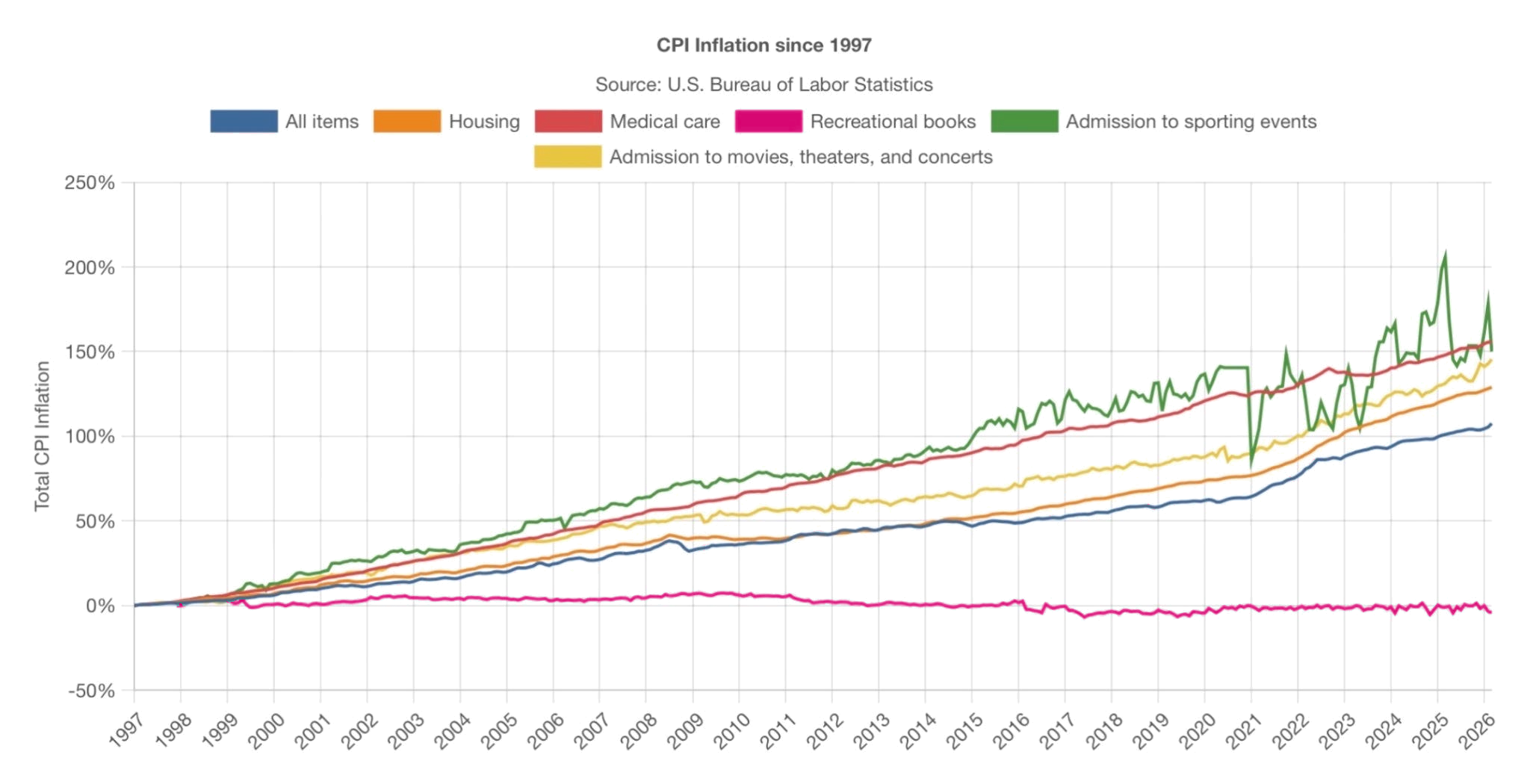
If you account for inflation, book prices have remained flat since forever. Publishers have managed this by squeezing margin out of every line on the P&L they can—including things like paper quality, packaging, and interior design. At some point there are diminishing returns. For those books that deserve to be written, let them be excellent books.
And explore what the codex can do. Given the content, a creative author or editor may figure out an enjoyable new way to move through a book. Linearity is a constraint, but it’s also your friend. What if the next turn of the page produces a surprise that keeps the reader turning pages? You can overdo this sort of stuff, but you can underdo it too.
There’s more to say, but let’s mention length. This feels like a content question, but format can cause problems here. I don’t know how much of this goes on anymore—I’ve been out of the business a while—but writing to a page count is good for the P&L and terrible for books.
A book should be as long or as short as it needs to be. If an author writes a short book, they’ve done a service to the species. A 30,000-word manuscript is cause for celebration, not padding to 40K. If the encounter is right at 120 pages, great. If it’s right at 512, also great. Adjust the format (maybe the price if you need to) and publish the book as the author intended.
Use. Two kinds of use resist extraction. The first is repeated use. If an author has transported you to another world, if they’ve unpeeled some part of the human experience you couldn’t get to on your own, you’ll come back. We all have dozens of authors whose work we enjoy revisiting. We feel more like ourselves when we read and reread these books, something no chatbot can replace. Acquisitions editors should strive to find books that improve with subsequent encounters.
The second use is communal. It’s the book you read in your small group or your bookclub, the book you share with friends. Because the book is frozen in the shape the author intended, the book can be revisited and read together as a collective experience. And there’s a bonus to repeat and communal reading—these books get shared. That’s the secret to word-of-mouth.
What about marketing? For years we’ve trained readers to approach books at their weakest point in the current environment: three keys, five steps, the big idea. It makes sense in marketing because it orients the reader, but that approach also teaches customers to ask the questions AI can answer with a prompt. We should be selling the encounter, not only the payoff.
Why is this a mind worth spending time with? We should be selling the author as much as the book—what they bring to the encounter and what makes that unique. This author has spent twenty years exploring a subject you care about. Their approach will force you to reconsider something you think you know. The story they’ve written will transport you to a reality you can’t get to on your own.
What Only Books Can Do
I’m left with this thought: If publishers hope to survive the AI disruption, they have to become passionate advocates for the unique experience their product alone can provide. We need to get reacquainted with the book’s singular magic made possible by the alchemy of content, format, and use. We need to publish for the encounter economy—focused on what books do better than any other technology, not mesmerized or panicked by the disruptor.
The “near-vertical drop” described by Ferriss is not inevitable, and it’s certainly overstated. But whatever disruption AI is causing the book market is understandable, and you can’t really blame consumers who find value in extracting what they need from a chatbot when they can’t see any benefit in reading the book, relative to the time commitment.
It’s about ROI, and the book has to be worth the investment of time and attention. Thankfully, the best books pay back our time tenfold and sometimes far more. We garner something from the experience we can’t get anywhere else: immersion in the mind of another person who’s lived a life or seen part of the world we never will. And we can do it over and over again and at prices stubbornly immune from inflation.
In a world of infinite information and personalized answers, the scarcest thing is a message that not only holds still but represents an encounter with another mind, another life, another set of experiences we can’t conjure on our own. For that, we need the book.
If you found this post interesting or helpful, please restack it 🔄, hit the ❤️ below, discuss, and share.
And consider subscribing: Free subscribers get two-week access to all new posts. Paid subscribers get the run of the complete archive, plus bonus content.
While you’re here, check these out 👇


Great stuff as always, measured, nuanced, data-based but not solely data-driven. I wish more legacy publications had someone like you writing for them.