
‘Just Launch and Raise a Flag. People Show Up’
Talking with Stewart Brand about Books, Technology, and the Maintenance of Everything

It wasn’t a religious thing, but I felt convicted reading Stewart Brand’s latest book, Maintenance: Of Everything, Part One, and found myself converted somewhere amid the pages. It’s rare that a book resets the way you think about the world. Most nudge us along a path we’re already inclined to go. Not in this case. I’ve been a fan of Brand’s for years and bought the book because of the author, not the subject. And then it walloped me. You can read my review to see why.
Brand is probably best known for creating and launching the Whole Earth Catalog in 1968. Mixing product reviews and philosophy, issue after issue the catalog presaged the World Wide Web between two covers. Steve Jobs compared it to “Google in paperback.” Among his many subsequent achievements, Brand launched the CoEvolution Quarterly in 1974, cofounded one of the first online communities—the WELL (Whole Earth ‘Lectronic Link)—in 1985, and later cofounded the Long Now Foundation, which promotes long-term, civilizational thinking.
That emphasis on long-term thinking has been an obsession for decades, as seen in his books, including: How Buildings Learn, an architectural exploration of how structures adapt over time; The Clock of the Long Now, on the sort of future focus that enables prudential decisions in the present; and Whole Earth Discipline, a counterintuitive environmental treatise on nuclear power, urbanism, biotech crops, and other controversial solutions. Maintenance fits right alongside those projects.
I wanted to talk to him about that—and more.
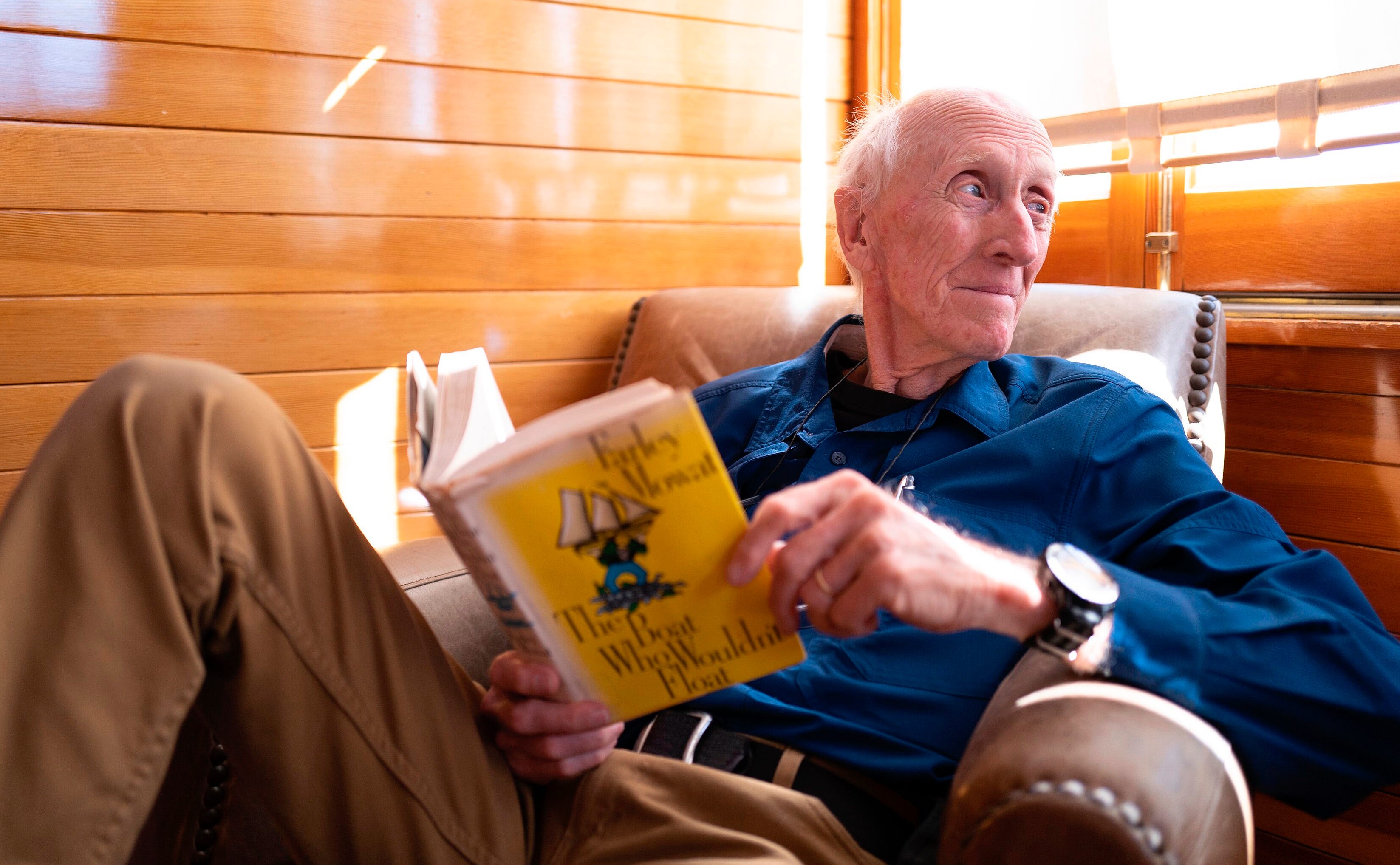
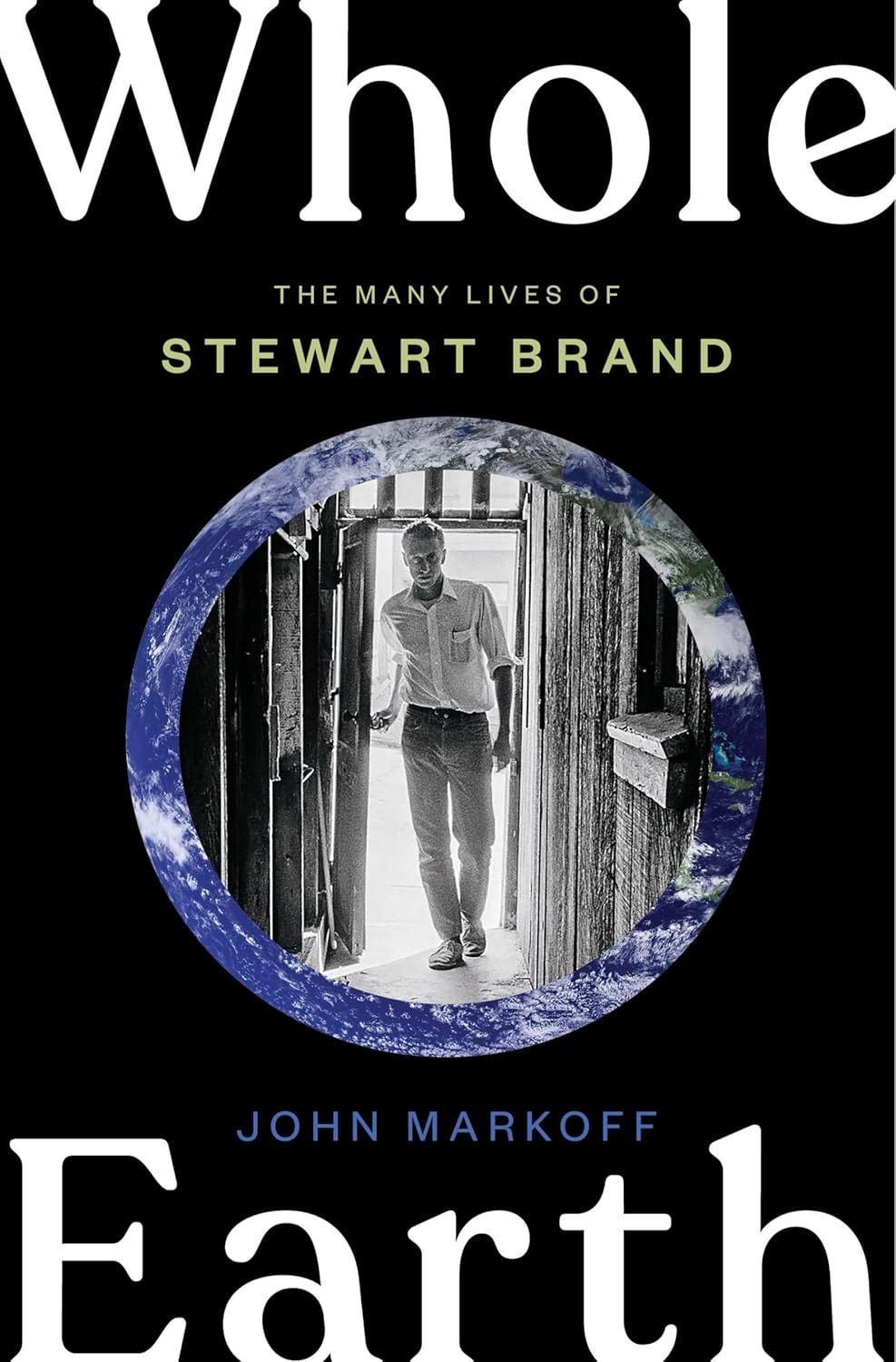
I recently read your biography, Whole Earth: The Many Lives of Stewart Brand, written by John Markoff. He mentions several scenes that involve books: your childhood room crammed with them, getting your mom’s permission to skip church to have more reading time, your book-laden red Volkswagen van, and your Whole Earth Catalog office “buried in books.” Give us a sense of what books have meant to you through the years.
Markoff said in an interview about his biography that I am the best-read person he knows. I think that’s because I spent a couple hours showing him the books in my library that had the most effect on me. For instance, there’s two whole shelves just on the history of Venice. Four of them really got to me.
I worked at a used bookstore in my late teens and became fascinated with the Foxfire series. Whenever a customer would bring one in for trade, I’d snatch it up for myself. You could learn anything in those books, all the way down to dressing a hog. You also confess a love for manuals, how-to books that explain the way stuff works and how to keep it working. You cover several legendary ones in Maintenance, including John Muir’s How to Keep Your Volkswagen Alive (my dad had a copy). Where did that fascination begin?
Since the Whole Earth Catalog was mostly about Access-to-How-To, I reviewed a lot of manuals for it. I remember particularly Stick and Rudder by Wolfgang Langewiesche (about flying) and The Natural Way to Draw by Kimon Nicolaïdes.
I bought Maintenance because of you, not the subject—but it completely changed my thinking. Have you ever had a book do that? One you picked up almost by accident that, because of where you were in life, sent you in a whole new direction?
One book that swerved me as a young artist in the 1960s was The Act of Creation by Arthur Koestler. One that made me an anti-romantic in the 1990s was The Idea of Decline in Western History by Arthur Herman.
Learning is a theme that comes up repeatedly in your story. What would you say about the value of learning as it relates to agency, tools, and long-term thinking?
Dylan’s line, “he not busy being born is busy dying,” is how I think about learning.
Why did you zag pro-technology when so many of your peers zigged con? From the hippies to the environmentalists, you’ve bucked the trends and advocated technology solutions for your ends—same with resisting the anticapitalist tendencies in those groups.
If you take the idea of tools seriously, you take the idea of technology very seriously. Thanks to my father, I was one of those kids who grew up building Heathkit radios.

Linking geography to worldview can be reductive, but I can’t help but think that Northern California played a big role in shaping your personal approach to life.
I came of age at Stanford and San Francisco’s North Beach and took root here.
How do you view today’s tech landscape—say, AI or genetic engineering—and do you still see it as a net positive for environmental or societal challenges?
Having experienced personal computers and then the Internet as enormous net positives, I expect AIs be the same. I use Gemini 3 Pro for research for my Maintenance book.
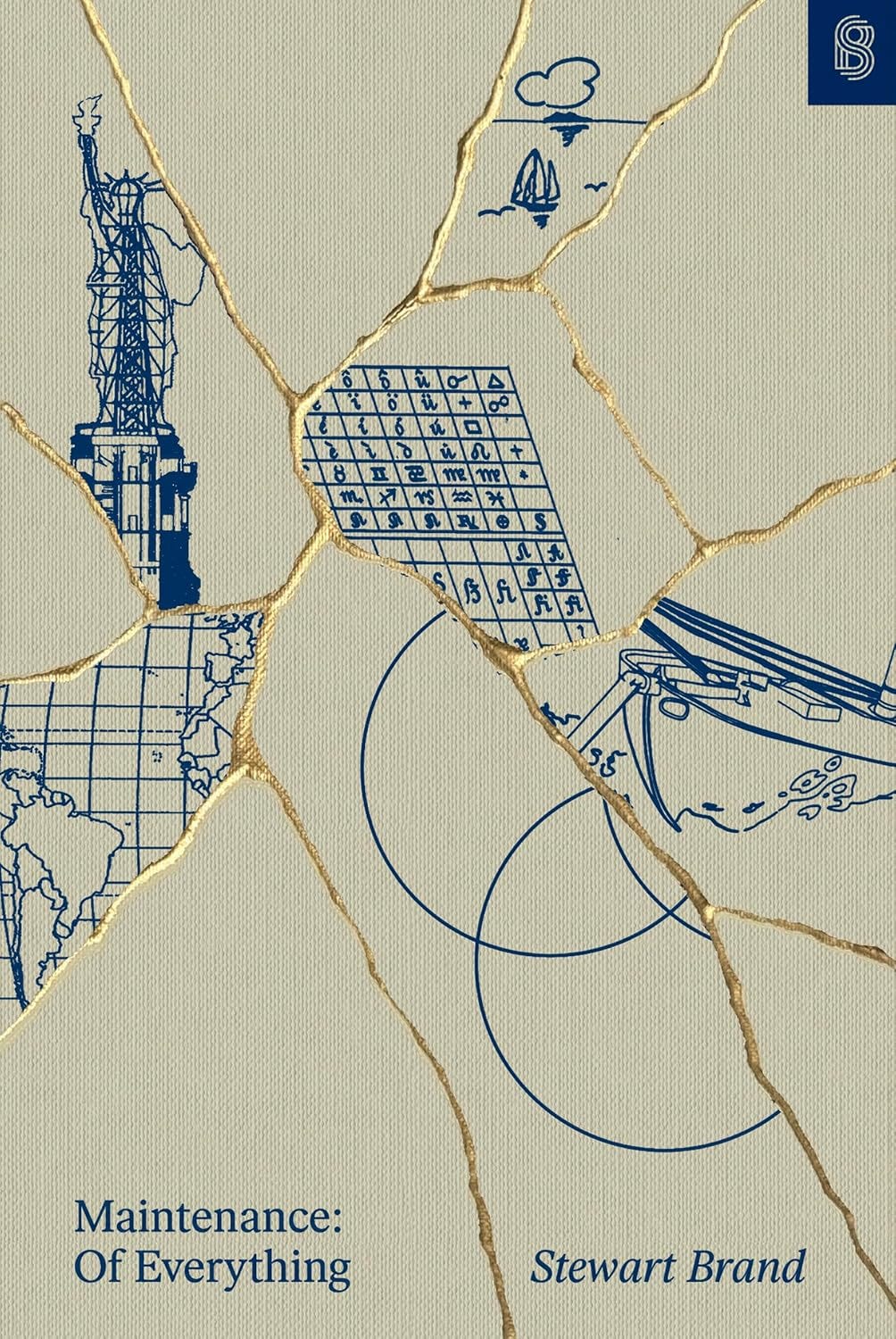
Early in Maintenance, you admit to resenting maintenance and resisting the need to do it. What drove you to conceive an entire series of books on the subject?
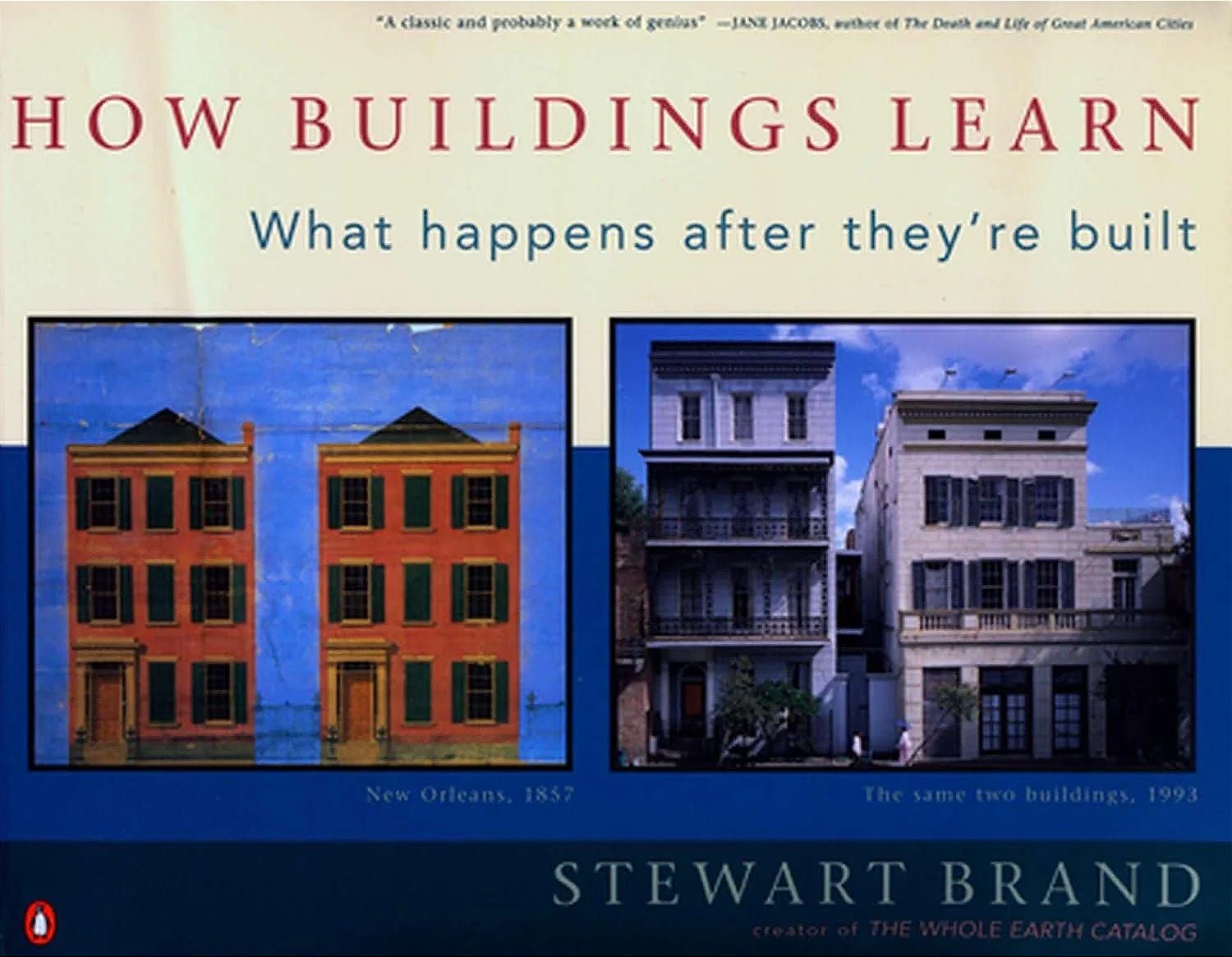
A friend, Garret Gruener, suggested I write about maintenance in general. I said no. The next day I started work on it. Overnight I realized how profoundly overlooked it is as a subject. It’s like my realization in the 1980s that there was no book about buildings in time. I filled that gap with How Buildings Learn.
You mention Robert Pirsig’s concept of gumption traps—things like ego and impatience—where we stall out on important projects because we get in our own way. Which of those traps are you most susceptible to?
When something breaks, I’m at a loss about where to start. That condition has been solved by YouTube videos. Now I always start there.
In your Civilizational Library project for the Long Now Foundation, you’re essentially arguing that books remain the most durable technology for transmitting the knowledge a society needs to function—and maybe even to recover after catastrophic loss. Where did that idea come from and how did it take the shape it did?
Long Now’s collection of books called the Civilizational Library is more of a canon of significant books, with only some focused on how-to. Not my project. But I like seeing all those books at Long Now’s bar in San Francisco, The Interval.
I’m one of many heirs of the fall of Rome and all the know-how that disappeared for centuries in Europe. Technical knowledge is easy to preserve. Just do it.
What are the top three books you’d recommend to help people think productively about tools and technology?
The Perfectionists (also titled exactly) by Simon Winchester. The Scottish Enlightenment by Arthur Herman (same one who wrote The Idea of Decline.) The Beginning of Infinity by David Deutsch.
One thing clear from your biography is that you’ve always had large and inspiring visions. Yet, you strike me as—and I might be entirely wrong on this since we’ve never met—somewhat introverted. Yet you’ve lassoed legions of loyal cobelligerents for all of these fantastic projects. How do you get people to connect with your ideas?
I just launch, and raise a flag. People show up. Yes, I’m an introvert.
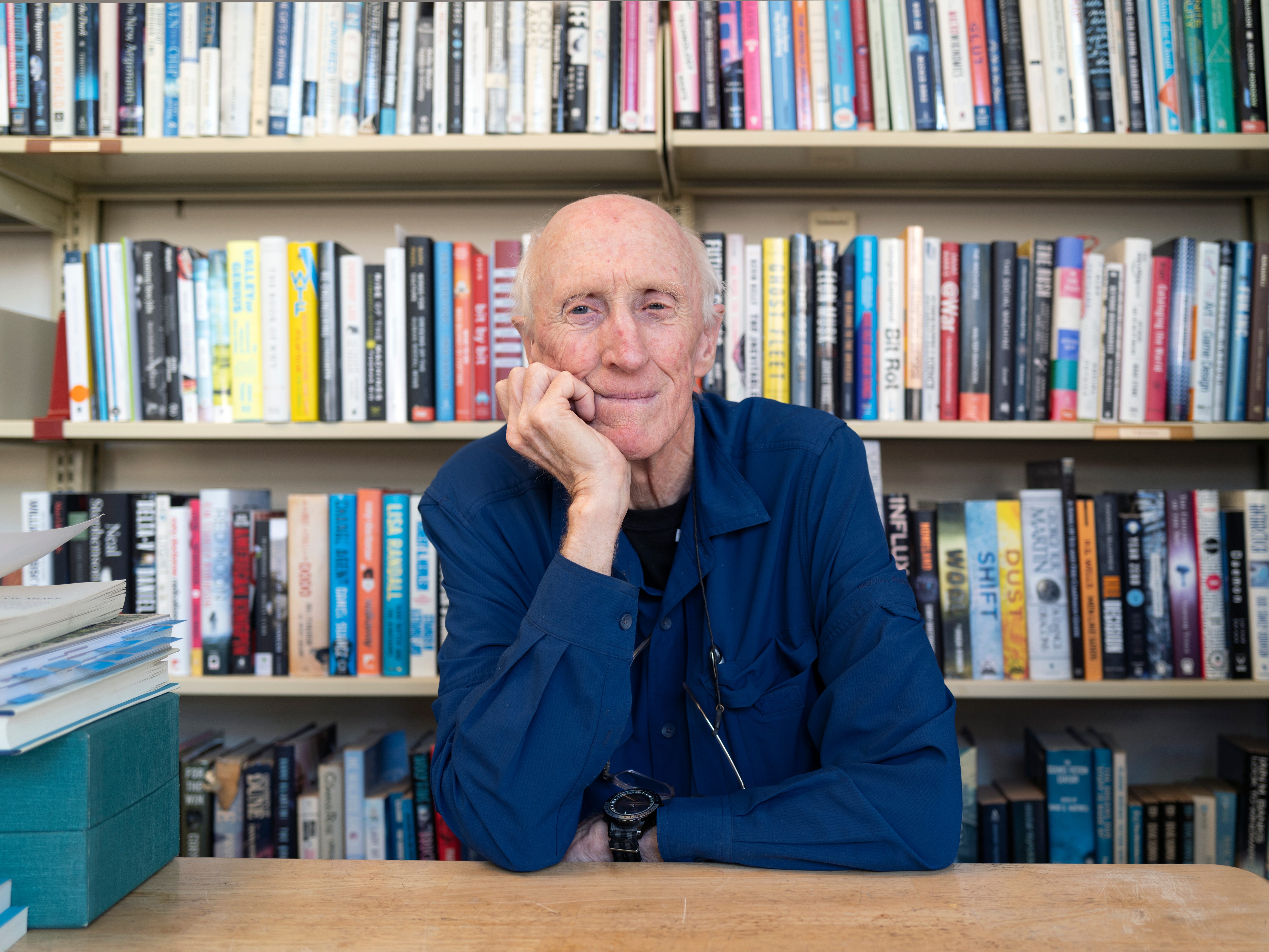
You’ve launched ambitious projects like the Catalog and Long Now, but not all ideas take off. What’s a venture that didn’t pan out as hoped, and what did you learn from it?
During the Catalog years I started a project called “Uncommon Courtesy” to train and pay people to be general purpose do-gooders. But it was one side-project too many, and it faded.
Final question: You can invite any three authors for a long meal to discuss whatever strikes your fancy. Neither time nor language is an obstacle. Who do you pick, why, and how would that conversation go?
I can’t think that kind of conjecture. I discovered long ago that I can’t write fiction.
Thanks for reading! If you enjoyed this post, please hit the ❤️ below and share it with your friends (or anyone you know who avoids maintenance).
Not a subscriber? Take a moment and sign up. I’ll send you my top-fifteen quotes about books and reading. Thanks again!
And don’t miss these 👇


.jpg)
.jpg)
He gives quite concise, even terse, answers! I kept wanting him to elucidate further. I'll admit it was a bit frustrating.
For a man who writes so prolifically, Stewart Brand is surprisingly reticent in interviews.