

Last week Empire magazine revealed that Meryl Streep would voice Aslan in Greta Gerwig’s upcoming Netflix adaptation of C.S. Lewis’s beloved classic The Magician’s Nephew, and people lost their everlovin’ minds. I never would have made that casting decision myself; I find it bizarre and may well dislike the finished film. Probably will. Sturgeon’s Law and all.
But is the social-media freak-out warranted?
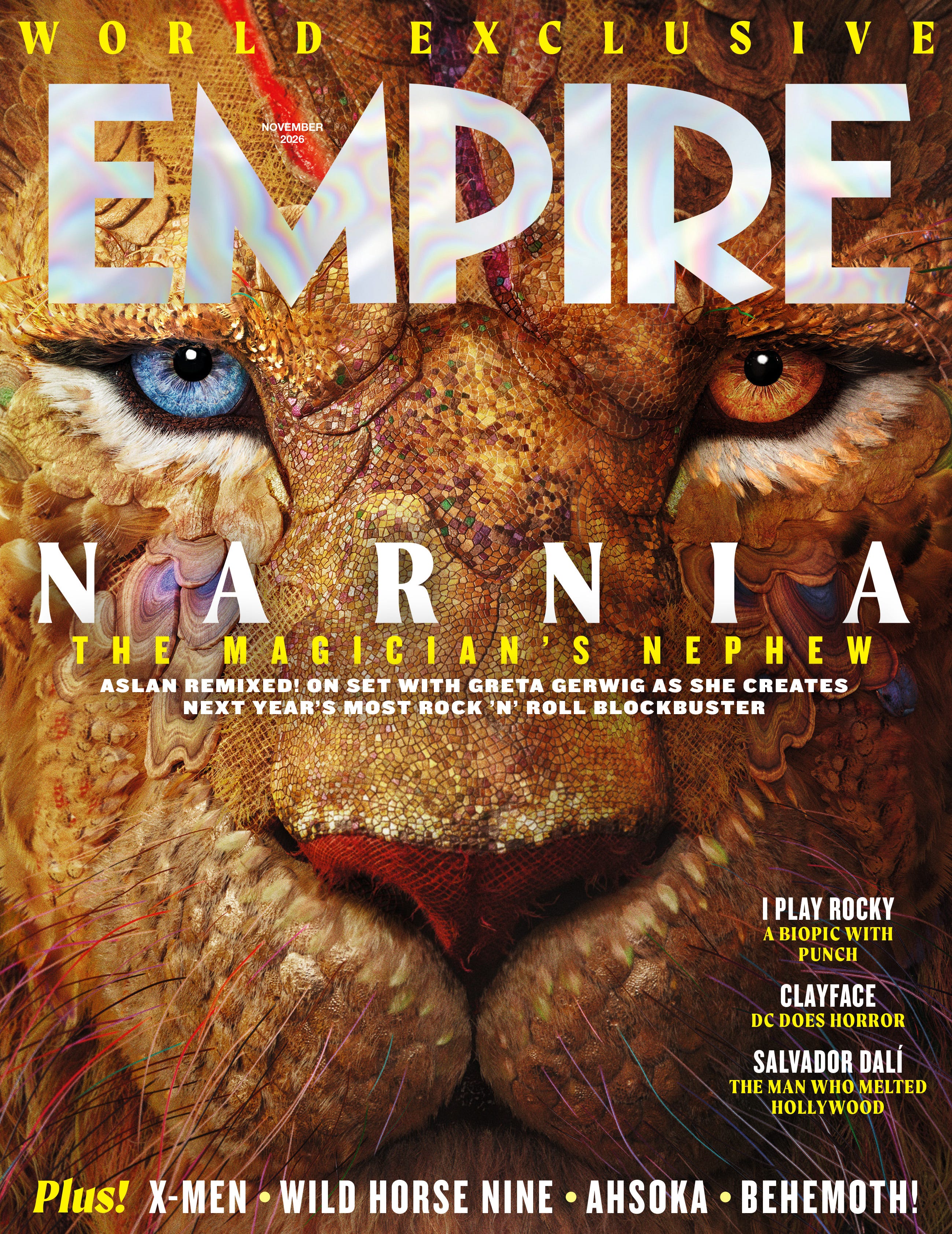
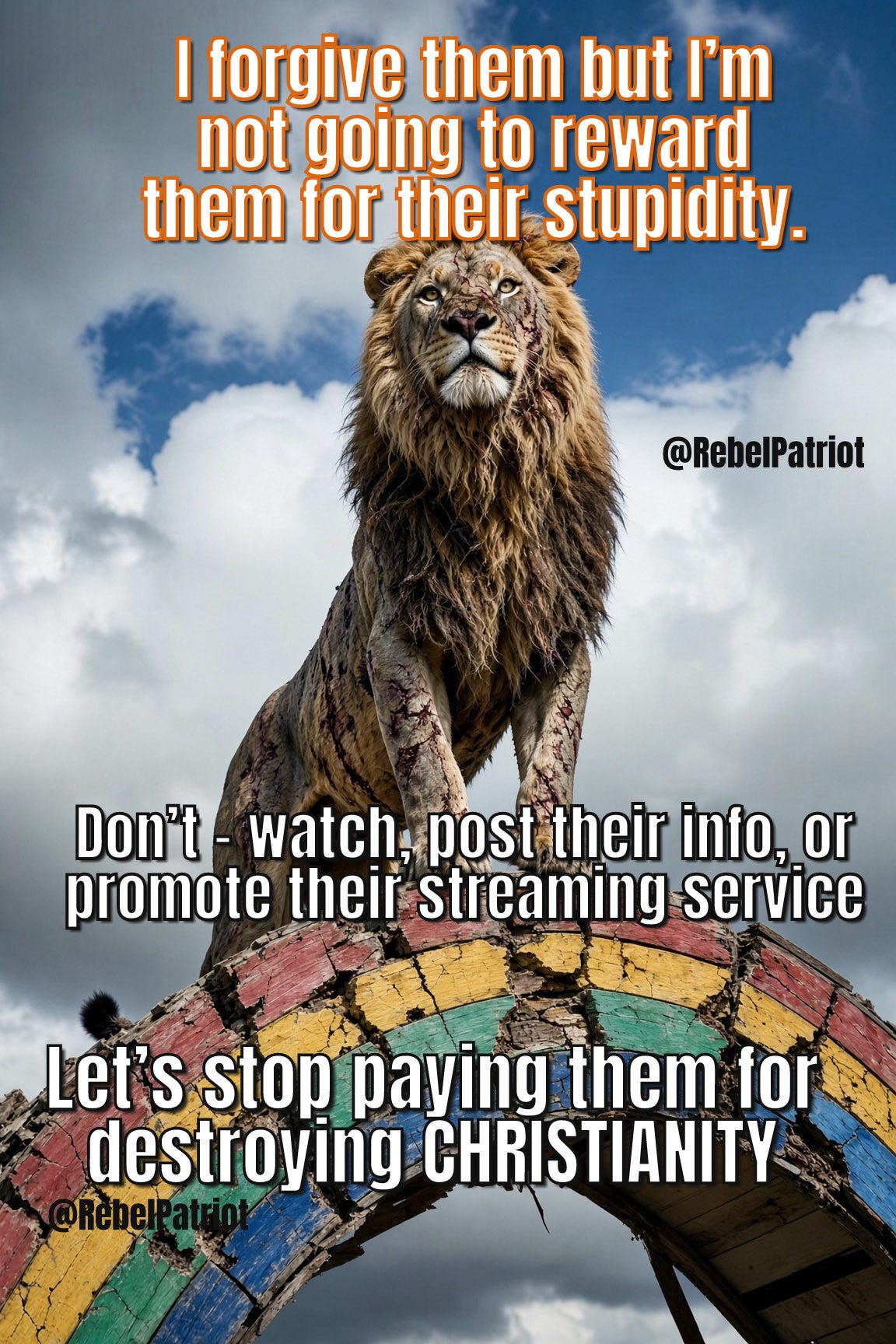
There’s something odd about treating the existence of a movie you might dislike as an injury somebody has inflicted upon you. Love her or loathe her, Gerwig hasn’t taken anything away from anyone. An adaptation is definitionally additive, not subtractive. Meanwhile, people are acting as if they’ve been violated, like they’ve been robbed or betrayed.
Start with the claim that the film destroys Narnia, adulterates Lewis, or does violence to his creation. Yeah, but no. A movie is a new work. The original remains on the shelf, exactly where you left it. An adaptation doesn’t overwrite the books, alter your copies, or require you to accept its interpretation; you don’t even have to pay any attention to it. Whatever Gerwig does, she can’t reach back into the book and change it. And if she botches the film, Lewis’s world is still right there, working the same wonderful magic it always has and will.
I just experienced this magic myself firsthand again after many years. I’ve read the Chronicles with all five of my kids and recently finished going through the whole series with my daughter Naomi, reading each volume aloud before bed. Netflix and Gerwig had no say in our experience.
Of course, a movie can distort people’s understanding of a book. Maybe some viewers will only encounter the story on screen. That’s a good reason to explain the pluses and minuses of any adaptation and introduce people to Lewis’s original. If we want our children to know Narnia, we should read it with them. Leaving that job to Greta Gerwig and then griping about her performance is significantly more bizarre than casting Meryl Streep as Aslan.
Then there’s the theological objection. This makes some sense, but I also think the ire is overdialed. I have no trouble understanding why people care about this. After all, Aslan is central to the Christian meaning of Narnia, and a film could certainly flub it. Lewis himself worried about that very thing. But are we talking blasphemy here? I don’t think so.
Lewis conceived of Aslan as the form Christ might take if he entered a fantasy world like Narnia. He’s Lewis’s idea of Christ in a form appropriate to a world of talking animals, dryads, and fauns. That’s easily seen in the novels themselves.
But that remains a fictional supposition, devised by a human author about a character in a novel. Narnia works with sacred themes; it’s not a sacred text. Aslan is a Christ figure, a type, something that points to Christ. He’s not a depiction of Christ himself, and the fact we can’t tell the difference between Aslan and Jesus is . . . maybe a little concerning. Besides, Gerwig’s Aslan isn’t even Aslan. Per my point above, it’s Gerwig’s Aslan. The real Aslan remains untouched.
A far more “problematic” (I hate that word) case would be Stephen Schwartz’s musical and film Godspell, based on Matthew’s Gospel and depicting Christ as a clown—which is the least of its theological issues. The story leaves out the only validation of Christ’s ministry: his resurrection! Schwartz so much as said it’s beside the point. And for the story he wanted to tell, it is.
For all that, plenty of Christians love it and connect with its approach. We sometimes forget that viewers (and readers) are free to make what they will of cultural artifacts; we’re not passive participants.
There’s also the weird assumption that Gerwig somehow owes us the movie we would have made. People want a “faithful” adaptation—a trickier proposition than most realize—and since somebody is finally making The Magician’s Nephew, they believe that’s what they ought to get. Meanwhile, their preferred, idealized film has somehow morphed into Gerwig’s debt to pay.
I’d like a faithful adaptation too (whatever that actually means), and yet no one asked me to make the movie. I’ve read nearly all of Lewis’s academic work, some of his poetry, most of his theological and apologetics work, and all his fiction. Till We Have Faces is my favorite novel—as in No. 1, ahead of all others. I’ve also read plenty of Lewis scholarship, and written a lot about him. Whatever that adds up to, it doesn’t put me in charge of somebody else’s movie set. Netflix secured the rights to Narnia from the C.S. Lewis Company in 2018 and asked Gerwig to direct under that arrangement. She doesn’t owe me the film I’ve already made in my head, nor you yours.
If we wanted a different kind of movie, we should have made it—or helped somebody else make it. Find the filmmakers, raise the funds, and pursue the rights when they become available: That’s how it’s done.
Walden Media discussed making The Magician’s Nephew back in 2011, but that proposed version fizzled for whatever reason. (Could be their first tries weren’t so impressive. Compare them, for instance, to Peter Jackson’s LOTR treatment, which it’s worth saying, many LOTR fans still hated despite the adaptations’ merits.) Regardless, Netflix and Gerwig actually got it produced.
Christian audiences, filmmakers, and investors who want different movies have their work cut out. Witness what the folks at Angel Studios are doing; they offer an innovative model to follow. What they demonstrate above all else? The desire for cultural influence ought to produce something besides complaints about the people who have it and what they make with it.
And now we come to a point that baffles me just as much as all the rest, maybe more: The movie isn’t even out yet! We have casting information, a few images, and some meager explanation of Gerwig’s approach. (I enjoy David Bowie, but seriously?) And yet people are coming out of their seats, flaming mad at what they take as a grievous wrong, a travesty, a catastrophe!
We can’t even wait to see what this thing is or how it plays before denouncing it to whatever circle of hell is reserved for moviemakers who deviate from our preferences.
Some say they won’t watch it at all because they don’t want to “support” it with their dollars. I don’t get this at all. Paying to see a movie does not automatically signal anything other than a desire to see what it’s all about. It’s a pay-to-play world, and a box-office ticket or a Netflix subscription (which a person might already have) is the price of admission; it’s not a receipt for selling your soul.
I would prefer a film that feels like my experience of reading Lewis. Who wouldn’t? But fidelity isn’t the only criteria for an adaptation. Alfonso Cuarón never even read P.D. James’s novel before making Children of Men! He saw a brief outline that suggested the movie he wanted to make. I talk about his substantial and sweeping departures and reconfigurations here if you’re interested.
Still, I love Cuarón’s movie as much as the book—despite its departures from James’s original. Lots of people did. It succeeds on its own terms. But the important thing to remember is that even if I didn’t love it, even if it didn’t succeed, it wouldn’t matter. James’s original is still on my shelf, waiting for my renewed appreciation whenever the mood strikes. Creating a new expression of a story does no violence to the original.
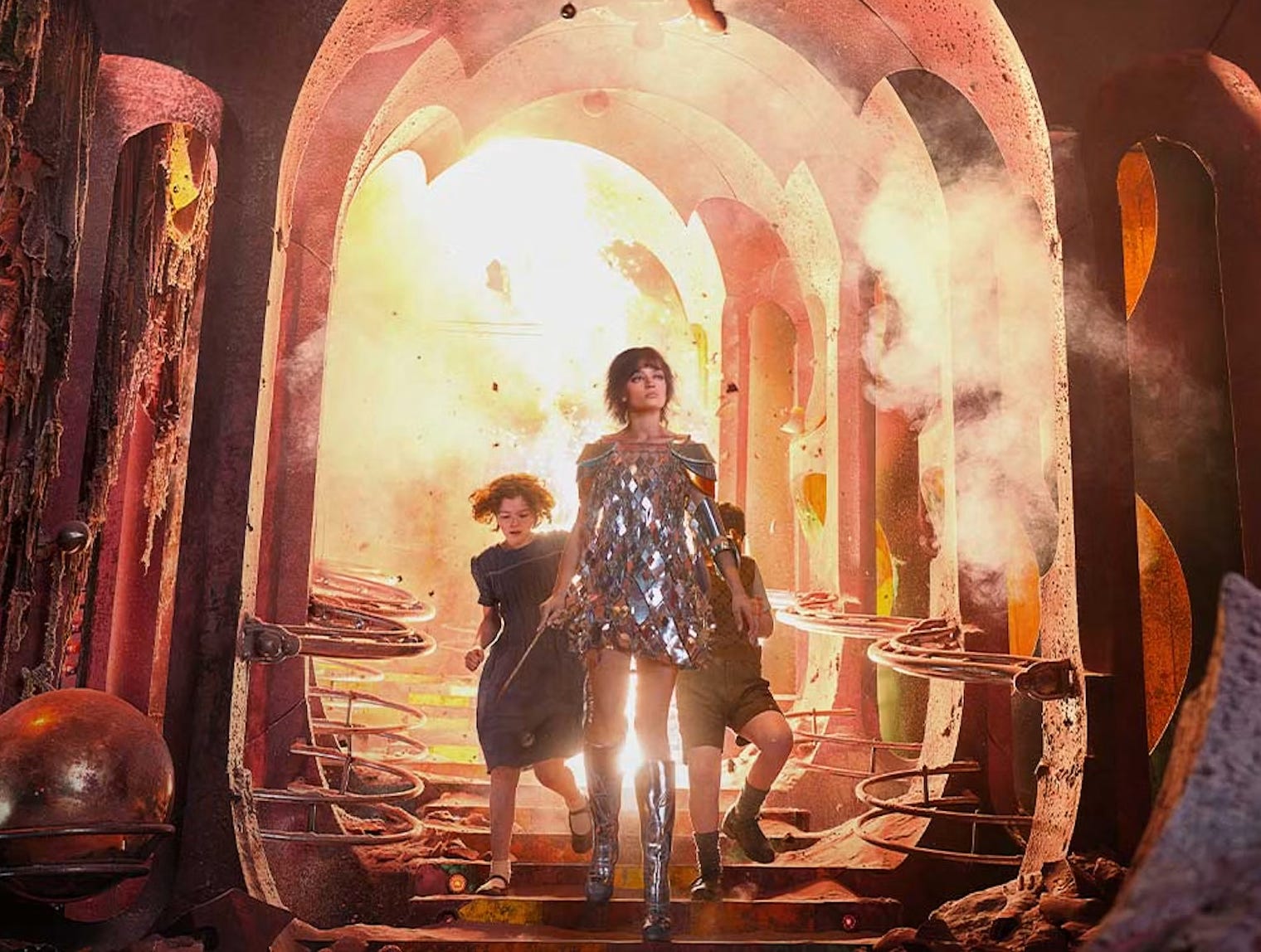
Gerwig may fail. Artists fail all the time, and my hopes are low to begin with; adaptations often disappoint. But we could stand to be a little less impressed with our ability to appraise a movie we haven’t even watched.
And so what if it is a failure? It’s possible Gerwig’s choices will alienate so many fans they won’t see it, or she’ll botch it in one of a hundred other ways. The only real losers in that case are Netflix and Gerwig and whoever else has time and money tied up in this thing. We, sitting comfortably at our keyboards, have exactly no skin in the game and lose nothing—except perhaps our hopes for a good movie. Were we really banking on that?
If these early revelations dissuade people from watching, fine. If subsequent revelations irk us even more, fine. If the movie itself disappoints, fine. My happiness doesn’t depend on whatever tumbles off the cultural conveyor belt next. I can’t imagine why anyone’s would. If it’s a flop, it’ll just slither down the memory hole like every other crappy movie that gets made. Life will go on. And there’s always—are we still allowed to say this?—the possibility it’ll prove an interesting surprise.
In the meantime, I’ll take the verdicts seriously when there’s an actual movie to watch. And whatever those criticisms say, I’m curious enough that I’ll probably watch it anyway.
If it’s really terrible, I’ll steer my kids toward something else—like the books.
If you found this post interesting or helpful—or maybe irksome and aggravating—please restack it 🔄, hit the ❤️ below, discuss, and share.
And consider subscribing: Free subscribers get two-week access to all new posts. Paid subscribers get the run of the complete archive, plus bonus content.
While you’re here, check these out 👇


I mostly agree. The medium is the message, and so you can't change the medium without changing the message.
But I must demur on one point. The first experience we have of anything is normative to a high degree. The first performance of a song we hear becomes the norm for that song, and any significantly different performance we hear afterward sounds wrong. (This is probably why most covers are so slavishly derivative of the original. That is what the audience wants.) The order of exposure matters.
For instance, many people now encounter Lord of the Rings through the movies, which some at least then prefer to the books. This can also determine whether they read the books at all. If you see a movie and hate it, why would you read the book? And if you see the movie and love it, the book is then likely to disappoint, as, for example, PL Travers Mary Poppins books disappointed so many who read them after seeing the film.
Worse, the films may eclipse the books altogether, as, for example, Disney's fairytales have eclipsed Hans Christian Andersen. Who today knows The Little Mermaid from Andersen rather than Disney? And who, having seen one first, will not be disappointed, or, at least, discombobulated by seeing the other?
Would the world be a better place and its children's lives richer if they read Andersen rather than watching Disney? Without a doubt. Is there any hope of that happening again? Alas, no. No adaptation of any classic is a neutral act.
I think anger has become a default response to so much in our society. The impact of cable news and other online media operating their model of “Outrage Porn” has created an extreme reaction habit that is almost Pavlovian in nature. Leaving aside the whole it’s not out yet issue (very well said Joel), to respond to the use of Streep as Aslan’s voice with “ Huh, I wouldn’t have made that choice” seems too tepid in today’s world. We are being trained to view everything as an 11 on a 1 to 10 scale. And to vehemently express that opinion. It’s exhausting. The best response to this? Get offline and go read a book!