
Bookish Diversions: The Point of Poetry? Slow Down
Out of Fashion, Lyrical Labor, Phillis Wheatley, Poetry’s Psychology, Smoking Dante, More

¶ Out of fashion. A while back, EconTalk host Russ Roberts talked with poet and cartoonist Zach Weinersmith about his book, Bea Wolf, an amusing adaptation of the Old English epic poem Beowulf. The conversation covers a lot of ground, but one subject that gets a fair amount of attention concerns why people seem to undervalue poetry these days.
Since this April marks the thirtieth anniversary of National Poetry Month, I thought it’d be good to explore why—and what we’re missing.
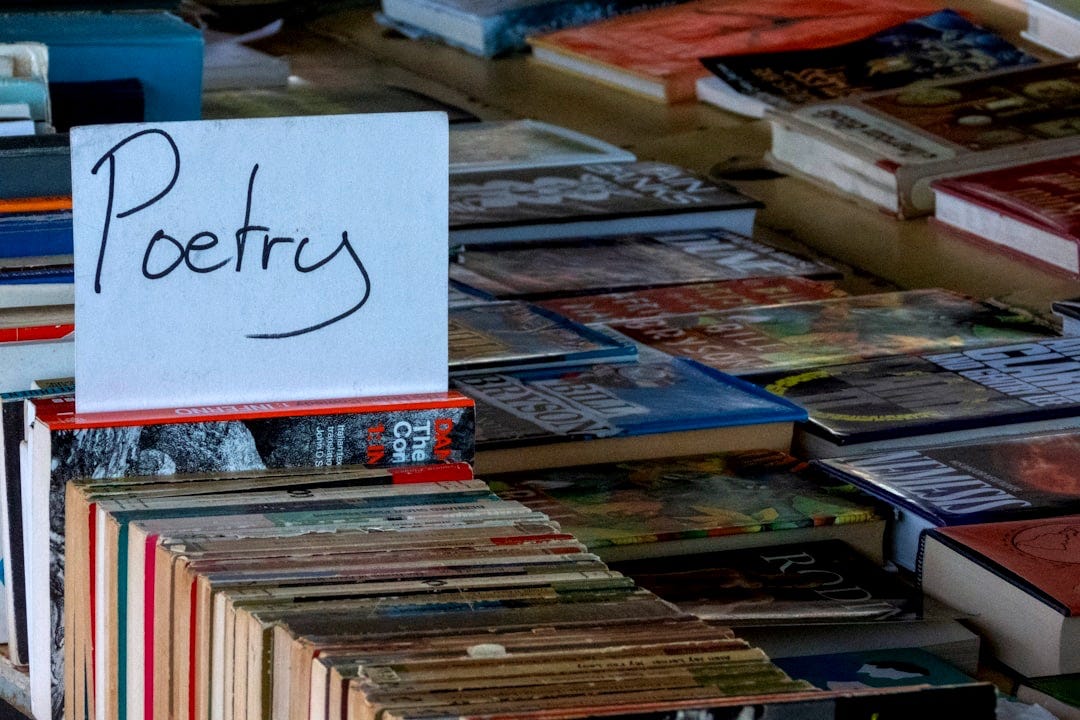
Weinersmith notes that a few generations ago people would regularly pepper their correspondence with verse, lines picked up here and there and then shared on the assumption recipients would appreciate the poem as much as the sender. “This used to be part of our culture,” says Weinersmith. “And somehow it got murdered, and I don’t know why.”
There’s evidence poetry has experienced a bit of a revival in the last decade, though the number of readers are still low. Only 12 percent of U.S. adults have read a book of verse in the last year; in 1992, that number was 17 percent. As Roberts notes, poetry doesn’t come easy for most people. “Poetry often, not always, but often requires work,” he says. “And work is a bit of out . . . fashion.”
¶ Lyrical labor. It’s not that poetry’s hard, exactly. The required labor mostly involves slowing down. We’re used to scanning articles online, chasing our eyeballs down listicles, and hoovering up information. But poetry doesn’t reward rapidity. It invites lingering, savoring, sometimes wrestling, and usually rereading many times over.
Poetry’s very shape and sound cause friction for the reader or listener. Line breaks interrupt rapid decoding because they force us to recognize the author’s intended emphases and rhythms. Prose permits rapid scanning where the reader sets the pace. Poetry interrupts. It also serves up words whose meanings might appear obvious but which hide layers of nuance only accessible to those willing to turn them over several times.
If the pace and pressures of life feel unsustainable, poetry offers a temporary detour from the race. As Roberts suggests, you might have to work a bit for it. But when I read a book like Seth Wieck’s debut collection, Call Out Coyote, I find it well worth the trouble. Same with the rest of the Weinersmith episode; you can find the video below. And Bea Wolf sounds like a riot.
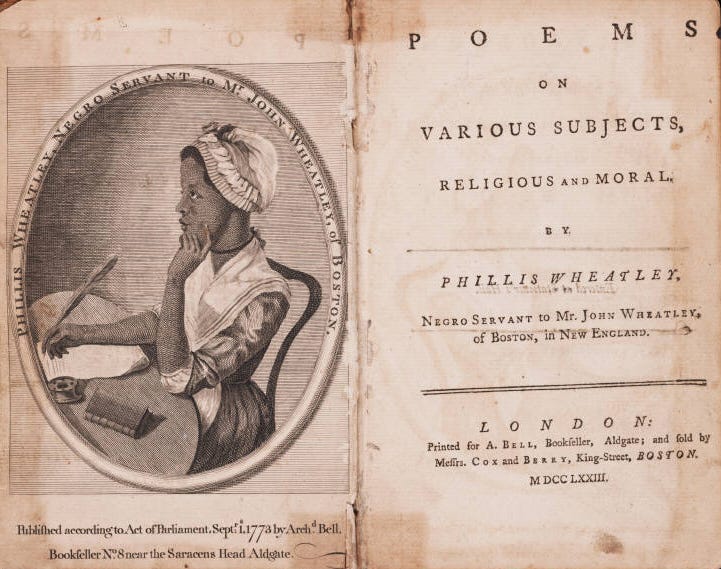
¶ Free verse. Phillis Wheatley was enslaved at the time her book, Poems on Various Subjects, Religious and Moral, was published in 1773. A brilliant and precocious child, she first published her work in a local paper when she was just thirteen years old. By 1773 she’d amassed quite a collection of verse, and the publication—the first book of poetry by an African American—garnered her international fame and led to her manumission in 1774.
I was excited to share Wheatley’s story in my new book, The Idea Machine; she plays a key role in one of my later chapters. She’s also still with us in surprising ways. Despite dying almost 250 years ago, Wheatley made news just a few years back when an Albany professor identified a hitherto unknown poem by her, tucked away in a Quaker commonplace book.
¶ Words to rile and console. “When poetry is a backwater it means times are O.K.,” says poet Jane Hirshfield. “When times are dire, that’s exactly when poetry is needed.” Hirshfield is speaking of society-wide moments of trouble. And poetry can certainly serve a protest function, as Hollis Robbins shows in her history of black sonnet writing. But poetry works when times are individually demanding as well.
Poet David Whyte explains why in a conversation with Psychology Today:
Poetry’s invitation is to bring the qualities we feel inside into conversation with what is occurring in the outside world. When those two come together, we experience it as beauty. There is always something beautiful about the truth in poetry, even when it’s difficult and frightening. Even in the asymmetry—when the world outside is beautiful, and, yet, we feel as if we’re dying inside. A poem extends the invitation to make the correspondence between inner and outer in that asymmetry. The poetic art is about living at the frontier between things.
You can’t rush that process, and it’s that process that can bring consolation amid tumult.
¶ A verse for adversity. “Can reading poems relieve the physiological symptoms of stress and anxiety?” asks science writer Marissa Grunes. Yes, as a matter of fact. “A series of studies have shown that reading rhythmic poetry can increase both your resting [heart rate variability] and cardio-respiratory synchronization,” both of which are correlated with “mental health, well-being, and even long-term resilience to stressors and trauma.”
So, if you’re feeling stressed, try dipping into a poem or two. Also, check out this video.
¶ An inheritance. I possess a few books of poetry once owned by my Grandpa Olson, including a collection of T.S. Eliot’s verse. He received the book as a Christmas gift in 1944, several years before my mother was born. Appropriately, a small black-and-white photo of a hippopotamus marks the poem, “The Hippopotamus.” There’s no date on the photo.
I received this one shortly after he passed away and his library was dispersed. I received his copy of A.E. Housman’s A Shropshire Lad at the same time.


Then there’s this collection of Thomas Wolfe poetry, A Stone, a Leaf, a Door. My grandpa loved Wolfe’s books. He kept this one beside his typewriter, according to my Aunt Chris. Grandpa included two stanzas from Wolfe in my grandmother’s funeral service, and I think the lines were from this volume, though I’ve long since lost the program to check.
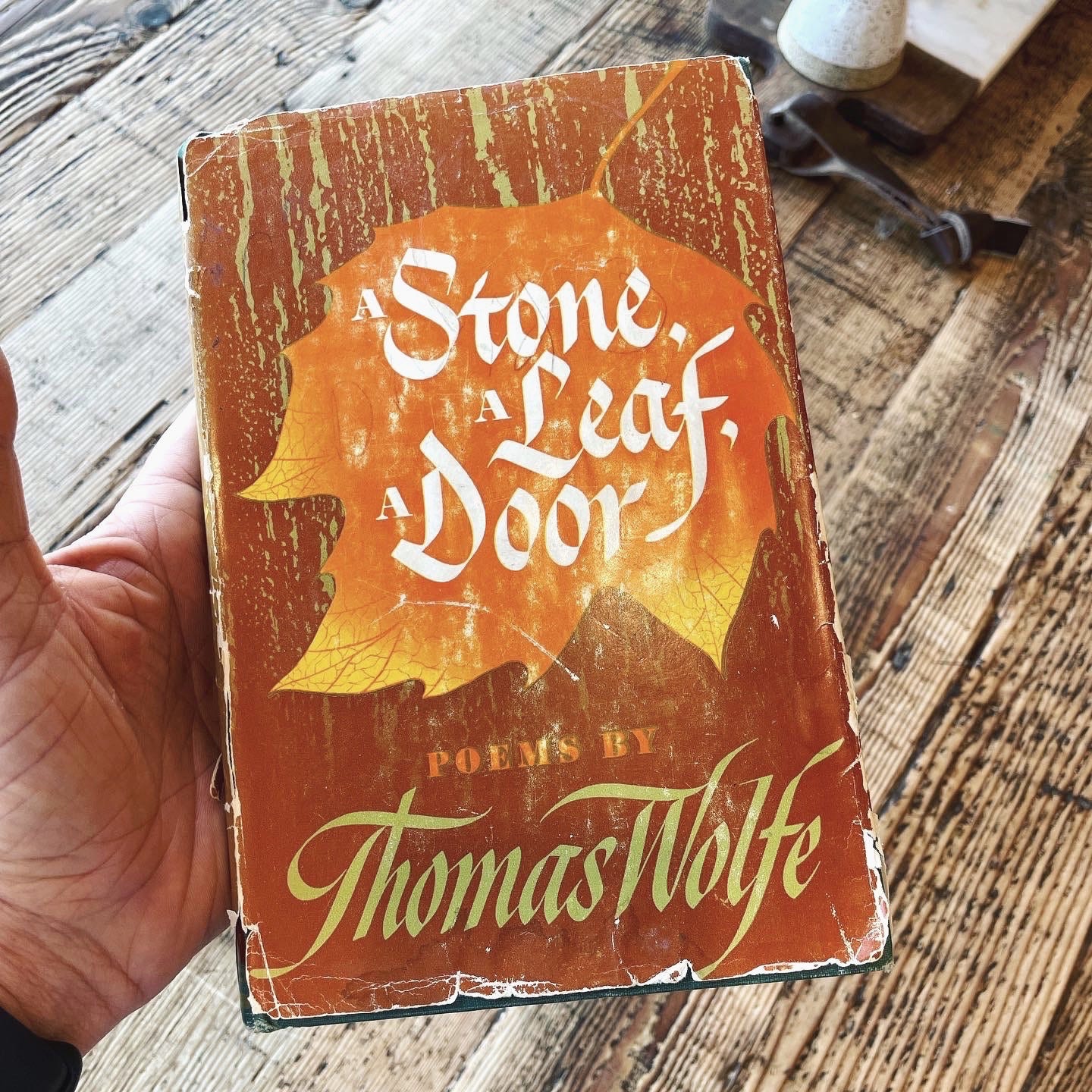
But wait, you say: Wolfe wrote novels, not poetry. True enough. A Stone, a Leaf, and a Door was published posthumously in 1945 (Wolfe died in 1938) and features passages from three posthumously published novels rendered in verse: The Web and the Rock, You Can’t Go Home Again, and The Hills Beyond. Many thanks to my mom and aunt for conspiring to get me this precious volume.
¶ If memory serves. My grandpa could quote line after line of poetry for hours on end. I don’t know where he kept it all or how those neurons followed the crumb trail back to his reading, but his memory was phenomenal. And he’d do it spontaneously—as context prompted.
Grandpa owned seven acres in Fair Oaks, California, with several orchards, gardens, and patches of this or that growing here and there. As we’d work among the trees or digging up potatoes, something might trigger a recital: a bee, a butterfly, a shovel, almost didn’t matter. He had a poem for almost anything.
In his conversation with Russ Roberts, Zach Weinersmith recommends memorization:
I think is extremely valuable. . . . In order to memorize, you have to make sense of it. . . . It’s very hard to remember something that's just gibberish. It would be very hard to remember a 100 lines of nonsense. But, like, 100 lines of the Iliad is quite doable. . . . When you commit it to memory, it’s like putting a little room in your personality.
But isn’t memorizing poetry hard? Not according ot Weinersmith. “It’s very easy to memorize a lot of verses,” he says. “You’ll surprise yourself. If you start trying to memorize something and just add a line a day, you would think would top out somewhere. And, it just becomes very natural. It’s part of your working knowledge.”
¶ Along the same lines. Henry Oliver offers six practical tips for memorization, and if you can find the videos of him reciting from memory—something Seth Wieck does as well—it’s worth it.
¶ Smoking Dante. I started this post with a podcast and will end it with another, this one a moment from Robert Harrison’s wonderful show Entitled Opinions. Back in 2006 (incidentally, the same year EconTalk started), Harrison interviewed Seth Lerer on the history of the book—an early prod in my own interest in the subject and which eventually helped birth The Idea Machine.
While talking about the orality and later materiality of the Epic of Gilgamesh and the Homeric epics, Harrison spun out a delightful tangent about their mutual friend and colleague Ian Watt:
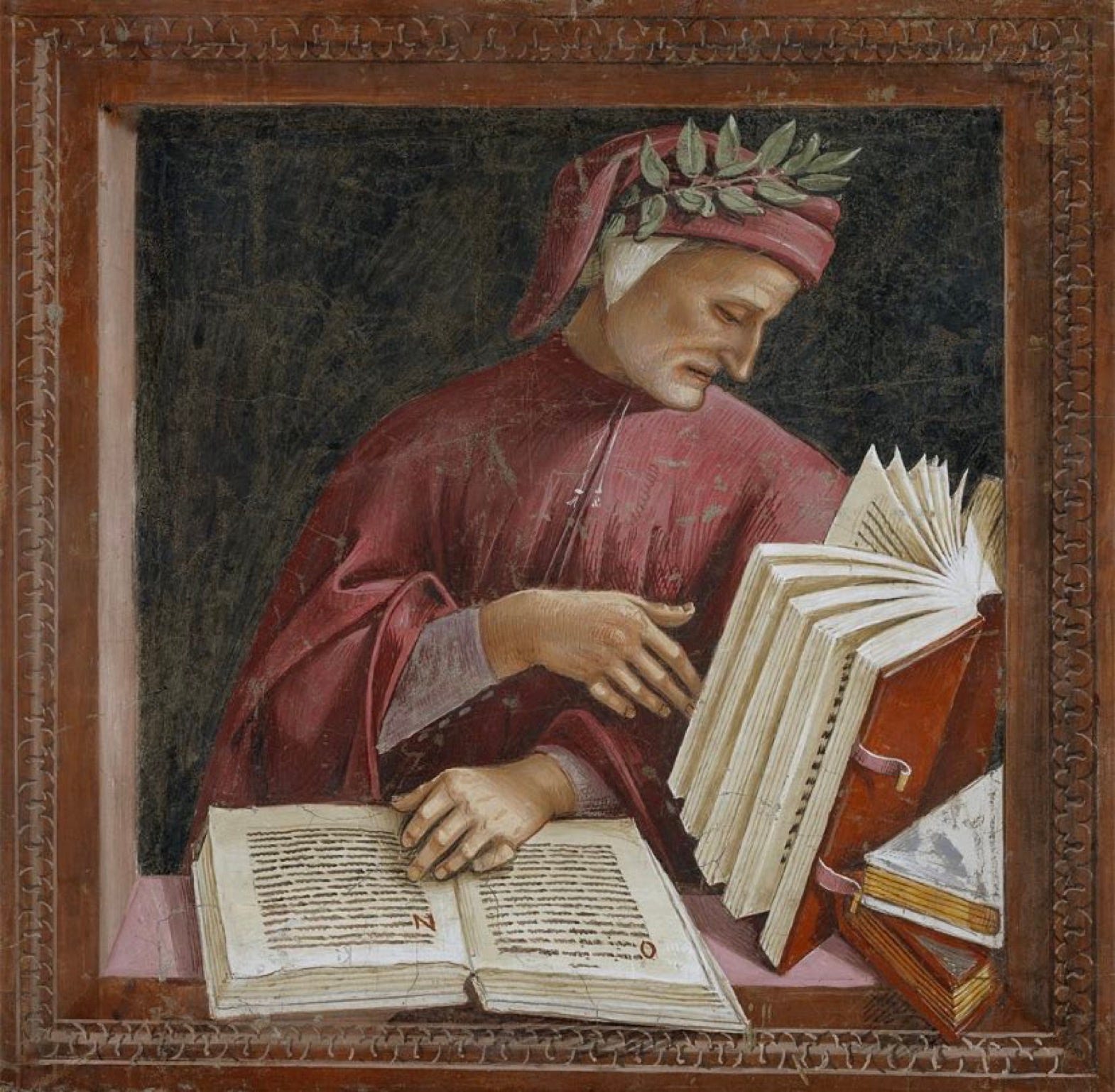
He, during the Second World War, was imprisoned for a very long time, and the prisoners in their cells, they had tobacco, but they didn’t have paper. And they had an edition of the Divine Comedy in very rarefied paper. But they were all literate and lovers of literature. So what they would do is each of them would memorize a canto by heart, and then they would rip off the pages and roll their tobacco in them. So when you asked Ian Watt, ”So, Ian, you know Dante pretty well?” he says, “Know him? I’ve smoked him.”
¶ Fakeout—for the children. I lied when I said I was wrapping up. I just recalled a wonderful event hosted at the American Enterprise Institute, organized by Joseph Bottum in 2005, and packed with luminaries like Christopher Hitchens and Dana Gioia (Ted Gioia’s prolifically poetical brother). Ostensibly, these and others gathered to discuss and read children’s poetry, but there’s more to it, and it’s a delight from beginning to end.
It also occurs to me that the public’s backsliding on poetry is really just a subset in the broader crisis in reading. And we know the only solution for that starts with parents reading to their kids. Thankfully, the panel offers a pocketful to try on for you and yours.
¶ Favorite poems or poets? I’d love to hear if you have any favorite poems or poets. Please share those in the comments.
Thanks for reading! If you enjoyed this post, please hit the ❤️ below and share it with your friends (or anyone else who appreciates some rhyme with their reason).
Not a subscriber? Take a moment and sign up. I’ll send you my top-fifteen quotes about books and reading. Thanks again!
And see also my book about books, The Idea Machine. You’ll see why poet Phillis Wheatley stands out as an essential figure in the American story👇


It may seem silly, but I love A.A. Milnes book of verse for children, Now I am Six. I’ve given a copy of this to all my kids upon the occasion of the birth of their first child. The poems are sweetly beautiful, and also full of a gentle sly humor. I still have a copy in my own library, too.
I had an Aunt who loved reading and she made sure her kids had many children’s books. When her own kids outgrew them, they were passed along to my sister and I. How I wish I still had them all! My mom was not sentimental, and upon my growing up got rid of many beloved tales and anthologies.
The memories of many of them live on.
Really enjoyed this whole stack today. It was soothing to the soul.
Why would Psalm 23 relish the benefit of "He makes me lie down in green pastures"? Would it not be more fun to graze? Or, to organize a pick-up baseball game? Who would stomach a half hour of merely lying down? I think I know the answer: do it for your digestion. Take time to chew your cud.