
Bookish Diversions: How the Pros Do It
John Grisham, Karl Ove Knausgaard, Wilfred Sheed, Joan Didion, and Edgar Allan Poe

My writing routine is roughly this: Write whenever I’m not reading or my family doesn’t need me. When is that? The small hours of the morning, the wee hours of the night, and random bits of time on the weekend. Naomi’s in quiet time? Excellent, I can knock out a few paragraphs.
John Grisham on the other hand. . . “He goes to his office on his central Virginia farm at 7 a.m.,” according to a recent Wall Street Journal profile,
fueled by the same brand of coffee, and writes until 11 a.m., five days a week. It’s a routine he started four decades ago as a young lawyer, writing before his actual workday began. Grisham, now 70 years old, still finds the morning hours his most productive.
Having sold a bazillion books, Grisham can write whenever and however he likes, and apparently he likes doing it like he’s always done it.
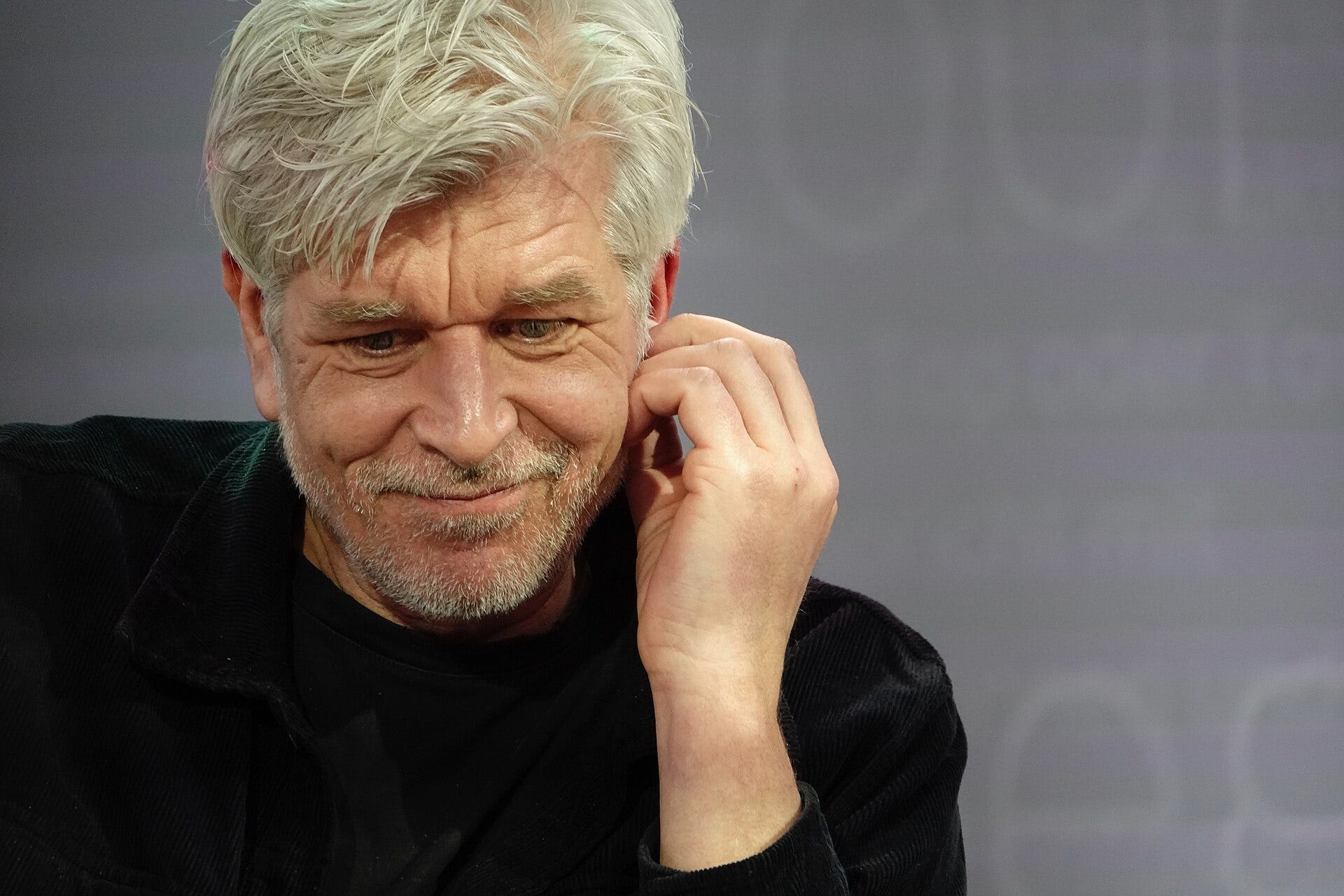
¶ His struggle in the library. I find the personal lives of authors fascinating, perhaps not all authors, but certainly many. Part of the joy for me is learning how they work. And what better way to understand how a writer works than a tour of their library? A chef has a pantry; a writer has a library. The Washington Post recently took a peak at Karl Ove Knausgaard’s book trove and shared some illuminating details about how the Norwegian author makes it all happen.
“This is basically everything I’m interested in,” Knausgaard told Sophia Nguyen, looking at the array of books shelved behind his desk. For Knausgaard a new idea for a novel often starts at the bookstore. He rummages around until an idea piques his interest. His most recent series, the Morning Star horror novels, contain storylines involving a black metal band, a detective, Shakespeare, immortality, and a nineteenth-century Russian crank who thinks he can resurrect everyone ever born. Related research lines the walls, along with everything else from Proust and Homer to Walter Benjamin and a blue-covered collection of Kierkegaard with more than fifty volumes. It’s all fodder—though he admits he’ll likely wait to retire before bingeing the melancholy Dane.
The Paris Review interviewed Knausgaard more than a decade ago now, during the middle days of the fame generated by his six-part autobiographical novel, My Struggle. The books were originally published in Norway between 2009 and 2011 and migrated to English between 2012 and 2018.
Asked about his diaries, Knausgaard said he burnt them in his twenties. “I was so embarrassed, I couldn’t stand it,” he said. “It’s the same with Min Kamp [My Struggle—which, again, made him famous at home and abroad], I can’t stand it. If I could I would burn that, too, but there are too many prints, so it’s impossible.”
Torch the book that cemented his fame? Life keeps changing and so must a writer’s work, he said. “If you want to write close to life, you have to break the forms you’ve used, which means that you constantly have the feeling of writing the first novel, for the first time, which means that you do not know how to write. All good writers have that in common, they do not know how to write.”
He echoed that thought in 2018 when speaking with Joshua Rothman of the New Yorker. Had writing My Struggle affected his approach to his craft? “I have no idea what craft is,” Knausgaard answered.
—and I have no idea what writing is. That’s true! The more I write, the less I know about what it is that makes something good. I normally think, you know, This is complete shit. And I send it to my editor or someone else, and sometimes they say, “No, this is alive.” Maybe two or three months later I can see that it was good. But I don’t know why. Really, I’ve developed a method, which is being in the present, sitting here, drinking some coffee, thinking of a memory. That’s the only way I know how to write. I don’t know how to write a novel. But I know that, if I just try, something might happen.
¶ Books happen to us. I’ve got a Wilfred Sheed novel sitting on my shelf I’m hoping to get to eventually, but Kevin Fenton opened my eyes to much more than what’s probably not the best book I’ll read this year. No, Sheed’s criticism is evidently where it’s at.
As a teen, Fenton found a volume of Sheed’s essays, The Good Word and Other Words, and gave himself an entire literary education between page one and the close. When he reread it as sixty-year-old man, he said he cried. I jumped on Alibris and bought a copy immediately.
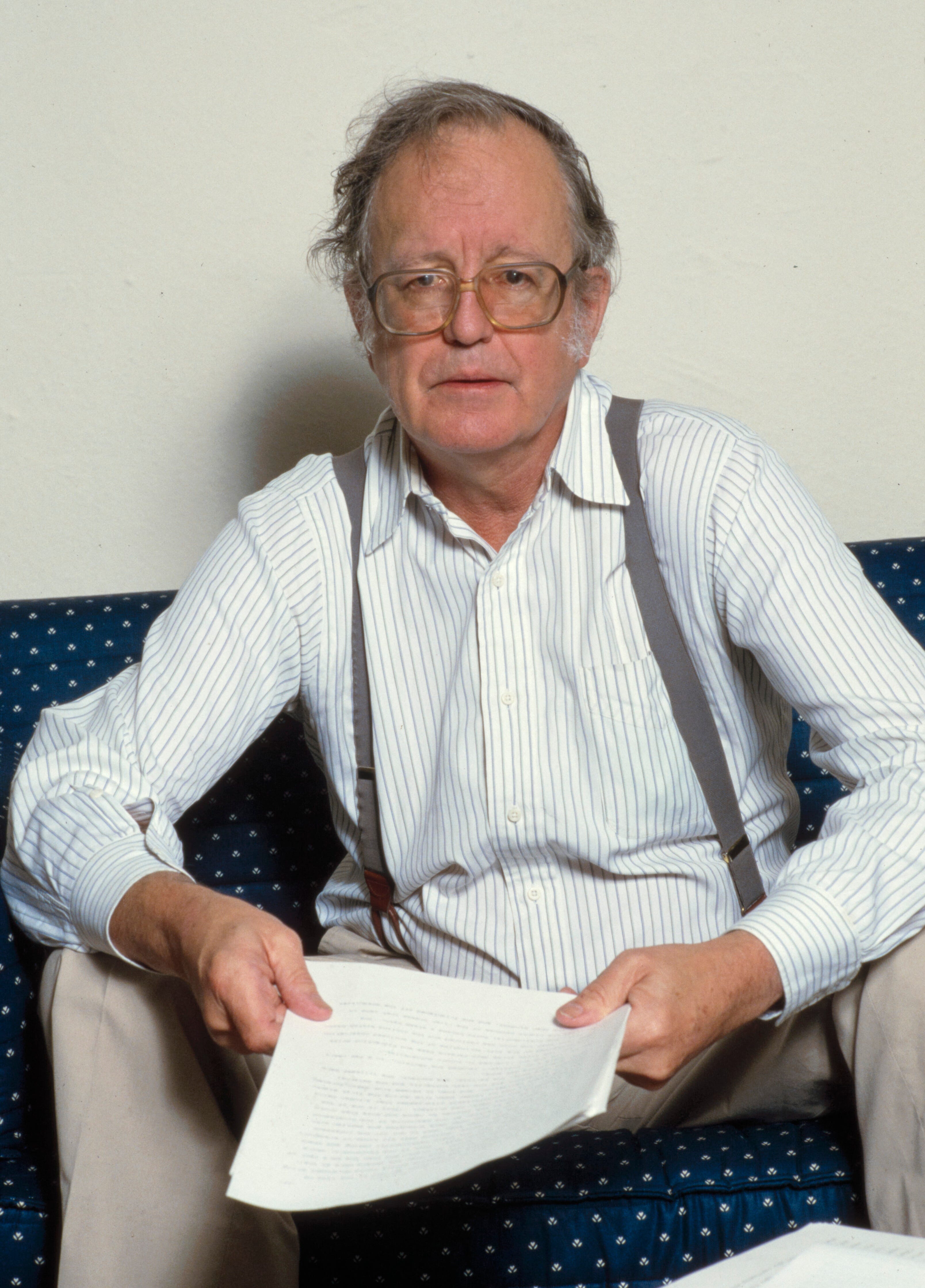
There’s a lot of material between “trash and Shakespeare,” as Sheed would say, and he seemed to have a good sense of how to navigate it all. Everything about Fenton’s essay warrants your eyeballs, but one thing (of many things) that struck me was Sheed’s understanding of what reading is.
As a reader, Sheed said, “books are events that happened to me.” This goes to C.S. Lewis’s point about the literary and unliterary I covered Saturday: the literary receive a book; they submit to the author’s vision with the hope of seeing what the author sees. The act of reviewing is thus, in a sense, a form of memoir. The implication for Sheed’s work? “His fellow authors,” says Fenton, “were not the producers of a consumer product but characters in a story he was writing.”
¶ Lost in the image. Like a train wreck, Knausgaard’s self-revelation in My Struggle keeps people’s eyes welded to the page. The more he shares of himself, the more the reader questions their own self. As social creatures, we can’t help but pingpong our attentions between the character and ourselves. Words do that.
But increasingly, as Henry Reichman argues in the Hedgehog Review, there’s a trend toward the image over the words. He takes up the curious case of Joan Didion. I’ve loved reading Didion over the last few years, thanks to the prodding of Erin Marie Miller. There’s so much there! But you can always reduce it to nearly nothing—or nothing more than a few quotes and photos that make easy sharing on the socials.
“Much of it is understandable on an aesthetic level,” says Reichman, “with the suave way she looks holding a cigarette in her Malibu home, the sly look on her face when photographed leaning against a white Corvette. But these photos tell us very little about the books she wrote that led to such poses. . . .”
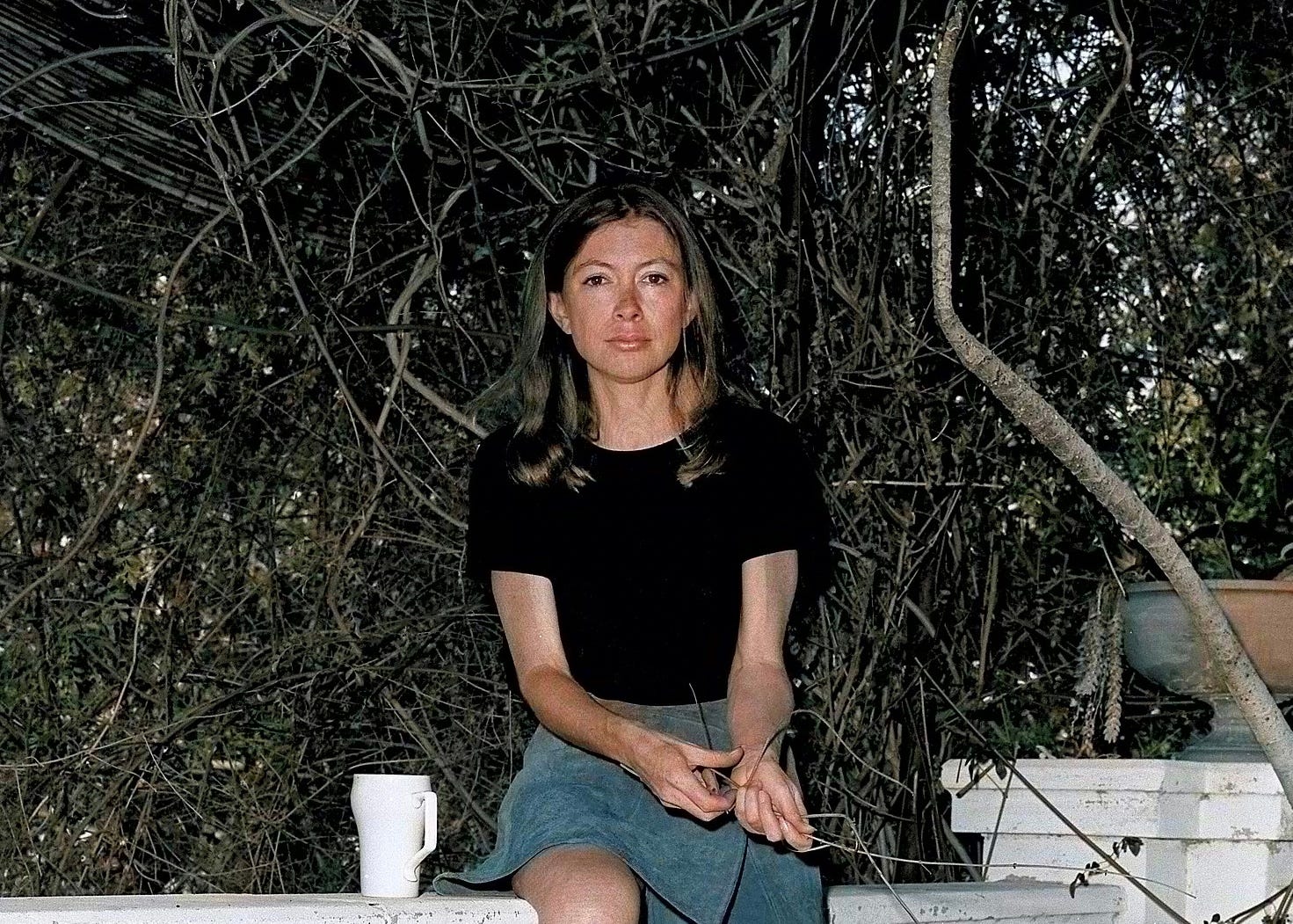
Reichman shows how this approach to “It” authors is everywhere, their images reduced to memes the user can imbue with whatever they desire, regardless of how that use aligns with the work of the author—and in Didion’s case, usually not well.
Whatever pleasure or illumination the texts might bring to readers is shown to be secondary to what the authors’ image might inspire us to be. . . . The reduction of Didion to a pretty face smoking a cigarette in front of a vehicle might be aesthetically alluring, but it’s an exercise that works against the hardness in women that she prized and that she cultivated in herself.
If you’re interested in more of the substance of Didion, at least as refracted through some essays of yours truly, here’s a taste of what she was up to:
Joan Didion Maps the Californian Dream. A look at her explorations of the history and mythos of California. As a Californian trying to understand the state of my birth, I’ve found her work invaluable.
Inside the Writerly Life of Joan Didion. Didion was first and foremost a writer and a very skilled one. She talked about it sometimes, and so did the people who knew her early on—back at the student newspaper.
Bookish Diversions: Not Done with Didion. Didion’s presence lives on after her 2021 death, sometimes in complicated ways she might well have disapproved of.
Narrative Control: How Stories Dominate Our Lives. She’s famous for her prose, but Didion also wrote movie screenplays. Alissa Wilkinson’s We Tell Ourselves Stories has the scoop. And it’s out this month in paperback!
¶ Modern anxieties, back then. Along with the library, an author’s social, economic, and work context provides food for the imagination. Edgar Allan Poe not only penned poems, stories, and criticism, but also served as a magazine editor and typesetter. He began working at the dawn of industrial printing with rotary presses powered by steam, flinging off thousands of copies of whatever was needed faster than any device in history—at least to that point.
His world was, says Danny Robb, “one of rapid technological change. Steam engines powered factories and trains, while Charles Babbage’s Difference Engine mechanized calculation. Journalism was not far behind—the steam press and new copying techniques powered the rise of magazines.”
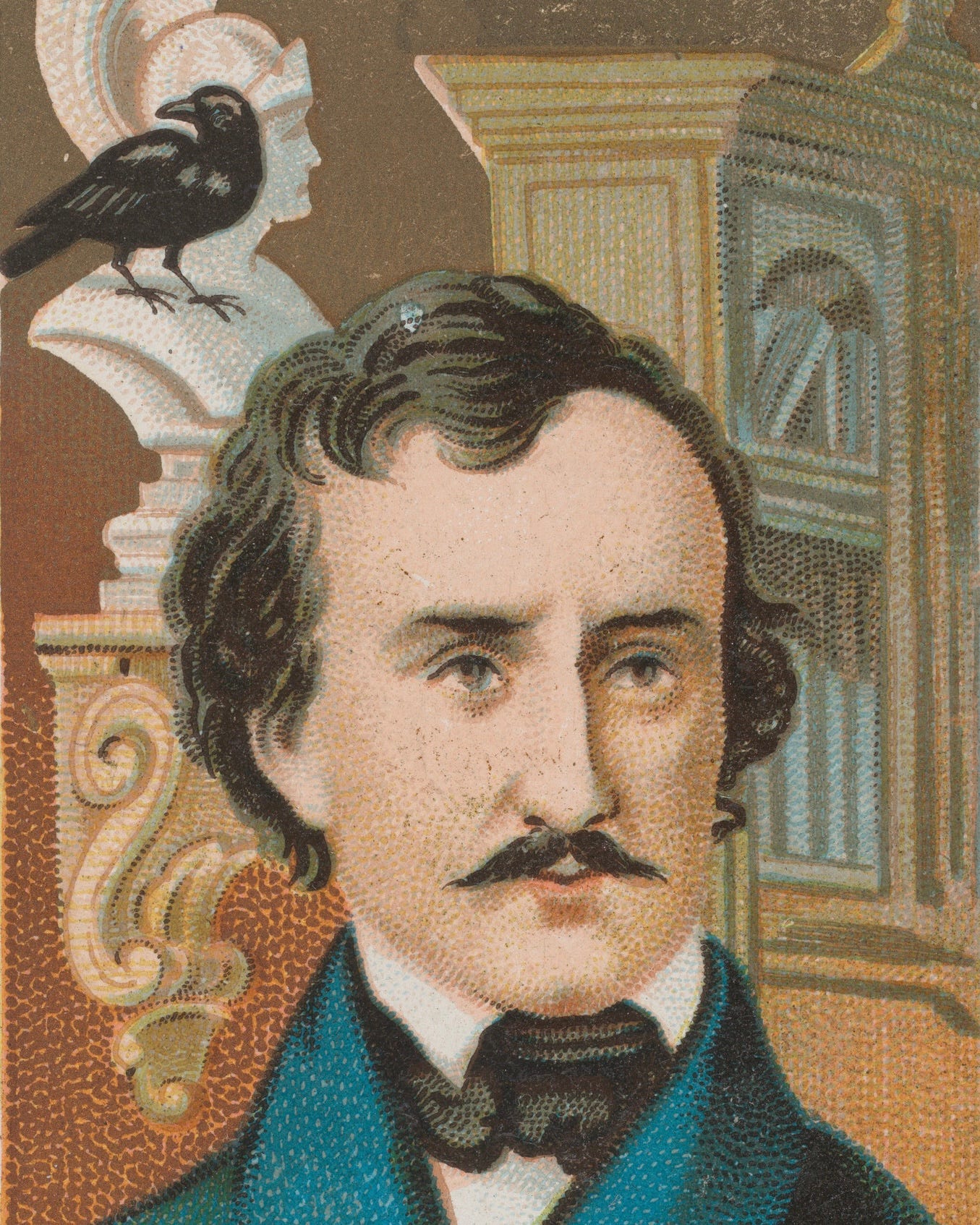
Unsurprisingly, the evolving professional environment not only influenced his writing approach but also its content. “The whole tendency of the age is Magazine-ward,” said Poe, who coined the term magazinist to describe himself (sadly, it never caught on). “We now demand the light artillery of the intellect; we need the curt, the condensed, the pointed, the readily diffused—in place of the verbose, the detailed, the voluminous, the inaccessible.” One wonders what he’d say about today’s media. Poe was a savage critic; he probably would have been murder on Substack. (Yes, I’ll take the annual subscription.)
Robb points to a paper by John Tresch, “’The Potent Magic of Verisimilitude’: Edgar Allan Poe within the Mechanical Age.” Says Tresch,
The image of the machine was as central to Poe’s reception and writings as it was in public discussions of progress in the mid-1800s. The machine was a focal point for anxieties surrounding the unstable distinction between the machine and the human, the dead and the living, and the inauthentic versus the factual. Poe’s work took the machine as his subject and is inscribed within a literary practice thoroughly permeated by a recently industrialized mode of production. He used this combination to exploit unsettled anxieties about human progress and mechanization in an era overshadowed by the Enlightenment.
Alas, Poe died in 1849—a little early for social media and large language models. I’d love to see whatever he’d write about those, and then ask myself: What does it say about him?
Thanks for reading! If you enjoyed this post, please hit the ❤️ below, restack, and share it with your friends (especially if they love digging into the lives of authors).
Not a subscriber? Take a moment and sign up. It’s free for now, and I’ll send you my top-fifteen quotes about books and reading. Thanks again!
While you’re here, check out 👇


