
Before You Panic About That Atlantic Reading Piece
It’s Easy to Fear the Future When We Romanticize the Past

“In 1958,” Rose Horowitch informs us in a lengthy and grim prognosis of reading habits published in the Atlantic, “the English translation of Boris Pasternak’s Doctor Zhivago was the best-selling novel of the year.” Meanwhile, she says, “last year’s top-selling novel was Sunrise on the Reaping, the latest in the Hunger Games young-adult series.”
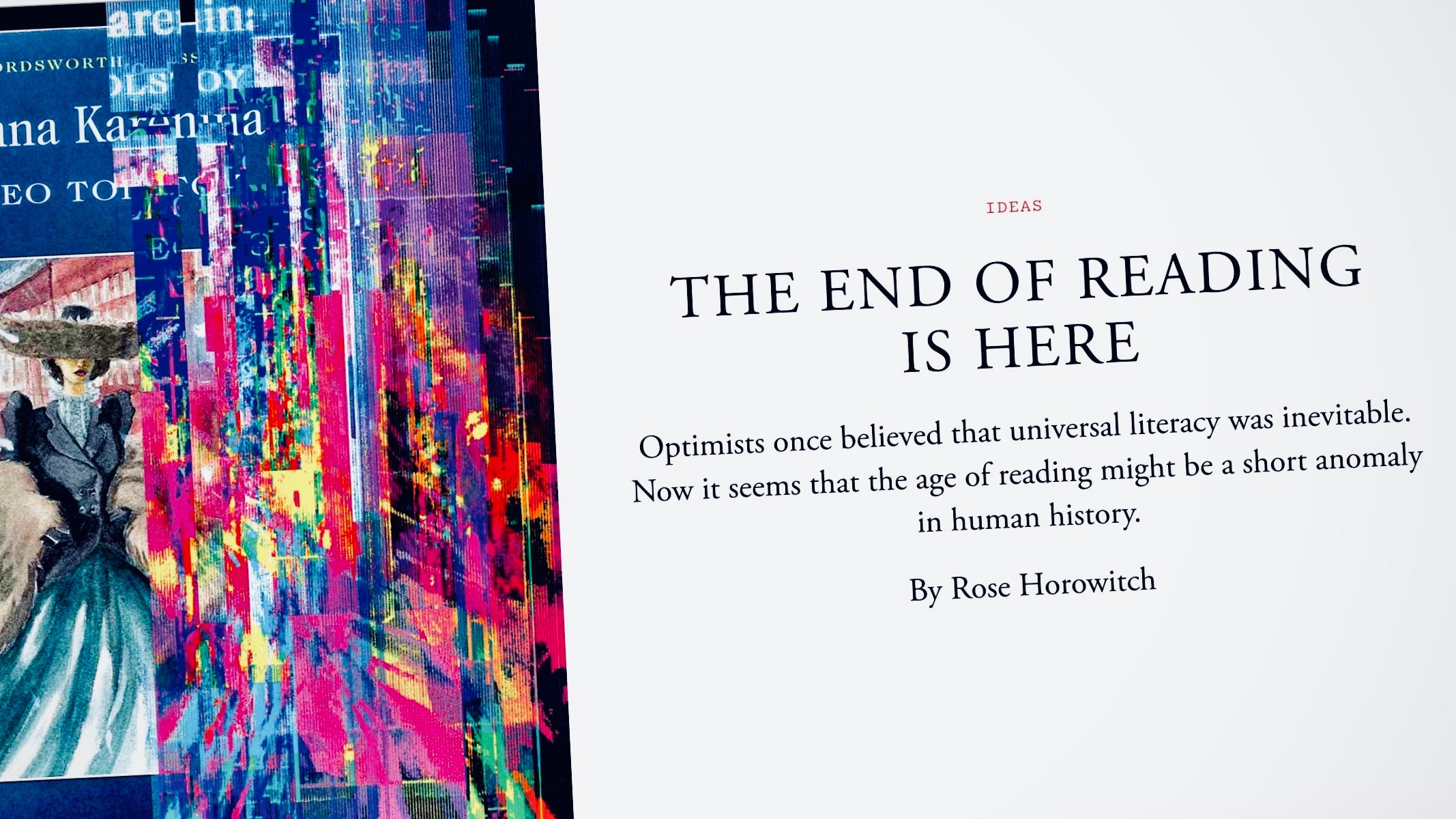
The point of the comparison? As a society, we once engaged with serious literature! We read the lofty and the literary, the rigorous and demanding. Today, we settle for the puerile and simplistic.
We are, she says in a word you can’t escape these days, “postliterate.” The shift toward shorter, simpler prose is, Horowitch contends, a symptom of an accelerating, culture-wide retreat from sustained reading itself—and, with it, from the focused attention, critical thinking, and independent judgment that reading nurtures and our society requires to sustain itself.
We’re talking civilizational disaster here, folks.
Still, resist the impulse to leap into traffic. I’ve written about the reading crisis several times and share many of Horowitch’s concerns. Who wouldn’t? But there are a few things in this piece that rankle, starting with Doctor Zhivago.
The Height of Literary Taste?
The example comes just eight paragraphs into the piece and sets the tone for much of what follows. Horowitch employs it to establish a historical baseline. We used to read X (hurray, us), now we read Y (we’re so pathetic). Doctor Zhivago establishes the “before” picture against which she measures everything that follows: shorter prose, weaker reading scores, reduced stamina, smartphones, social media, generative AI, even the rise of Donald Trump.
But the comparison is misleading: The idea everyone including your Grandma Pattie was reading this sort of literature in the past paints a bogus picture.
Doctor Zhivago was a Cold War fluke. The book was banned in the Soviet Union, published abroad, and had CIA support because the agency thought Pasternak’s message could undermine the commies. The agency, according to documents declassified in 2014, hoped for “a maximum number of foreign editions, for maximum free world distribution and acclaim and consideration for such honor as the Nobel prize.”
The CIA did not, so far as we know, juice U.S. sales. It didn’t need to. In part because of the agency’s promotion abroad, Pasternak won the Nobel Prize in Literature in 1958, the Soviets forced him to refuse the accolade, and the publicity firestorm drove insane sales. Pasternak’s U.S. publisher, Pantheon, printed just 4,000 copies at the start. But because of the prize and the ensuing controversy, “‘Doctor Zhivago’ went on to sell a million copies in hardcover and five million more in paperback,” as James Surowiecki recounts.
So, yes: massive bestseller and well deserved. But, no: it says nothing about the standard reading tastes of the average American in the 1950s. Which raises the question: What was Grandma Pattie actually reading?
Grandma Pattie’s Bookshelf
I doubt it’ll cause you to blush, but she was probably reading Grace Metalious’s Peyton Place, the sensational 1956 novel about adultery, incest, abortion, and murder. One newspaper publisher called it “literary sewage.”
Readers lapped it up. Alice Payne Hackett, a Publishers Weekly editor who compiled decades’ worth of sales in her 1967 book, 70 Years of Best Sellers, 1895–1965, counted 600,000 in hardcover sales and 9.3 million paperback by 1965. Later estimates put lifetime sales around 12 million, but the contemporaneous number—almost 10 million within a decade—ranks it as one of the most successful novels in U.S. history. Readers wanted more, and Metalious delivered; her 1959 followup, Return to Peyton Place, sold another 4.5 million.
What about Grandpa Joe? Along with adventure pulps and paperback westerns purchased at the drugstore, he was likely reading Mickey Spillane’s Mike Hammer detective novels—high culture stuff like Kiss Me, Deadly. These little crime novels proved hot commodities: Spillane’s The Long Wait moved over three million copies in one week.
The literary establishment loathed it all. Malcolm Cowley called Mike Hammer a “homicidal paranoiac.” Time dubbed Spillane a “semiliterate fantasist of violence and squalor” whose books were “sexy drivel.” Midcentury readers didn’t care. As of Hackett’s counting, Spillane had seven novels that all sold four million or more. His twenty-six novels, all told, sold more than 200 million copies. Nobody loved it but the people.
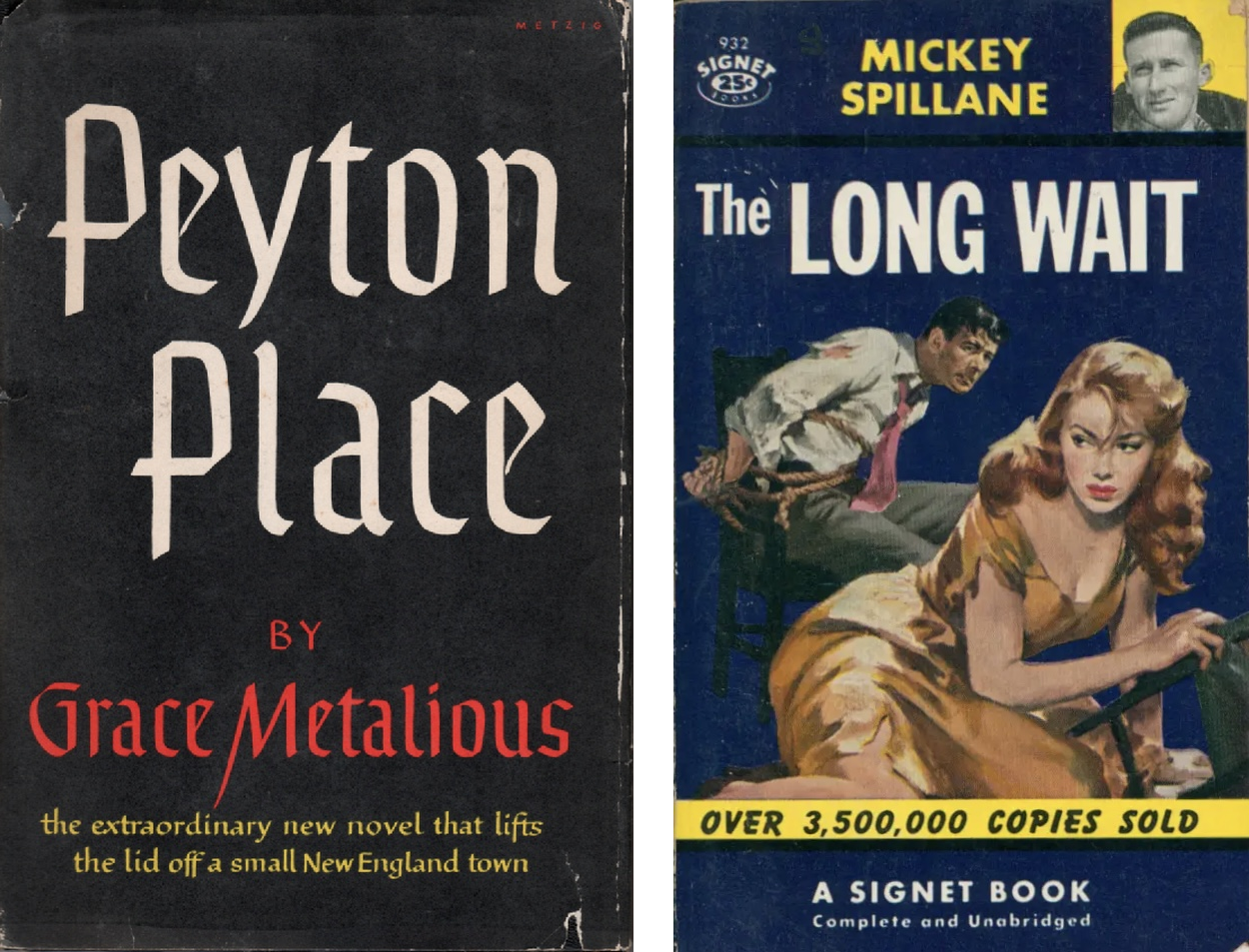
It’s fair to say the success of Doctor Zhivago was a wild outlier. Hackett’s survey shows plenty of good stuff—and also gobs of trash and mediocrity we would wince to call literature. But what Horowitch gives us is the height of literary taste and sophistication compared to, well, The Hunger Games, our generation’s version of drugstore pulps. The comparison falls apart if you swap out Pasternak for Metalious or Spillane; it might even skew the other direction.
Curated by Posterity
Undoubtedly bursting with good intentions, Horowitch has nonetheless fallen headlong for the fallacy of survivor bias. Posterity is a ruthless editor, and we forget how messy the first draft ever was once it’s wielded its red pen.
When Time reviewed Hackett’s book in 1968, the reviewer noticed the same dynamic already at work. We remember the decade of the 1920s bubbling over with such classics as:
F. Scott Fitzgerald’s The Great Gatsby
William Faulkner’s The Sound and the Fury
Thomas Wolfe’s Look Homeward, Angel
Marcel Proust’s Swann’s Way
E.M. Forster’s A Passage to India
Theodore Dreiser’s An American Tragedy
—and many others that regularly find slots on 100-best novels lists nowadays.
But Hackett’s tally of the sales figures shows none of these books ranked high when they came out. By the sixties, it was clear they were literary triumphs. When first published, however, they were avalanched by lesser books of meager merit that nobody remembers today. The average person might still know megabestselling western author Zane Grey—but Harold Bell Wright, Edith M. Hull, or A. Hamilton Gibbs? Yeah, me neither.
Time compared the process to Gresham’s Law, the principle in economics that bad money drives out good, positing a hopeful amendment: “that the bad verbal coinage drives out the good, but only for a while, after which sound currency reasserts its values.” Thankfully for us, living all these years later, that’s exactly what happens. It’s also exactly why Horowitch didn’t say anything about Mickey Spillane, even though he was far more popular than Pasternak.
But in the meantime, says Time, “these dolorous statistics may make one skeptical of universal literacy.” Which is hilarious because Time’s reviewer scooped Horowitch on her own thesis by almost six decades. The difference is the reviewer was making a joke, whereas Horowitch doesn’t seem to realize she’s comparing the present to a romanticized past.
When posterity employs its red pen, it preserves Pasternak, Proust, Faulkner, and Fitzgerald and crosses out disposable romance, crime, adventure, self-help, and all the rest. Bye, bye, Spillane! Decades later and the survivors look like the prevailing culture, but only if we discount everything else actually happening at the time.
That’s what Horowitch does.
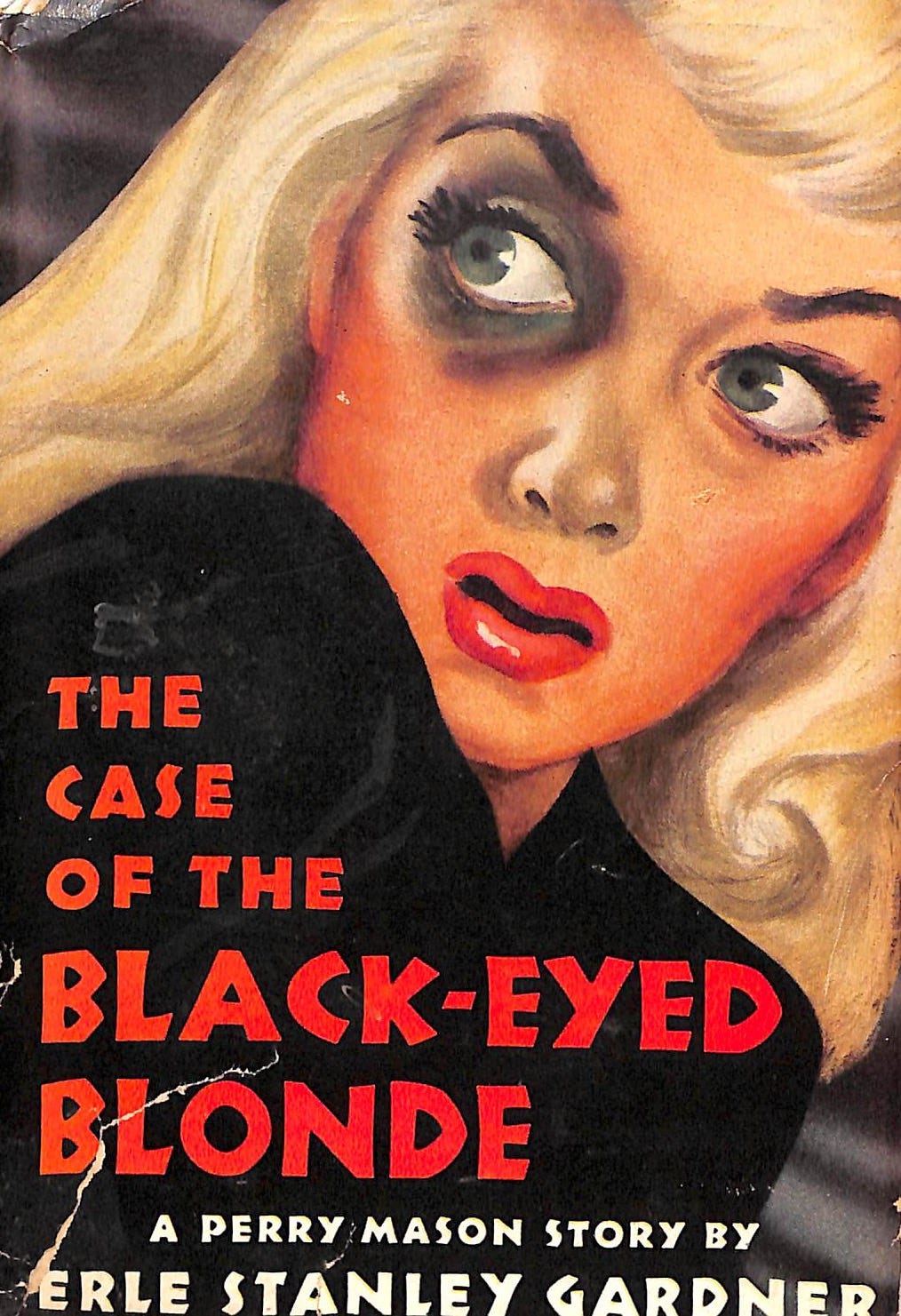
Horowitch’s midcentury America is a country crammed with newspaper-reading commuters, literary novelists celebrated on the covers of national magazines, and people settling into highbrow fiction like a luxurious bath each evening. All that existed, but so did readers riffling Erle Stanley Gardner’s latest novel (he wrote more than a hundred) before trashing it like a candy wrapper.
In 1940 just 24 percent of American adults had finished high school. That number bumps to a not-so-whopping 41 percent by 1960, according to the U.S. Census Bureau. By then only 8 percent had completed four years of college. Such statistics should caution us that Horowitch’s celebrated literate public of the 1950s was considerably narrower than she lets on. It included intellectuals and autodidacts (read The Autobiography of Malcolm X for one of the greats), and also millions who read nothing, read little, read badly, or read mainly to kill time—not deliberate on the burning questions of the era.
The End of Reading, Again
This sort of skewed picture of the past skews Horowitch’s understanding of the present, as well as her fears for the future. She credits print culture with its highest achievements (Boris Pasternak and James Baldwin, analytical thought and political deliberation) and then charges digital culture with its worst (TikTok slop, conspiracy memes, AI deskilling, and Donald Trump’s social-media posts). That’s a fake contest.
Yes, print produced everything from the Federalist Papers to the Pentagon Papers; it also produced yellow journalism, eugenics and race science, libel, red scares, and oceans of formula fiction arguably worse than the dregs of a discount streaming service. Digital media produce brain rot; they also distribute serious newsletters (hello, Substack!), digitized archives, research papers, online courses and how-tos, public-domain libraries, and more—including the very long article in which Horowitch announces the end of serious reading.
Horowitch isn’t totally blind to the past. She admits there have been prior scares about the future of reading and all that entails, citing a piece in the Atlantic itself 126 years ago. It goes back even further. Thomas Jefferson, she points out, was antsy about women’s brains going to mush after reading novels.
“Perhaps,” says Horowitch, “126 years from now, this essay will seem like the latest such exercise in hand-wringing.” Odds are good.
Not for a minute do I discount the troubling data in Horowitch’s jeremiad. I do, on the other hand, have serious reservations about how she reads some of it and the conclusions she draws. We’ve been anxious about cognitive collapse for ages and foretelling our doom for decades. It’s easy to do when you romanticize the past.
Thank you for reading! If you enjoyed this post, please hit the ❤️ below, 💬 discuss, and share it with your friends—or anyone you know still reading Mickey Spillane.
Not a subscriber? Take a moment and sign up. Free subscribers get two-week access to all new posts. Paid subscribers get access to the full archive, going back to 2022, plus an exclusive member chat and monthly member calls.
While you’re here, don’t miss 👇


Thanks for writing this, Joel. As a bookseller, I often want to invite the panicking naysayers to come into the shop on a Saturday and see all the children reading in the various spots around the store, the browsers making their way through our shelves, and listen in on the opinionated and interesting conversations taking place around contemporary books. Of course our attention spans are changing! And of course our shop is but a small sample size. But if our little bookshop can thrive in this small city, there remains more than a spark of literary interest in the world.
Excellent points! I also have to wonder how many people who bought Dr Zhivago actually read it (as with The Satanic Verses 25 years later!)
Also, I think the Hunger Games books are actually quite good (though obviously not in classics territory).