
Wrestling Coach Bets on Tolstoy and Dante to Save the Classics—and Young Men
Joshua D. Phillips Blends Heavy Lifts and Epic Lit to Battle the Reading Crisis

What’s the connection between weightlifting, wrestling, and the Western literary canon? Say what you like about X, the social media platform formerly known as Twitter, but you meet a lot of fascinating people there. That’s how my paths crossed with Joshua D. Phillips, a wrestling coach and college professor who posts about Tolstoy, Shakespeare, and Dante.
As a Penn State communications professor, he focuses on rhetoric, intercultural communication, media, race, sports, poverty, and gender violence. As a wrestling coach, he focuses on shaping the character of young men. The link? Great books.
Phillips holds a Ph.D. in speech communication from Southern Illinois University, with a graduate certificate in Women’s Studies. His publications include the book Homeless: Narratives from the Streets (McFarland, 2016). He is married and a father, emphasizing a balanced life of intellectual and physical pursuits.
I wanted to talk with him about the classics, the reading crisis in education, and the intersection of literature with athletics and masculinity.
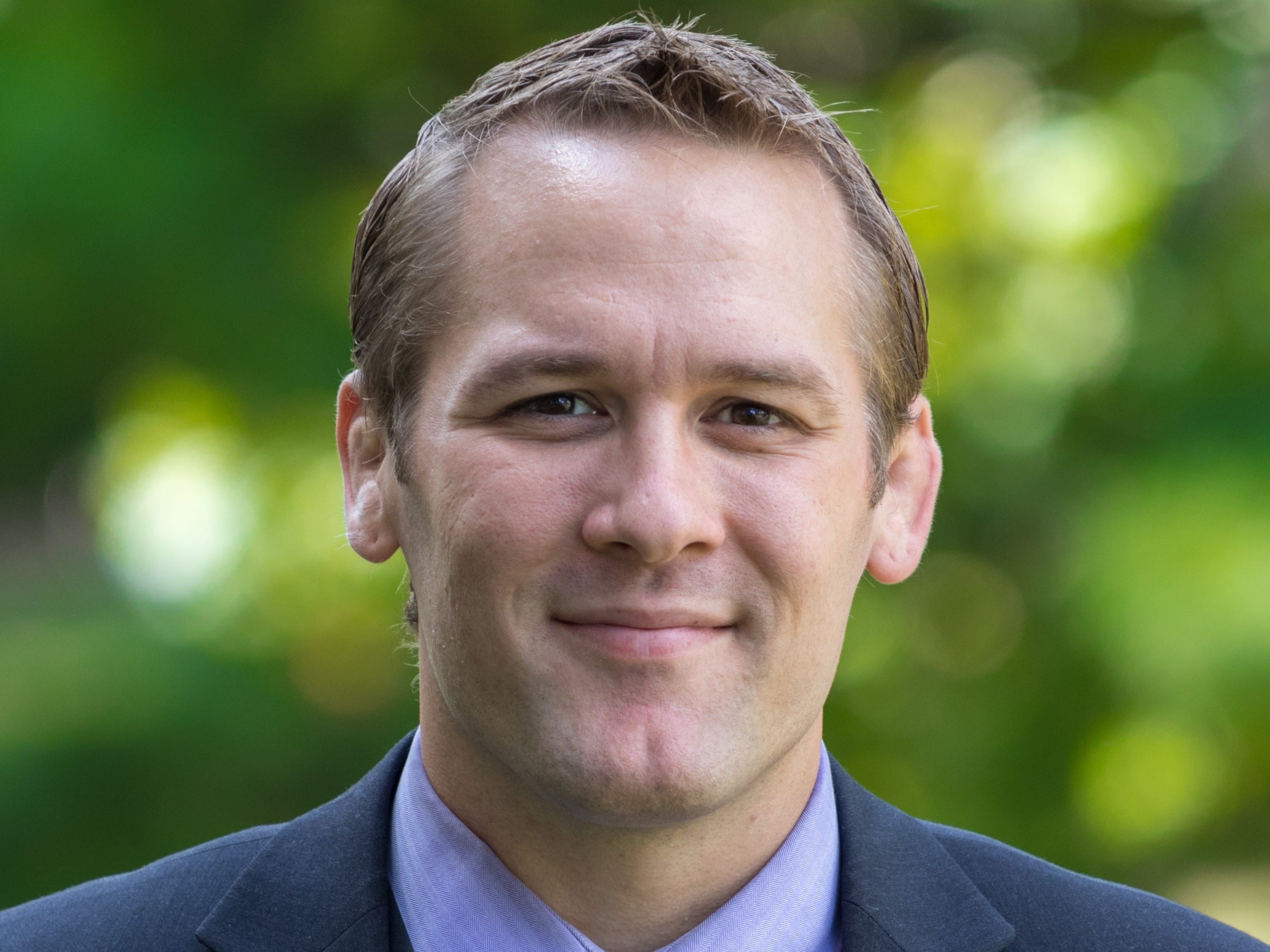
You’re an associate head coach for a high-school wrestling program who simultaneously serves as a college communications professor and posts on X about Tolstoy. How did those two lives end up in the same person?
What a great question! I hardly know where to begin. My parents (especially my dad) was always pushing us to read; and to read Great Books. We didn’t have a lot of money growing up, but we were always allowed to buy books. Add the fact that we didn’t have television, and books were a main source of entertainment.
As for athletics, I’ve always been involved in some sort of sport. Growing up I played just about everything (at least for a season or two just to try it out). I started to really grab onto wrestling as my main sport in eighth grade. I liked the idea of one-on-one competition. There wasn’t a team where players could point the finger at one another. With wrestling, your effort determines your outcome. It didn’t matter if my teammates didn’t run or lift or work hard because I could always control my efforts and see the results.
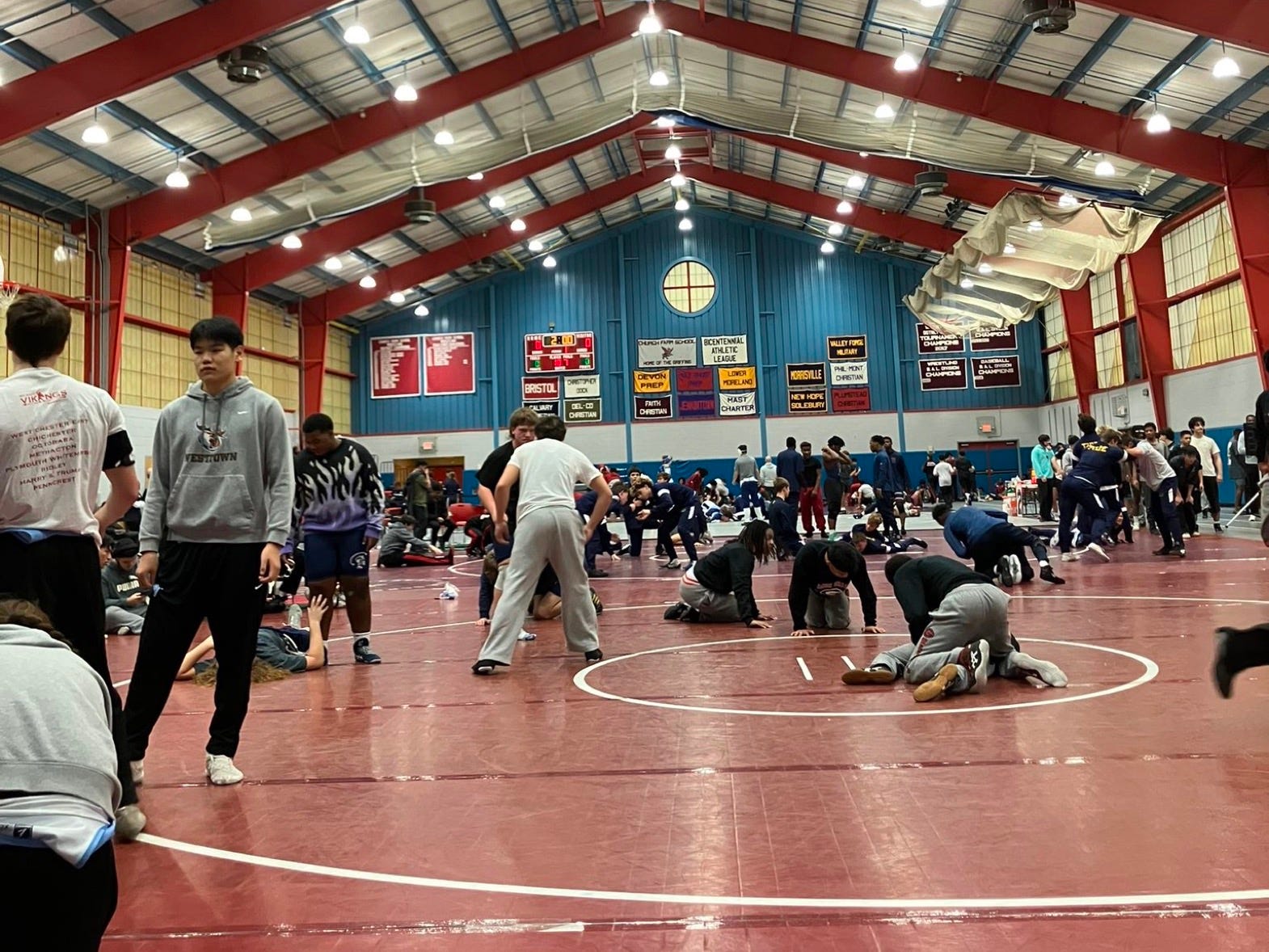
As for the “lives of a professor and wrestling coach” living in the same person, that’s pretty easy: Wrestling has always been my escape when things got overwhelming. People talk about “imposter syndrome” a lot in academia. When I was in grad school and felt like I wasn’t smart enough or as capable as others in the classroom, I could retreat to the wrestling room where I felt comfortable.
The same was true early in my career. I’ll teach classes and go to admin meetings all day and then think “I have no idea what I’m doing!” But I know how to wrestle. I know how to coach wrestling. When I’m overwhelmed or feel like an outsider in academia, I know I can just go to wrestling practice and feel at home.
How does weightlifting improve the life of the mind? I’ve only been lifting for the past year, and I love it. But I waited till I was 49 to indulge my inner jock! What have I been missing all these years?
On a physical level, I just feel better! I need lots of exercise to have the energy and clarity for teaching! When I’m away from the gym for too long, I get brain fog. I can’t think straight.
Personally, I prefer lifting heavy weights. Lots of compound exercises. My guess is that I like the measurable goals that these lifts allow: Reach a certain number on bench; deadlift a certain amount of weight. It’s very Type A. But that’s how I organize my academic life too. I like lists. I like completing lists. Set a goal and try to achieve it. Plus, it’s nice to have a hobby outside of academia.
I encourage everyone in academia to do something outside of academia that has measurable results. Lift weights. Train for marathons. Learn another language. Play an instrument. Do something completely unrelated to academia, otherwise, you’ll burn out.
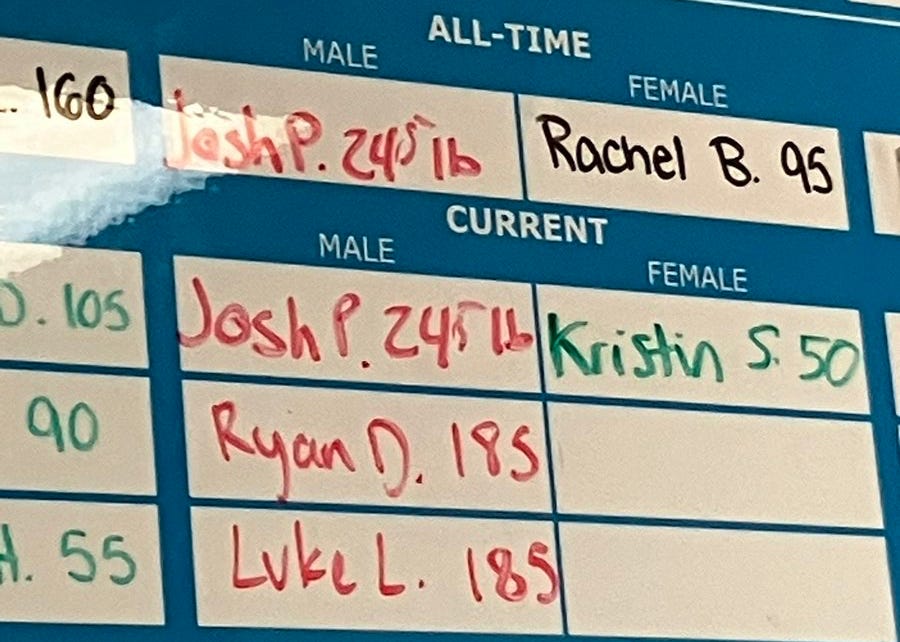
On a side note, I also have found it useful in relating to young men struggling to embrace the life of the mind—young men who see modern academia as too soft. There’s something about seeing your college professor in the weight room bench pressing more than you.
You can show young men that they can enjoy all the testosterone-filled lifting sessions and also enjoy reading Shakespeare. You don’t have to shy away from reading great literature because you want to uphold some narrow view of masculinity. Get your lift in and then go home and read Macbeth.
Does coaching change the way you read? I’m curious whether there’s something about the physicality of wrestling—the discipline, the suffering, the one-on-one confrontation—that shows up when you sit down with a difficult text.
Coaching probably doesn’t change the way I read, but it definitely informs the way I interact with my wrestlers (and young men in general). I’m around a lot of athletic young men. When they find out I’m a professor, they have a lot of questions about books; mostly recommendations. So I have a pretty well-curated list of books to offer to young men when they ask: Hemingway, Steinbeck, Fitzgerlad. I’ve probably read more work by these authors than I would have otherwise because I coach.
I read and reread these authors so I can pass that information onto young men when they ask. Young men need specific books at a young age. So if I can get these authors into their hands during adolescence, then that’s a win.
You’ve mentioned retiring after a tournament to read E.M. Forster’s A Passage to India. What does literature do for you in those moments that nothing else does?
In a word: Beauty. I like reading beautiful prose. I like relaxing with beautiful music. I like looking at beautiful art. Between teaching and coaching, I’m busy all day long. Constant rush. I don’t want to come home to a bright television full of colorful ads or loud pop music. I want to slow down. I want to enjoy the slowness of a well-written book. As Tolstoy put it, “In the name of God, stop a moment, cease your work, look around you.”
Another curiosity of your CV: You regularly champion the classics, books in the so-called Western canon. And yet you’ve published papers on critical race theory, feminism, and topics that would seem to cut against that grain. How do you reconcile those differences? Is there something generalizable for the rest of us that we’re missing?
In my youthful naivete I entered university thinking it was a place to explore new ideas and play around with different theories. So with some of my writings, I found specific theories did something interesting to the topic at hand.
For example, I don’t like it when academics refer to themselves as a “[fill in the blank] theorist.” If a person says “I’m a feminist theorist,” then they tend to see every situation through the lens of sexism. A “critical race theorist” trend to see everything through the lens of race. And there are a lot of instances where I feel academics force a theory onto a situation where it is unfounded.
One thing I stress to my students is that the topic should drive the theory. If I’m exploring a topic and see clear evidence of sexism or something interesting about gender roles, then I use feminist theory to help make sense of that topic. I don’t think there is anything to reconcile in this instance.
I don’t want these controversial theories out of academia. I just want them to be used more judiciously. And I want a space for people (and students) to push back and “maybe sexism doesn’t exist in this instance.” Academia should be full of competing ideas so that we can have interesting conversations and try to figure things out.
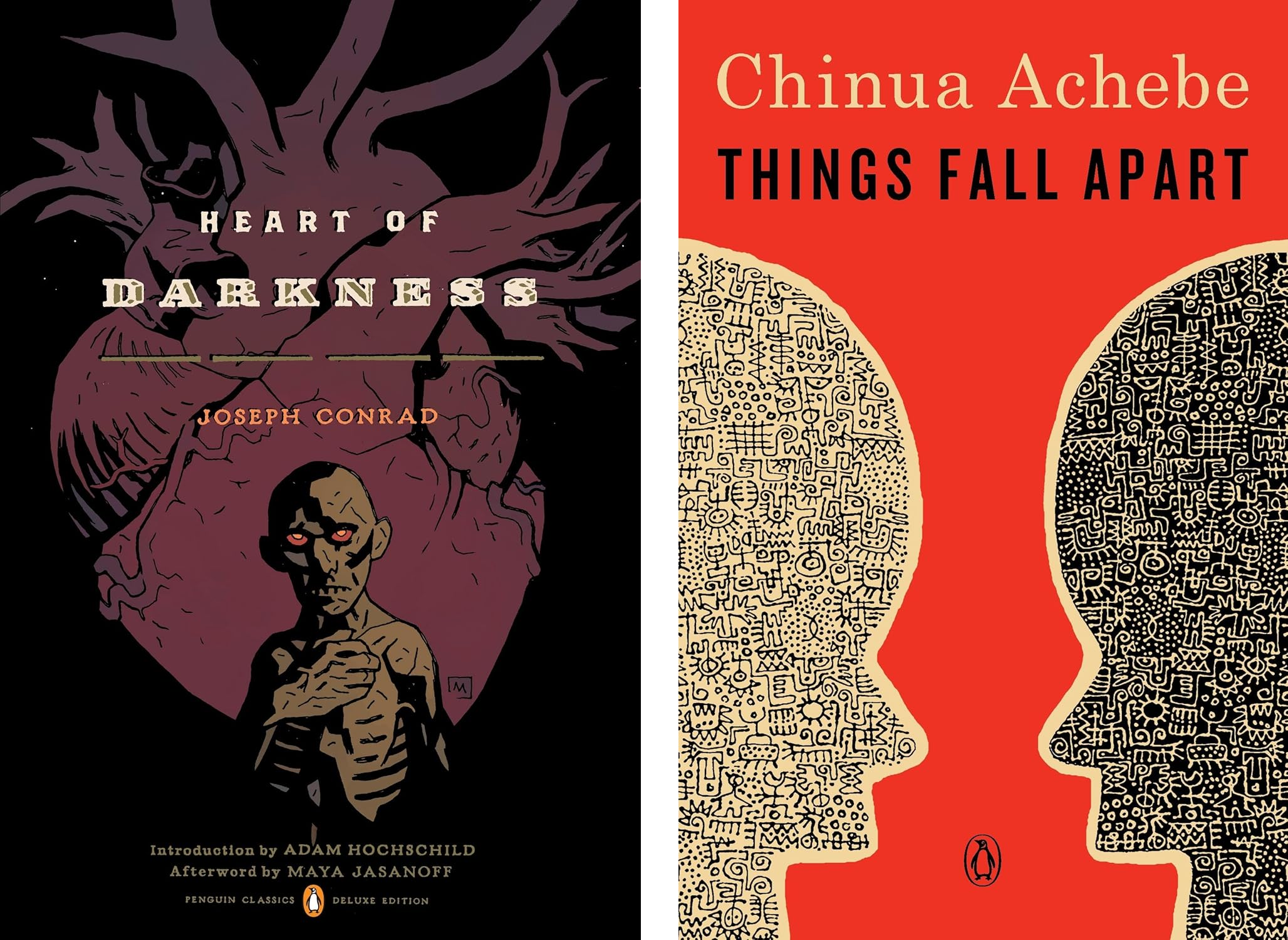
As for my love of the Western canon, I don’t see the controversy. A beautifully written book that has long lasting appeal and has influenced the culture is in consideration for the canon. It would be foolish to ignore the feminist critique of George Eliot’s Middlemarch or the racial conservations imbued in Heart of Darkness or Things Fall Apart. And knowledge about Marxism will serve you well when you tackle Charles Dickens and John Steinbeck.
If books and history and culture are allowed to be complicated around these issues, then so am I.
You’ve said that if students don’t encounter Vergil or Chaucer or Dante in school, they simply won’t encounter them at all. And—weirdly, to me—a lot of educators up and down the grade levels have effectively decided that’s not their problem. I’ve argued that most of the reading crisis on college campuses are downstream effects of poor primary education. What’s wrong with the view of these hands-in-the-air educators, and why do you think they’ve given up?
To throw one’s hands in the air is a complete dereliction of duty. Exposing students to these great works is quite literally the job of teachers. Several years ago I made it a point to include hundreds of examples from great books into my college courses’ lesson plans. I don’t cover the entire book, but I’ll find a small scene from a book and use it to illustrate a larger point for the discussion that day. It’s just a small way of keeping these books in the minds of young people.
Additionally, the buck has to stop with someone. So, why can’t it be you? To keep saying, “The kid can’t read is someone else’s fault” just continues to pass on the problem. For crying out loud, be the problem solver! If the kids haven’t read Gatsby, then assign Gatsby!
Some have given up because they are tired. A more devastating reason is because more and more teachers haven’t read these books themselves. We are getting to a critical point where teachers who are now entering the profession haven’t read the books they should have.
How can a teacher teach Pride and Prejudice if they never read it (or worse yet, never even heard of it)? I’m more afraid of this scenario. It’s one thing to “give up.” That can be remedied by demanding teachers teach Great Books. It’s something quite different to be in a position of such extreme ignorance that teachers don’t even know what books kids ought to be reading.
What’s your case against the “let students choose what they read” approach? I can imagine a thoughtful version of that argument—I might even support it to a degree—but you seem to think something important gets lost.
The simple explanation is “when else will students be exposed to the Great Books?” Students will have plenty of time to read whatever they want when they are older and out of school.
Reading in school isn’t just about literacy: Can a student read the words on the page? Reading in school is about passing down cultural heritage. Students need to read the books that shaped their culture. To ignore these books is to rob students of their rightful inheritance.
So it’s about cultural foundations, not personal taste. But foundations for what, exactly?
To understand your current culture, you have to have read the books that helped shape your culture. Your culture wasn’t formed yesterday. It is a process that is centuries in the making. If you want to understand what your forebears were thinking when they created these cultural systems you currently live under, then you ought to read the books they read.
This is Richard Dawkins’s argument for reading the Bible, despite being an atheist. How does one understand Europe without knowledge of the Bible? The art, the architecture, the laws, the literature? We are fish in water who do not understand water. Reading the canon gives us insight into the waters we swim.
What do you think actually happens to a society that stops reading its inherited literature?
A culture that stops reading inherited literature can only live for the present. There is no past and there is no thinking about the future. The only thing that matters is “now.” When you read the canon, you realize that you are part of a long chain of stewards. You inherited something wonderful: Western Civilization. And you feel a duty to pass that civilization onto the next generation so that they too can experience something wonderful.
Shakespeare, Chaucer, Melville, Tolstoy have enriched my life immensely. How dare I keep those works hidden in secret from the next generation? It is my job to share these works so that someone else’s life might be enriched.
You’ve expressed enthusiasm for Jennifer Saint’s Greek mythology novels alongside recommending D’Aulaires’ Book of Greek Myths for kids and Stephen Fry for adults. Some canon purists would say retellings are a distraction from the originals. Are they on-ramps or detours?
On-ramps. I have no problem with adaptations or retellings. Make Shakespeare’s Julius Caesar about Trump. Retell Romeo and Juliet in a 1996 setting with DiCaprio and Danes with gun fights instead of sword fights. I had quite a Twitter/X viral moment a few weeks ago when I expressed an opinion about how the new Wuthering Heights movie need not be a perfect adaptation of the novel. The Twitter/X purists let me have it!
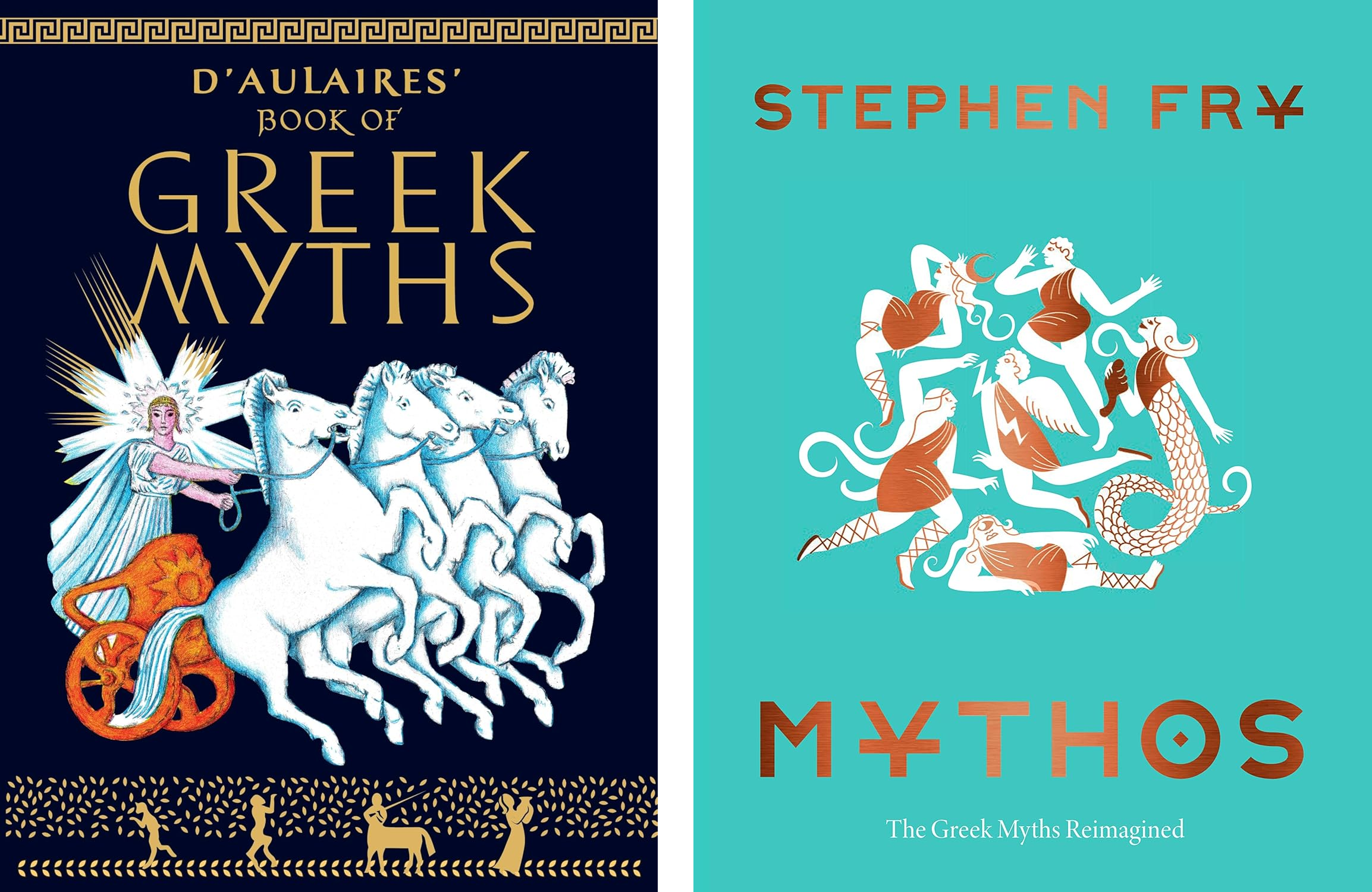
I say, let contemporary artists play around with source material. My only hope is that these sorts of contemporary books and movies will lead audiences back to the original source material.
Here’s a mechanism question that interests me: It’s one thing to put The Odyssey on a syllabus. It’s another for a book to worm its way inside a student and change how they think and feel. What have you seen work in the classroom? What makes the difference between mere assignment and transformation?
My classroom time is limited and my syllabus reading schedule is finite. Yes, classroom reading can feel like a drag even when students ultimately enjoy the book. That’s why I like to “name drop” dozens of books throughout the semester during my lectures. And I always have students who will stop by later for more information about a particular book.
Having a student stop by office hours to discuss some of the books I mentioned always turns into something far more fruitful. We might talk about three or four different books a student might be interested in, and based on that conversation the student will head to the library to check out one.
Seeing and hearing about incredible books (through classroom repetition or scanning a professor’s bookshelf) and then discovering them for oneself seems to be far more transformational.
What about the question of meeting students where they’re at? If students come to you hobbled by crappy primary and secondary education—as I assume is often the case—how do you help bring them up to speed?
This will sound dismissive, but that’s not my intention: Assign shorter books. Not all the classics are as long as War and Peace or as difficult as Ulysses. I’ve assigned The Old Man and the Sea, The Great Gatsby, The Picture of Dorian Gray, The Metamorphosis, The Death of Ivan Ilyich.
These books are easy to read and are fewer than two hundred pages. I want students to read the classics, and if they can only handle a hundred-page book by Hemingway or Tolstoy, then that’s what we’ll read. Hopefully, they enjoy it enough to tackle their longer books after they’ve left my classroom.
If someone wants to venture into the canon and they already know the basics—say, Homer, Vergil, Dante, Shakespeare—where should they turn next?
This is what is so great about the canon: There are so many paths one can take. I would encourage them to figure out what genre they like. Take the American Lit path and read Twain and Whitman. Or the English Lit path with Dickens and Austen. Or spend time in France with Hugo and Balzac. They can read a bunch of gothic literature by Shelley and Poe. Or a bunch of literature on colonization by Conrad and Achebe. Dive into poetry for a year.
You definitely need the foundation you mentioned. But the canon is big enough where you can start to “pick and choose” based on personal interest after you’ve read a hundred-or-so foundational books.
Final question: You can invite any three authors—I’m not limiting you to classical or canonical figures; anyone is fair game—for a long meal to discuss whatever strikes your fancy. Neither time nor language is an obstacle. Who do you pick, why, and what would that conversation sound like?
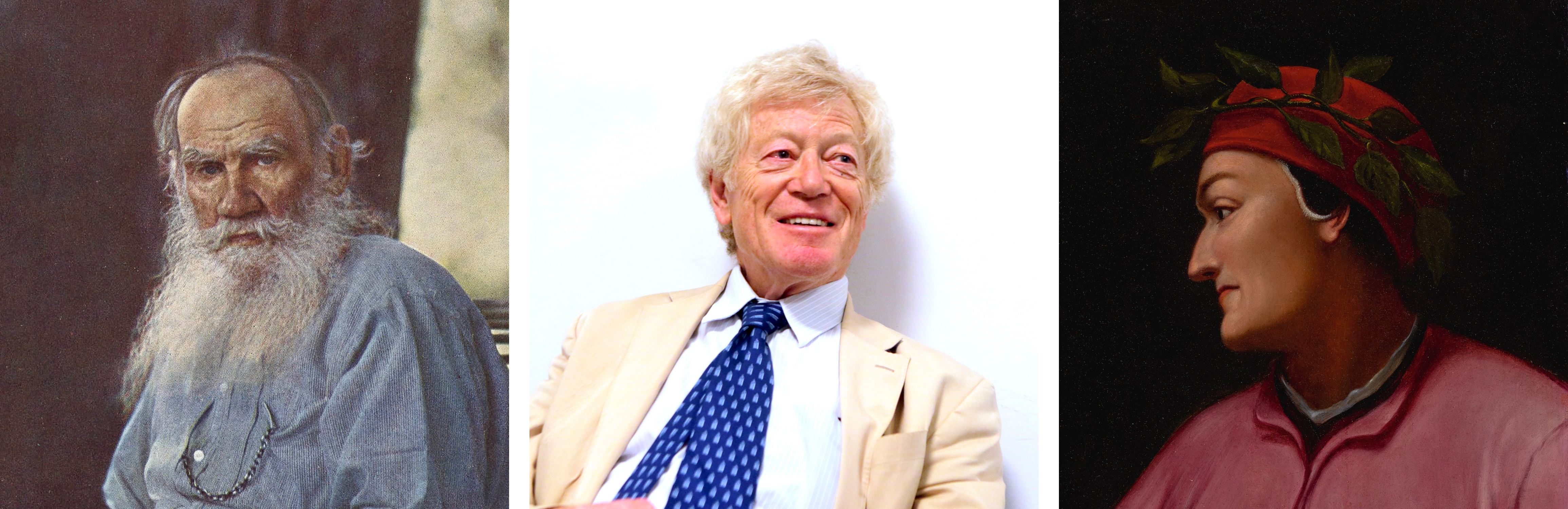
Such an impossible question. I’ve stared at this question long enough and I reserve the right to change my answer at any point in the future! But for now, I’ve settled on: Dante, Tolstoy, and Sir Roger Scruton.

.jpg)

More than most, these three have given me insight on “how to live” a meaningful life. And ultimately, actions and behaviors shape the man. Dante provides guidance for living a moral life. Tolstoy (specifically through the characters of Konstantin Dmitrievich Levin in Anna Karenina and Prince Andrei in War and Peace) provide guidance on how to act with dignity, purpose, and duty. Scruton provides reasons as to why we should strive to preserve standards and heritage.
We would talk about how one should act in this life: towards self, towards others, and towards community.
Thanks for reading! If you enjoyed this post, please hit the ❤️ below and share it with your friends—or any other young readers and educators you might know.
Not a subscriber? Take a moment and sign up. I’ll send you my top-fifteen quotes about books and reading. Thanks again!
And while you’re at it, read more conversations here.
What an inspirational interview! Thanks.
God bless him!