
He Sold 55 Million Books, but His Government Wouldn’t Let Him Publish
Japan’s Greatest (and Definitely Latest) Export—Detective Writer Seishi Yokomizo

By the time he died in 1981, Seishi Yokomizo had sold over 55 million copies of his detective novels. His success is especially noteworthy considering—when he got started many decades before—the government wouldn’t let him publish.
Yokomizo was born in 1902 in Kobe, Japan, and fell under the spell of detective fiction. Largely a western import, translated European and American novels infiltrated Japanese bookstores, and the adolescent Yokomizo scooped up books and magazines featuring the work of Edgar Allan Poe, Arthur Conan Doyle, Maurice Leblanc, Agatha Christie, and John Dickson Carr.
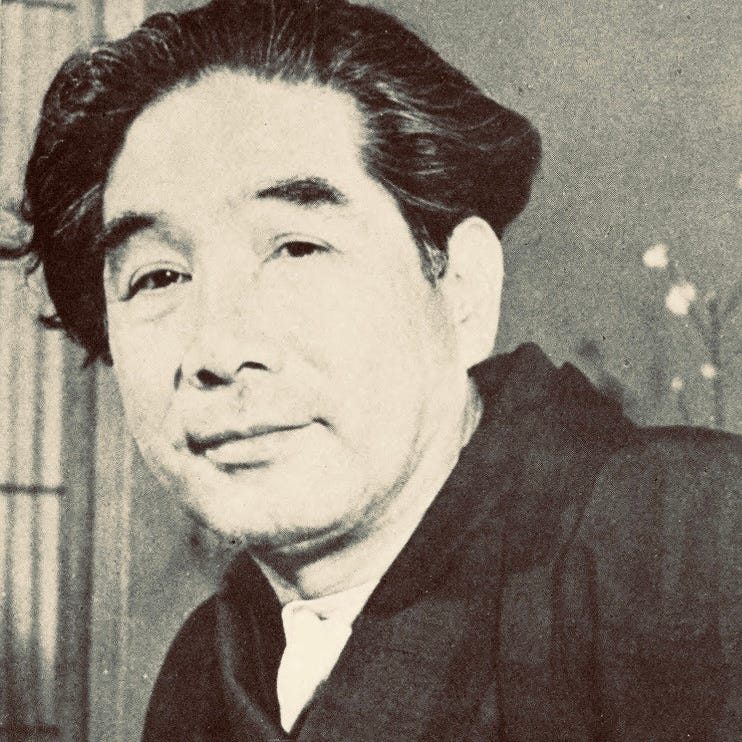
“His career started when he was a kid,” said his grandson, On Nomoto, “hopping around old bookstores, finding any kind of foreign-language book that could be a detective story. That’s how he began.” His friend, another crime writer and detective-fiction impresario Edogawa Ranpo, nurtured Yokomizo’s nascent talent and encouraged him to write.
After a stint working in his family’s pharmacy, Yokomizo began editing detective fiction for a small magazine and by 1932 was ready to seriously pursue writing his own. Nature and the state had different opinions; tuberculosis nearly killed him in 1933, and, though he recovered, Japan’s war against the Allies complicated his life further.
The Japanese government, allergic to Western influences, banned the publication of detective stories—especially in magazines, the very venue aspiring new writers depended upon to access the reading public. It was a grim time. “You probably wouldn’t understand the pain of not being able to write,” Ranpo recalled.
He said the only escape was reading contraband books by writers like Carr and Christie and exchanging drafts with friends like Yokomizo, who felt certain “detective novels, which had been suppressed during the war, would eventually see the light of day.” He was right.
Though Japan’s defeat posed a crisis for their countrymen, it liberated Yokomizo, Ranpo, and other writers. “While some people were grieving over the radio broadcast announcing the end of the war,” recalled Yokomizo’s daughter Rumi Nomoto,
deep within my father’s heart, he was stirred. His creative urge, which had been suppressed during the war, became heated . . . The passion for detective novels that had settled in his heart turned towards the depths of his creation, overcoming his impatience to break through the walls of the world. This marked the birth of the uniquely Japanese authentic detective novel.
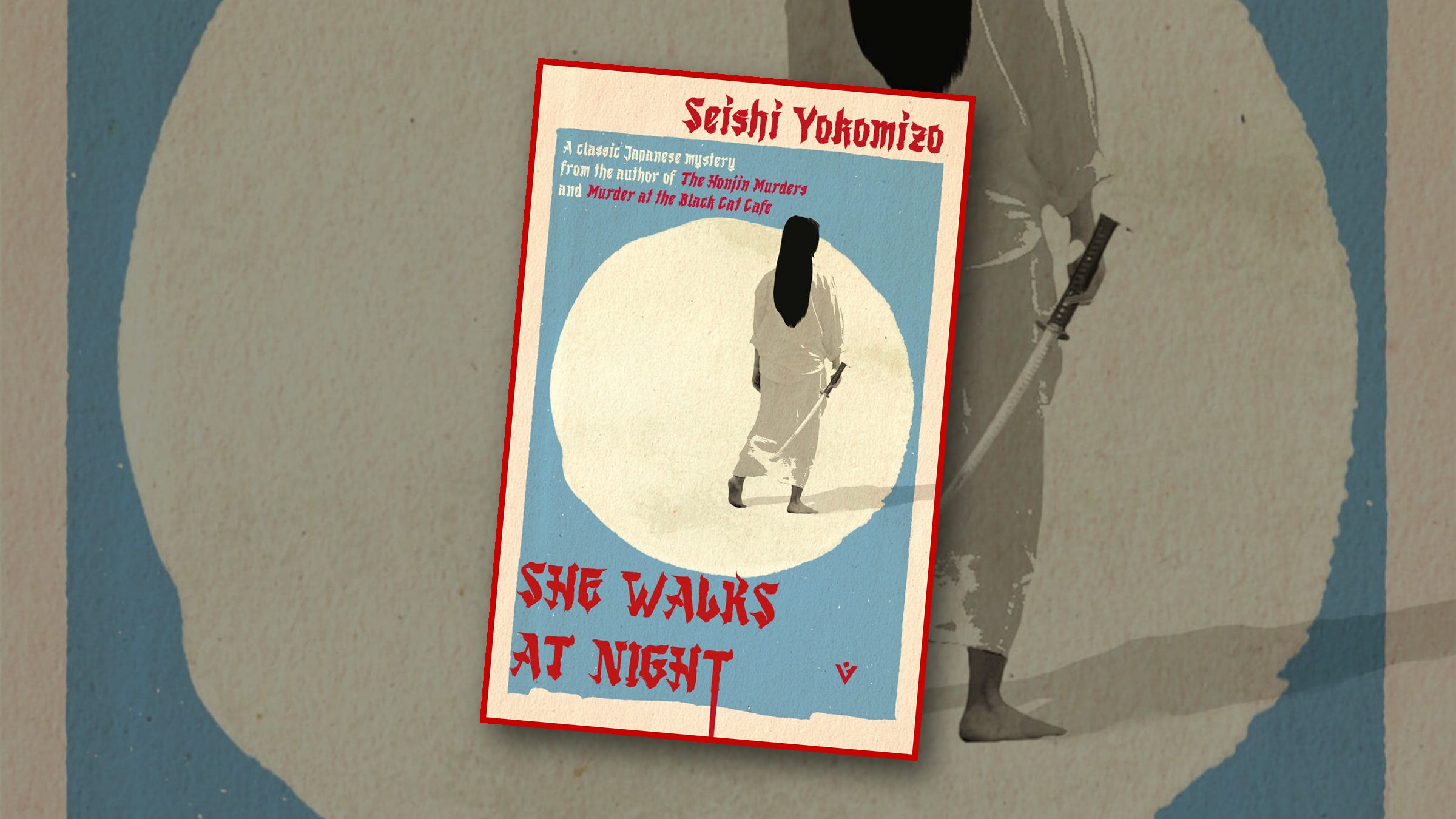
I’ve now read three of these wonderful novels by Yokomizo, including, most recently, She Walks at Night. Originally serialized as Yoru Aruku in Japan between 1948 and ’49, the book finally made its English debut a few months ago, thanks to the translation work of Jesse Kirkwood and the enterprising Pushkin Press editor Daniel Seton.
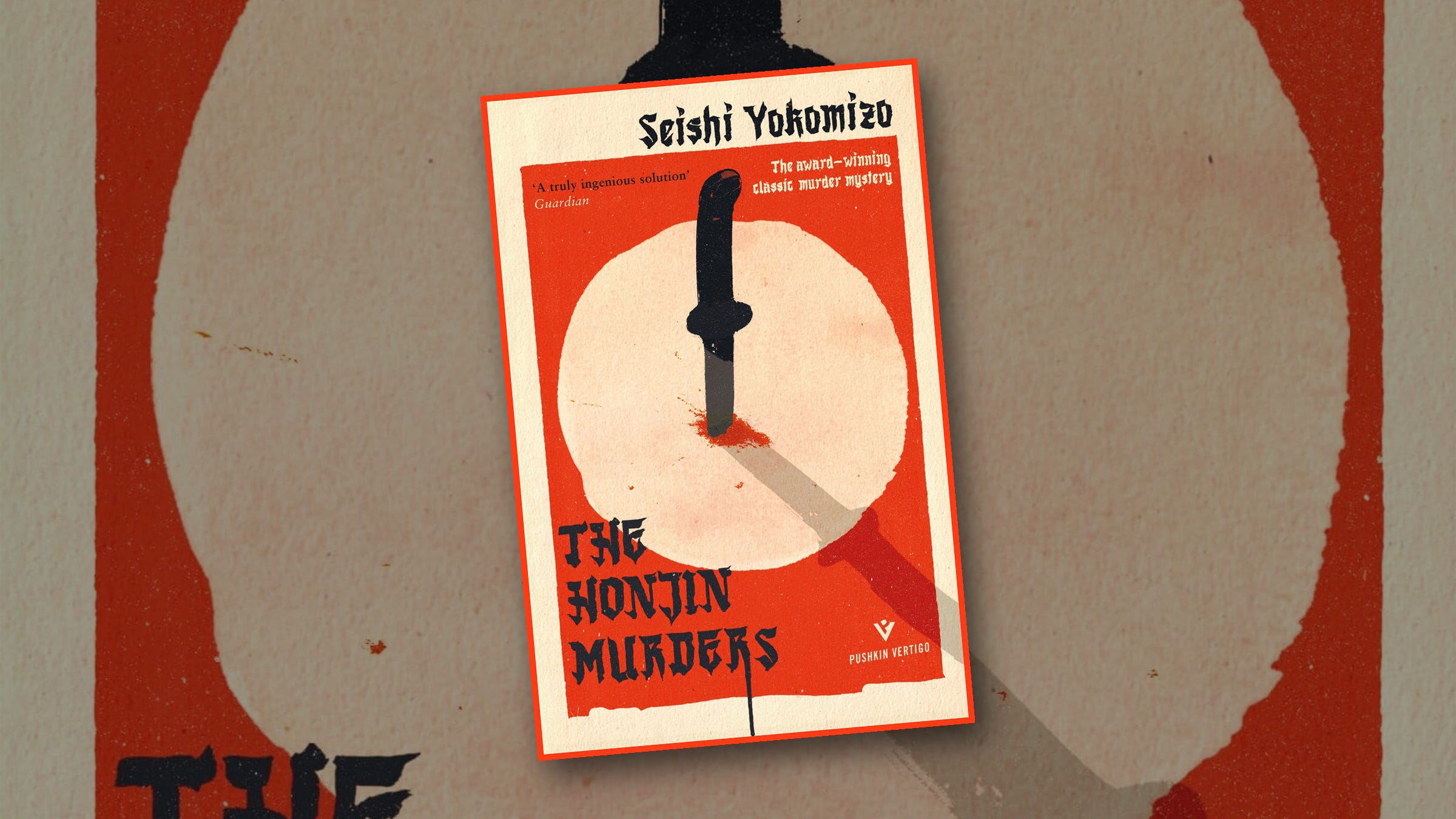
Earlier this year, I started with the book that started it all for Yokomizo, The Honjin Murders, translated by Louise Heal Kawai and published by Pushkin in 2019. While Yokomizo had written several novels before the war, his career commenced with Honjin Satsujin Jiken, serialized in 1946.
The story is an ingenious locked-room mystery, set the decade prior in rural Japan among the declining aristocratic Ichiyanagi family, whose eldest son Kenzo determines to marry a local schoolteacher, Katsuko Kubo, over the objections of his family. So, murder, naturally.
On the night the newlyweds consummate their wedding in an annex at the family honjin (an Edo-period inn that had become the family’s estate) the couple retires for bed shortly before a scream is heard from their room, along with the eerie sound of scraped koto strings. Relatives break into the room to find the pair slain in bed, “a tableau from hell”—the apparent murder weapon, a bloody katana, standing upright in the new-fallen snow outside the annex with nary a footprint around.
More than a dozen characters collide within the confines of the narrative, complicating the solution with varying degrees of motive, until Yokomizo’s young detective, Kosuke Kindaichi, arrives.
Kindaichi’s appearance inspires no confidence. He’s disheveled, wearing a wrinkled kimono and jacket bulging with notebooks stuffed in the pockets, his toenails poking through his worn-out socks visible in his run-down wooden clogs—to say nothing of his dandruffy scalp hidden under his shapeless hat.
Kindaichi doesn’t take himself very seriously, and neither does Yokomizo. One of the delights of the story is how Kindaichi mocks the very idea of a locked-room mystery.
Readers thought it worked. While Ranpo had his criticisms, the story garnered Yokomizo the inaugural Mystery Writers of Japan Award in 1948, launching Yokomizo’s sensational career. Curiously, the Anglophone world has only recently caught up, thanks to Pushkin’s publication of Yokomizo in English. In 2023, Time magazine listed The Honjin Murders as one of the top-100 mysteries and thrillers ever written.
Yokomizo was wildly prolific, and Kindaichi would come back to solve many more crimes. I next read The Devil’s Flute Murders, serialized over two years in the early 1950s as Akuma ga Kitarite Fue o Fuku and finally coaxed into English by Jim Rion in 2023.
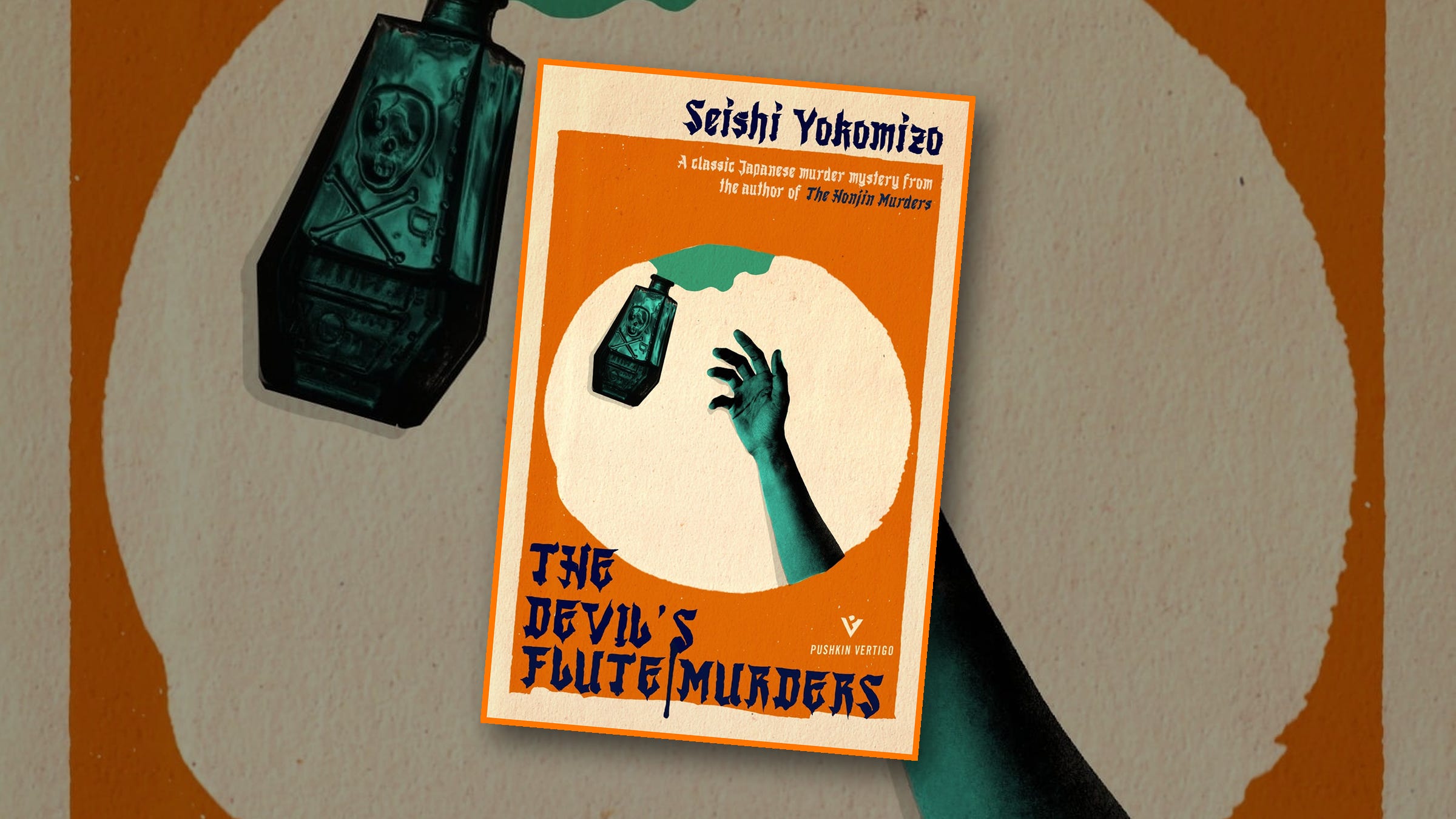
Where The Honjin Murders is relatively straightforward, The Devil’s Flute Murders is all over the map. Yokomizo features another locked-room mystery, but it’s far more complicated, and the plot itself spirals outward in countless other directions, involving poisoning, seppuku, incest, blackmail, mistaken identity, incriminating birthmarks, and more—so much more it’s hard to keep track of. I underlined and notated my way through, trying to track the multiplying motives, the proliferating props and their implication in murder, and more, all the while Kindaichi maneuvers and manipulates to rein in the chaos and edge closer to the truth of the story.
Readers couldn’t get enough of Kindaichi, which makes She Walks at Night, the most recent Yokomizo to find its way into English, somewhat surprising; Kindaichi is almost an afterthought in the story.
The narrator is a writer of mystery novels who finds himself dragged into a series of events by a friend, including a wild story about a woman who, out on a pub crawl, shoots and injures a local artist because he’s hunchbacked. I won’t recount the plot, but as the story develops let’s just say it involves sleepwalking and a number of murder victims who find themselves missing their heads.
Kindaichi is brought in to solve the case, but does he need to? Someone else actually solves the mystery this time. Still, Kindaichi’s help proves irreplaceable.
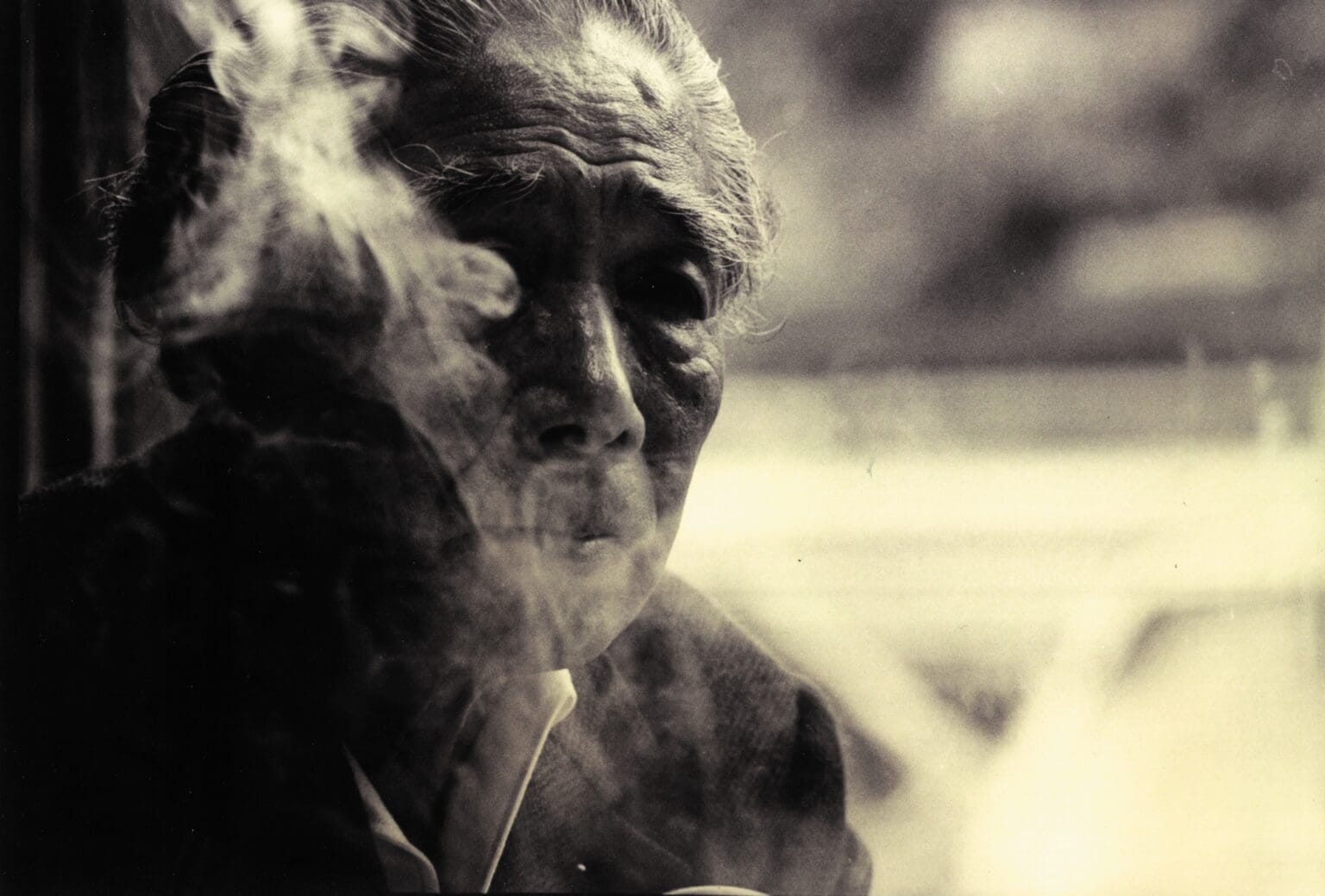
While Yokomizo’s crimes are sometimes gruesome, there’s nothing gratuitous in the telling. He was squeamish about blood, possibly connected to his proclivity to cough it up because of his tuberculosis, but extending far beyond. “Even though my father wrote such bloody works,” his daughter Rumi Nomoto recalled, “he would make a huge fuss all by himself every time he bled a little while shaving and said, ‘This is terrible!’”
Despite the tuberculosis, possibly exacerbated by his penchant for chain-smoking around fifty cigarettes a day, Yokomizo worked until he passed away in 1981.
“My father was the kind of person who was always thinking about his work in his head while going about his daily life,” said Rumi Nomoto. The pair would walk together after school, but Yokomizo would tread silently, rarely talking because he was busy writing in his mind. If the tuberculosis flared, he’d rest. If he got blocked, he’d knit.
In all Yokomizo produced more than six dozen Kindaichi mysteries, some seventy-seven in all. So far, English readers have just eight of that total available to them. Hopefully, we’ll get more.
Thank you for reading! If you enjoyed this post, please hit the ❤️ below, 💬 discuss, and share it with your friends—or anyone you know who loves crime fiction.
Not a subscriber? Take a moment and sign up. Free subscribers get two-week access to all new posts. Paid subscribers get access to the full archive, going back to 2022, plus an exclusive member chat and monthly member calls.
Before you go, check out these👇


Great to learn about a writer who is new to me.
I may read with an intererst in comparison with the American noir writers like Raymond Chandler.
Joel thanks for this follow up post. Based on your previous reference to “The Devil’s Flute Murders” I’m well into it and very much enjoying Kindaichi et al. It was just what the author knew and not necessarily a choice, but the setting in post war Japan adds to the interest of the mystery.