

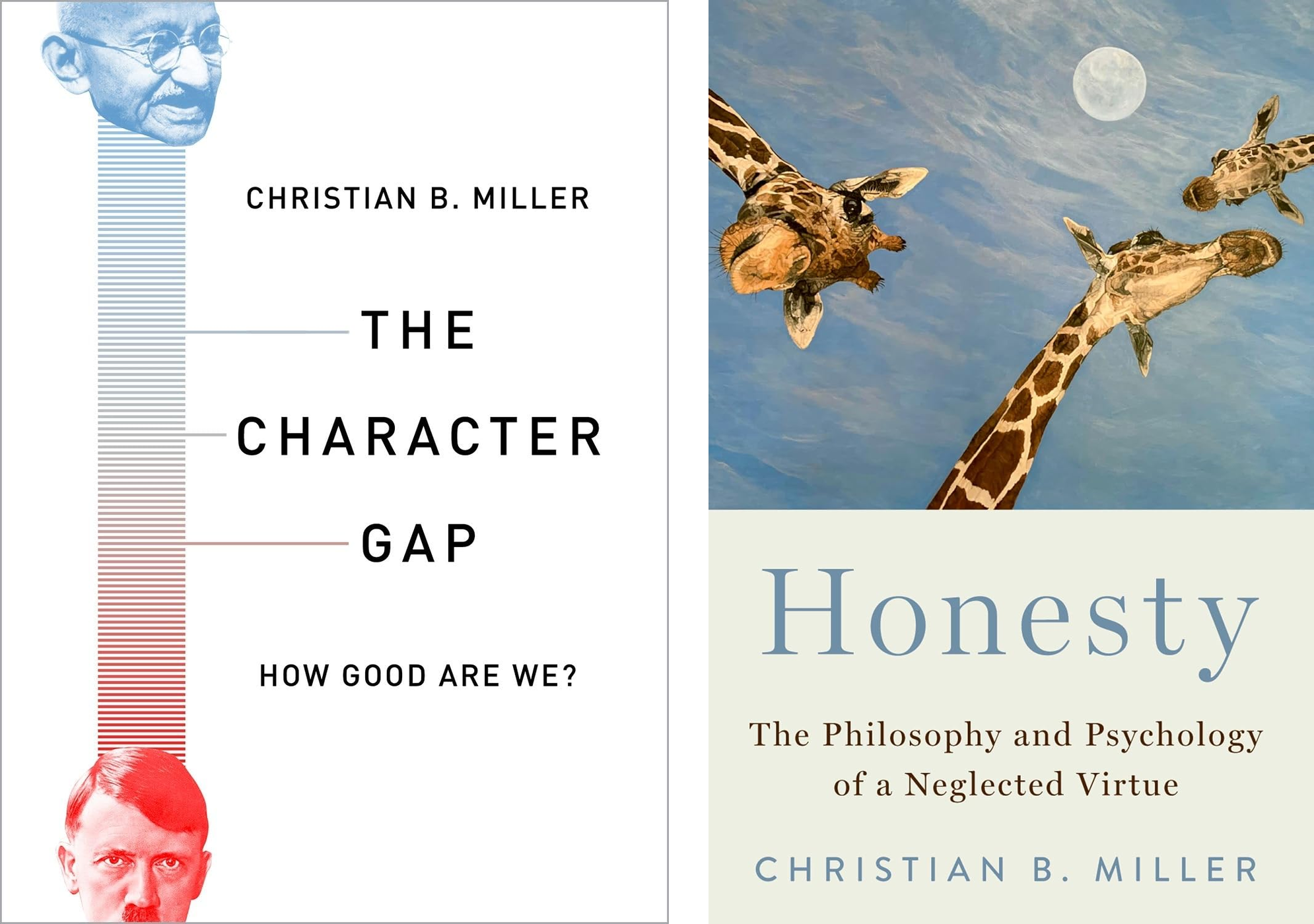
My first exposure to the work of philosopher Christian B. Miller came through his book The Character Gap, which came out in 2017. Have a gander at the cover; it’s sure to get your attention. Gandhi on one end of the spectrum, Hitler on the other. Where do I fall? Where do you fall? Our company, Full Focus, ran a book service for business leaders at the time, sharing two books a month. Business leaders need character, right? I eagerly shared it with our subscribers.
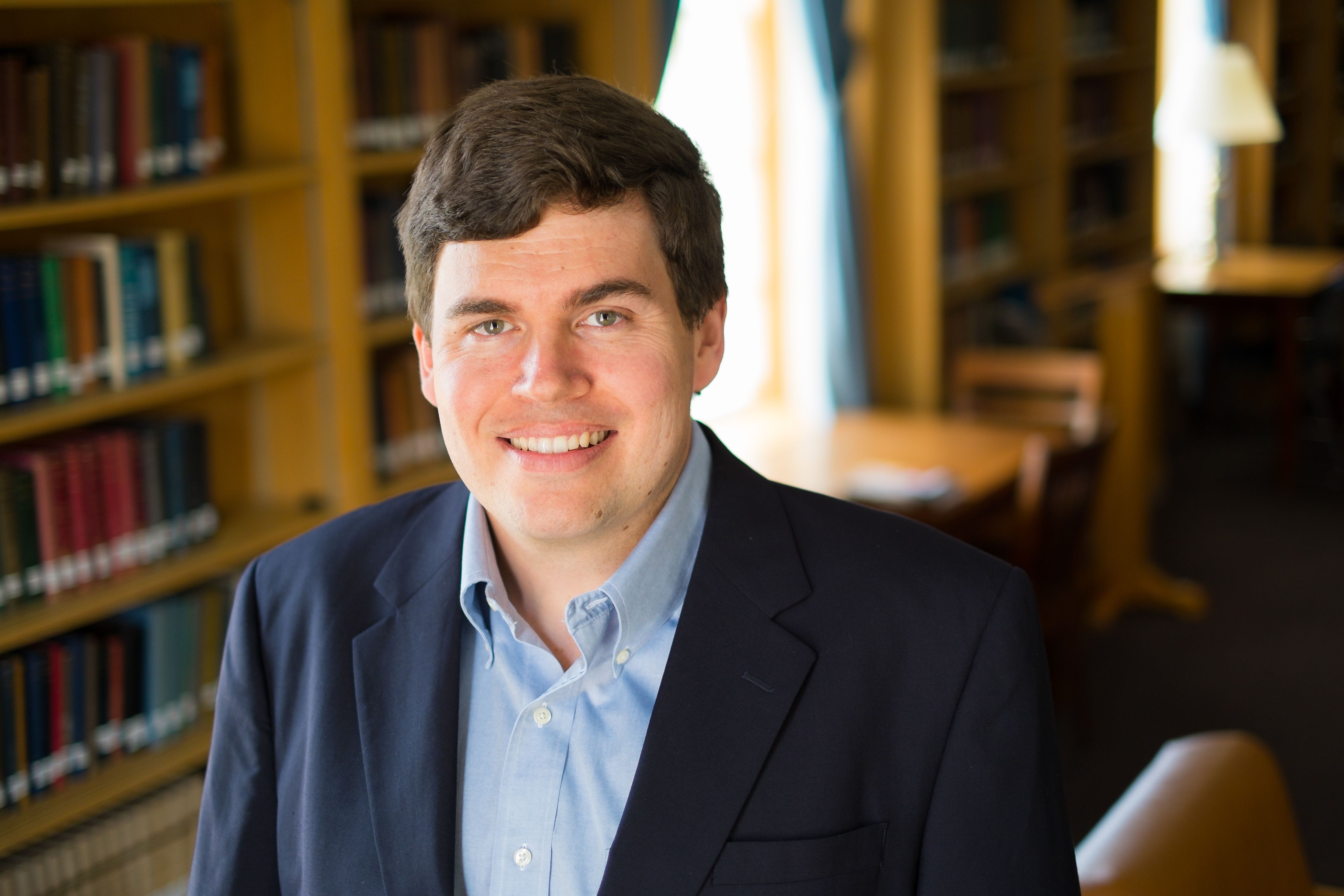
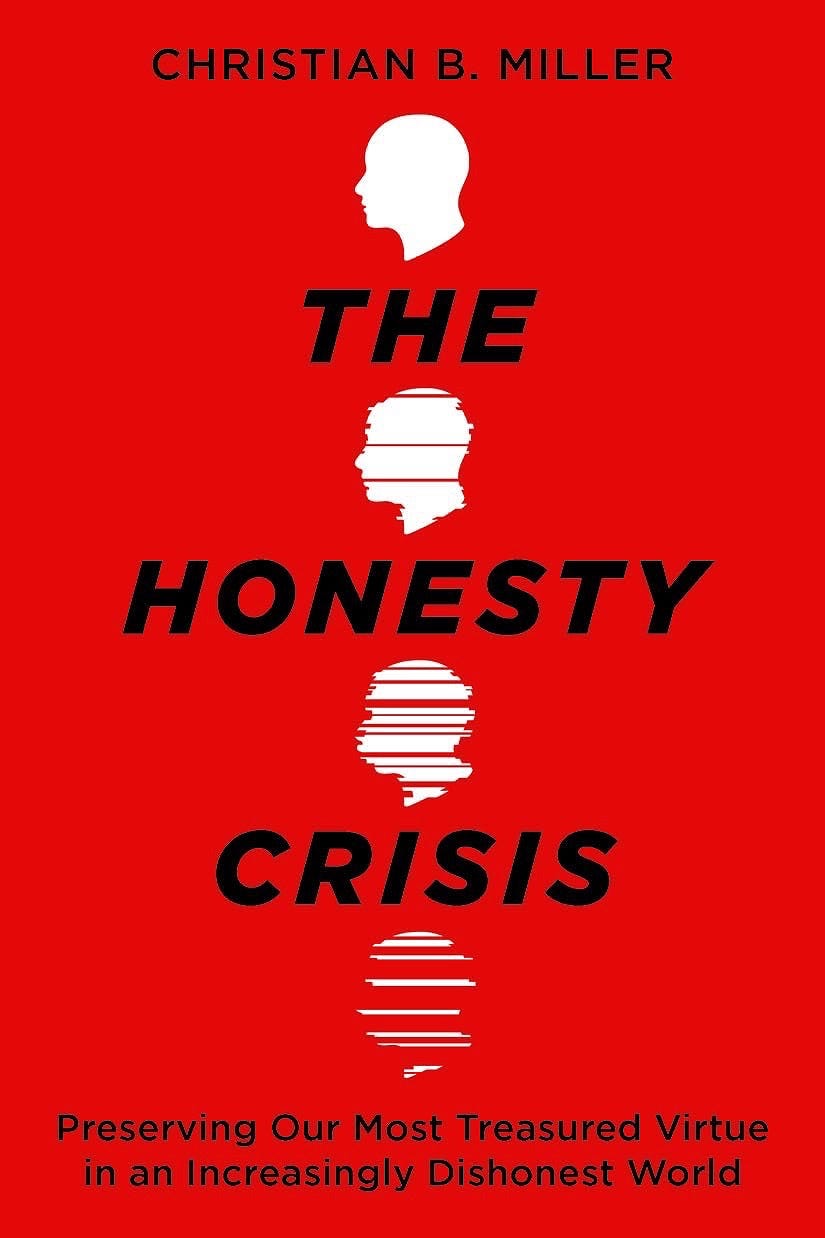
I’ve followed Christian and his work ever since, so I was excited to see his latest, The Honesty Crisis: Preserving Our Most Treasured Virtue in an Increasingly Dishonest World. As A.C. Reid Professor of Philosophy at Wake Forest University, where he heads up the Honesty Project, Christian has focused on ethics broadly, and honesty in particular, for many years.
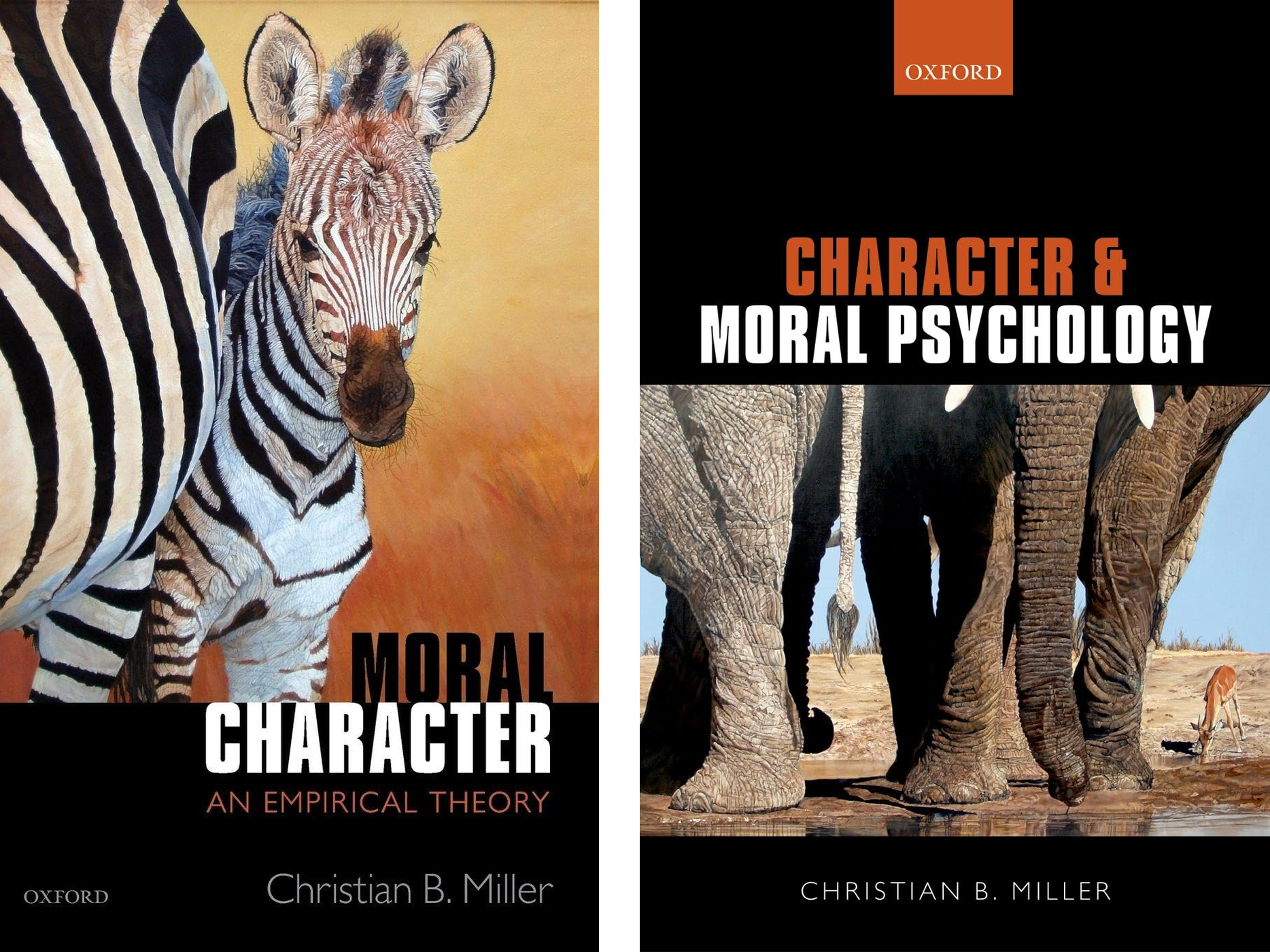
He’s published well over a hundred academic articles in various journals, along with popular articles for such publications as The New York Times, Wall Street Journal, Dallas Morning News, Slate, The Conversation, Newsweek, Aeon, and Christianity Today. He’s the author of several books beyond those already mentioned, including Moral Character: An Empirical Theory (2013), Character and Moral Psychology (2014), Moral Psychology (2021) and Honesty: The Philosophy and Psychology of a Neglected Virtue (2021).
Given the amount of untruth we encounter on a daily basis, I wanted to talk with him about the challenges honesty faces in the world today.
Harry Frankfurt elevated the discussion of bullshit, most popularly in a 2005 book, On Bullshit, but even before that in a 1986 essay. Perhaps this is recency bias on my part—I remember being impressed by his book when it came out—like, “Wow, this is a new problem.” And it seems to have gotten worse—again, recency bias? What’s the state of bullshit in 2026, forty years after that initial essay?
I really liked Frankfurt’s famous essay when I first read it, and I still like it a lot today. It sheds a lot of philosophical light on the phenomenon of bullshit, and also has generated a fascinating literature extending his analysis to related notions like spin and horseshit.
But Frankfurt is working at the conceptual level. He’s not doing empirical assessment. And I am not either, so I am reticent to make any grand pronouncements about levels of BS today. I’d want to consult my colleague in the psychology department, John Petrocelli, who wrote a widely discussed book, The Life-Changing Science of Detecting Bullshit.
From my armchair perspective as a philosopher, though, I completely agree with you. Bullshit involves making up things and yet presenting them as if they are factual, even though you don’t care about whether they are and instead are motivated by other considerations like self-interested gain.
In politics, without naming names, we seem to see this all the time today. Celebrities also have bigger platforms than ever before, and increasingly seem to make BS statements, perhaps to grow their celebrity status or to virtue signal. And strikingly, AI is producing waves of BS content, one notable instance of which is all the hallucinating going on of sources and citations. So I wouldn’t just chalk it up to recency bias.
When I think of honesty, I mostly regard it as a question of telling the truth. But as you point out, it includes a broad stroke of other concerns, including bullshitting, misdirection, cheating, hypocrisy, self-deception, even stealing. What’s the common thread? And why lump stealing in the mix?
Yes, I definitely have a broad conception of dishonest behavior, and thereby of corresponding forms of honest behavior. There are even more examples of dishonesty that could go on the list, like fraud. I add stealing as well, in order to capture ordinary thinking. Most people are going to say that someone who steals money from a retirement fund or a toy from a child, is not an honest person.
I have a bit of an abstract philosophical answer for what the common thread is. I say that you act honestly when you don’t intentionally distort or misrepresent the facts as you take them to be. For instance, if I told you in all sincerity that I am a grandmaster at chess, I am on purpose saying something that misrepresents what I know to not be the case. I am intentionally distorting the facts, as I see them, in my communication with you. An honest person wouldn’t do that.
Your definition of honesty involves not so much whether our beliefs are objectively true but whether we intentionally distort the facts as we understand them. So a person—and this explains at least half the tiffs on social media—can be both honest and wrong. Doesn’t this run the risk of substituting sincerity for truth?
That is an accurate depiction of my view. And it seems to me to be an unavoidable feature of how we think about honesty. Consider people thousands of years ago talking about the shape of the Earth. If they said the Earth was flat, they would have been honest back then, but objectively mistaken. If they were trying to pull a fast one on someone by saying the Earth was round, they would have been dishonest but correct. Honesty tracks the subjective truth, the truth as we see it, and not the truth as it really is.
So I have no problem saying that honesty is more closely aligned with sincerity than it is with the objective truth. The person 4,000 years ago was being sincere about the Earth being flat. And honest. But mistaken.
Flat-earthers, moon-landing denialists, chemtrailers, almost anything Candace Owens says—based on your definition, conspiracy theorists can be honest. Doesn’t that drag the moral burden upriver to how we form beliefs in the first place? Should we regard honesty as a separate virtue from epistemic humility and critical inquiry?
Yes, that’s correct as an implication of my view, and one that perhaps people will find controversial. But I am sticking to it for now.
And yes, you are also right about belief formation. Once a person genuinely believes that, say, the Earth is flat, and they tell you they believe this in the course of ordinary conversation, then I would say they are being honest about that belief.
But there is still a separate question of how they came to form the belief in the first place. One way is self-deceptively, which would clearly be dishonest. Another way, though, is innocently, perhaps because they had a very sheltered upbringing and never heard anything contrary to the view in question. In that case, I wouldn’t fault their honesty when it came to either the formation or the communication of their belief. Their trust was misplaced, but they had no chance to know any better.
These are all matters of intellectual honesty, I would say. It is indeed distinct from epistemic humility and critical inquiry, although highly correlated with both of them. For instance, the intellectually honest person uses tools of critical inquiry to try to get at the truth. That is one means to exercising their intellectually honesty.
The broader upshot is that honesty comes in different flavors (moral, intellectual, and perhaps others too), and they all need to be promoted.
How much responsibility do we bear for self-deception?
That’s probably the hardest question you’ve given me. I am not an expert on the philosophy of self-deception (although probably on the practice of it!). But I suspect the answer is that we often bear a lot of responsibility. Suppose I believe that my best friend is not using drugs. But then a lot of evidence starts to pile up—erratic behavior, strange meetings, needle marks on his arms, etc. Yet I ignore all of this evidence simply because I want to continue to believe that he is not a drug-user. It was my choice to ignore all the evidence to the contrary, and I thereby bear responsibility for doing so. This is a failure of intellectual honesty.
But things get tricky, as they always do when thinking about self-deception. Sometimes we improperly discount counter-evidence. Sometimes we overstate supporting evidence. Sometimes we selectively attend to certain pieces of evidence and not others. Sometimes these things happen more consciously and other times more subconsciously. There are many complicating factors.
Lying is relatively infrequent compared to honesty, according to the research you cite, and a small group of prolific liars tend to dominate. (I’m sure we can all think of a few examples.) If there is a crisis in honesty, how should we think about it?
In chapter two, I cover some encouraging results in the empirical literature on honesty, focusing mainly on this research on lying frequency. So if there is an honesty crisis, it is not there. We will need to look elsewhere.
First of all, let me clarify what I mean by an honesty crisis. I think of it as any situation in society where dishonesty has become both (1) more appealing or incentivized, and (2) harder to detect. That’s a bad combination.
In the book, I focus on six areas of society where I see honesty crises arising: education with AI student cheating; audio and video media with deepfakes; relationships with chatrooms, Ashley Madison, and online pornography; politics with the sharing of fake news; religion with sermon plagiarism; and celebrity culture with social media. Oh, and by the way, this list isn’t meant to be exhaustive.
Here’s a tricky case. Some of the examples you cite involve no actual lying. Every word is defensible and true, but the speaker intends to manipulate or mislead. My word choices there load the question, but I’m trying to distinguish between dishonesty and situational discretion. Put it another way—tongue in cheek—can a lawyer put in an honest day’s work?
I think this distinction is important and defensible. Contrast two cases:
A husband comes back from a late night out and the next day his wife asks him what he did last night. He says, “I was at the bar with the guys.” He omits the word “only” on purpose, hoping that his wife doesn’t get suspicious and find out that he went home with someone else after the bar.
A husband comes back from a late night out and the next day a casual acquaintance at work asks him what he did last night. He says, “I was at the bar with the guys.” He omits the word “only” on purpose because he thinks it’s none of this person’s business.
In the first case, the husband is being dishonest (quite apart from the infidelity), and specifically he is being misleading. In the second case, the husband is not being dishonest. The difference is that it is contextually important and relevant for him to share the part about the other woman with his wife. But it is not contextually important or relevant with the acquaintance at work.
More generally, the honest person is someone who is sharing information when it is appropriate to do so, and to the right degree and with the right people. Making a mistake here can lead to oversharing or undersharing, both of which are forms of vicious behavior that miss the mark.
Can someone be functionally honest and self-serving at the same time? Does that render them a dishonest person?
On my way of thinking, good motivation is a crucial part of being a virtuously honest person, alongside honest outward behavior. And purely self-serving motives are not virtuous motives. If I don’t cheat on the test, solely to avoid punishment or to get rewarded in the afterlife or to not feel guilty, then the behavior gets an honesty checkmark, but not the heart behind it. Virtuous motivation has to be concerned with something larger than benefitting oneself.
Now does honest behavior with self-serving motivation render someone a dishonest person? I don’t think so. It renders them somewhere in the middle between honesty and dishonesty, which are not exhaustive categories. Honesty requires good motivation and good behavior. In parallel fashion, dishonesty requires bad motivation and bad behavior. When you have one piece in place for honesty and one piece for dishonesty, you get neither.
A couple questions about tech. In Charles Williams’s novels, some supernatural element—the Holy Grail, Solomon’s stone, a tarot deck—tests and proves the characters. Whatever powers these elements unlock equip and enable them to act more fully on their desires, either saving or damning them in the process. In our context, the “supernatural” element might be AI. What are the ramifications for honesty in an AI-infused world? What does salvation and damnation look like?
In the book, the thread running throughout the six honesty crises I focus on is indeed technology. But I should say upfront that I am not anti-technology, and never claim that it is inherently wrong or bad. I think it is value neutral and can be used for both good and bad purposes.
Having said this, I also like to focus on particular segments of society to see what the ramifications are. I am bad at trying to do society-wide assessments of, say, the ramifications of AI for honesty (or any other virtue). There are just too many variables, and the calculations are too complex.
So let me take two specific examples. One is the increasing prevalence of using AI to generate deepfake audio and video outputs. Because they are so well done today and often undetectable, and because people are becoming increasingly aware of deepfakes, one major ramification is that we are more frequently suspending judgment about the veracity of recordings that, in the past, we never doubted for a second.
Another example is AI romantic companions. In a recent survey, 1 in 11 people in committed human romantic relationships also were involved (either emotions or sexually or both) with an AI romantic companion. And they typically weren’t forthcoming about it. I would argue that they are, thereby, cheating on their significant other.
So the ramifications are diverse and complex, and there is no simple way to tally them all up.
In your chapter on education, you describe the challenges to academic honesty raised by AI. You’re an educator: How big a problem is this? We’ve all seen the ubiquitous accounts of students using LLMs to skirt their assignments. Why is this a problem? Is it deeper than that? How should educators respond?
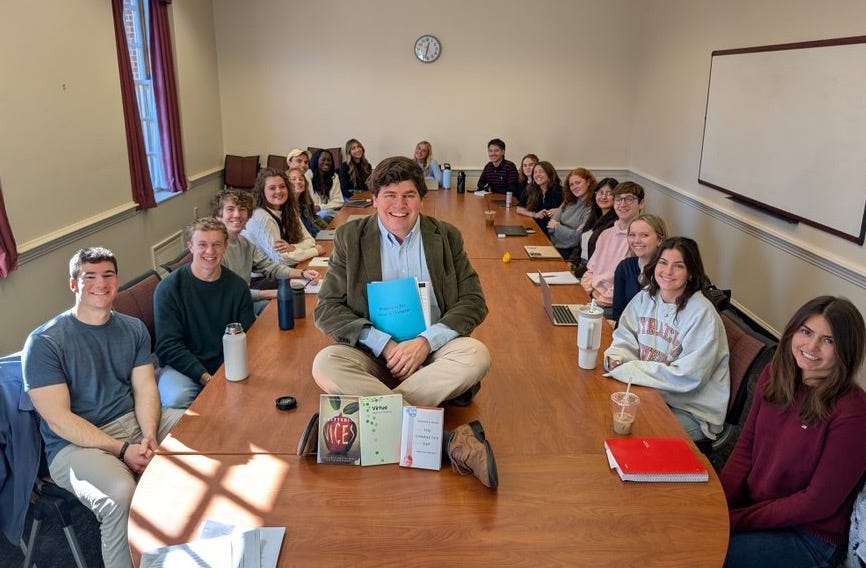
I think I this is a massive problem, in a specific context. The context is take-home graded work. If a professor assigns a problem set, or a coding task, or a paper to be completed at home, and then the student turns in work that is AI generated without acknowledging the source, then that is plagiarism. It is dishonest, and it is morally wrong.
This is now being done at alarming rates, starting in middle school and going all the way to graduate student seminars. If you teach a 300-person introductory course at a university, and you assign a paper to all the students, you should fully expect that the vast majority of them will rely on AI to do the thinking and to some extent the actual writing for them. You are not getting their own work being turned in.
Alas, the strategies that were helpful in curbing student cheating in the past—honor codes, cultivating mastery mindsets, being very clear about what constitutes cheating, etc.—are going to have little impact now with AI, especially in large impersonal classes. The only reasonable response I see, and the one that the vast majority of educators are employing, is to simply eliminate graded work at home and bring it all into the classroom.
What about dishonesty in public life? It’s easy to dismiss lying politicians as moral cretins, which, confessing my cynicism, most seem to be. But what do we do when the air we breathe is so thoroughly suffused with BS? Not just politicians but corporate talking heads and so on. It’s hard to credit sincerity here, and that wouldn’t solve the problem that few voices in public life warrant the trust they assume.
I don’t have any easy answers here. In the chapter on politics, I focus on one very specific area where an honesty crisis has arisen, namely our willingness to share fake news and political misinformation online. But that’s a far cry from addressing widespread BS in the public domain. I will only make one brief point here.
Given our current information climate, I think we should have more compassion for people who hold opposing views to our own. Rather than label them as dishonest, closeminded, ignorant, or the like, we might note that, in many cases, they are being informed by sources different from our own which they find trustworthy. And there is nothing dishonest per se about doing that.
We can’t be experts on every issue. There just isn’t enough time. So we have to trust the judgment of other people some of the time. For instance, I can’t be an expert about vaccines and about car safety and about the history of the Roman Empire. I rely on people I consider to be experts in these areas to guide me and keep me informed. And so do people on the opposite side of the political aisle. They might be mistaken, or (heaven forbid) I might be mistaken. But that doesn’t mean we are automatically being dishonest. Our trust is, instead, misplaced.
And now at home: My wife shows me an outfit she’s trying on. She loves it. I don’t. There may be cases of extreme gravity that overrule honesty—say, the Hebrew midwives, and more on them in a moment—but you don’t give so-called white lies a pass. If that sort of moral flexibility isn’t on the table, how do people maintain civility amid potential interpersonal conflict? Help a brother out.
True, I don’t give white lies a pass in most cases. I do allow exceptions, say when the other person is really struggling with a mental-health issue and an honest but negative comment about something that is not “of extreme gravity” like an outfit or a dessert could send them over the edge.
But most white lie cases aren’t like that. Take your example. If you hate the outfit, but say that you love it, then she is likely going to buy it. Then you are going to see it potentially hundreds of more times. That’s not great. Plus, you will need to be similarly enthusiastic in the future—you will have to keep the façade in place. That takes work. And if your tastes are similar to those of her friends and family members, they may not like it either, which won’t help your wife out in social contexts. Not to mention that someday you might let the truth out (perhaps involuntary, by the reaction on your face that she reads accurately). Then she can feel betrayed, and trust is eroded. And not just there. If she can’t trust you about something like an outfit, she might wonder whether she can trust you about more important matters. So the problems keep adding up.
To be sure, the alternative doesn’t have to be cold judgment, conveying that you hate the outfit with all of your being. You can say things tactfully and lovingly without being dishonest. And studies even find that we often overestimate how much we will hurt the other person’s feelings when we do so.
Now for the midwives. You know the story: Pharaoh wanted to snuff out the male children born in Hebrew households. Midwives were put to this infanticidal task and refused. But they didn’t oppose Pharaoh to his face; they lied and said the Hebrew women were so lively they gave birth before they could get on the scene. I know hard cases make bad law, but lying in some circumstances is surely acceptable. Or is it? How do we weigh grave cases?
These are big issues in ethics, and it is hard to do much more than scratch the surface. There have been clever attempts to say that God does not in fact condone lying in the Exodus passage, only praising the midwives for their bravery or fear of God. I find those attempts implausible, and instead read passages like this and Rahab hiding the spies as God allowing some space for dishonest behavior in the moral universe.
But if you don’t like those examples, there are others which I think are undeniable, like lying to the Nazi at the door to protect the Jewish family you are hiding in the basement. Not only is lying in that case acceptable; I would submit that it is morally required of us.
There are different ways of arriving at that conclusion, and in general of weighing grave cases. The most straightforward is purely consequentialist. You just weigh up the bad consequences of telling the truth (innocent lives lost) versus telling a lie (the Nazi forms false beliefs), and it is no comparison. But you can get to the same conclusion using virtues, such as the virtue of honesty being compared to the virtue of compassion. It seems clear that compassion outweighs honesty in this case. Indeed, you can even get to the conclusion using Kant’s first formulation of the categorical imperative, which is surprising since Kant famously argued in an essay that lying is always wrong. But using his own formulation, you can make the case that lying to a Nazi to protect innocent lives is universalizable.
You have a chapter on dishonest pastors and the perils of sermon plagiarism, infidelity, and celebrity. Are pastors particularly (and ironically) vulnerable to dishonesty because so many pressures converge in their unique role—or is that a pass their congregations extend them?
Great question, and as someone who is not a pastor myself, I don’t feel very qualified to make any confident pronouncements. But I would lean more towards the first option, although phrased in terms of “so many distinctive factors” rather than “so many pressures.”
Rather than speak in vague generalities, here is an example that I use in the book of some of these factors with respect to infidelity (the following is adapted from chapter eight, section two):
Pastors are highly visible in their communities, and the Internet provides a place where the pastor can hide behind the cloak of anonymity. Because pastors often do not have normal work hours and can be alone for large blocks of time during the week, there is ample opportunity to partake of morally forbidden pleasures without others—even their families—being aware of what they are doing. Sexual pleasure can become a “forbidden fruit” in a way that is not the same for members of their congregation.
Accountability can be difficult. As one pastor admitted: “We have no one to turn to. We are afraid to go to a counselor for fear that word of our problems will somehow leak out.” Indeed one study found that 96 percent of pastors who were engaged in infidelity did not tell anyone else about it.
The week of a pastor can be filled with other people’s problems. As such, they may in turn look for a release. One pastor noted, “A minister longs for positive feedback in a world filled with problems and tragedy. Sex can seem an easy and accessible route to find that affirmation.” Put simply, “Isolation and loneliness are inherent to the position. And many pastors neglect their personal relationships for the sake of ministry.”
One of your prior books, The Character Gap, seems relevant to mention. How much of the honesty question is one of personal character vs. institutional restraint and formation? What role do institutions play in forming honest people? And what do we do given people’s trust in institutions is at near all-time lows?
Really important questions. And big ones. I don’t have short answers. And I have no idea how to comparatively weigh the impact of the individual versus the institution. It seems clear, though, that institutions can play an enormous role in incentivizing or disincentivizing honest behavior. When that behavior becomes repetitive, it will start shaping one’s character as well.
Here’s an example. Empirically we know that the single biggest predictor of student cheating is whether a student thinks that his or her peers are also cheating. If there is a perception that cheating is widespread in a class, then that will make it hard for the student to resist the urge to cheat as well, for understandable psychological reasons. And to the extent that peer cheating persists, it sends the message to the student that the school doesn’t really care about honesty and integrity. So now the student might have more of an inclination to cheat in other classes as well, and over time. The same thing can happen in the office environment too, if for example someone is starting out at a new company and quickly observes a culture where their colleagues are cutting corners to get ahead.
So while institutions needn’t go so far as to force someone to act dishonestly, they can put in place incentive structures which make dishonest behavior (or alternatively honest behavior!) appear awfully tempting to engage in.
Maybe the most basic question of all: Why be honest? You cite the character Judah from the Woody Allen movie Crimes and Misdemeanors to ask the question. If a person can appear upright in public yet profit from dishonesty in private—and never get caught—why not take the low road?
This is such a challenging topic, a specific version of the “Why be moral?” question that goes back famously to Plato’s Republic. On honesty specifically, it matters a lot who or what the question is directed towards. For instance, why should a society be honest? In the book I outline a number of reasons:
because it helps to ground trust in society and avoid distrust:
because it helps to ground respect for others and avoid instrumentalizing them: and
because it helps to ground peaceful coexistence and avoid fear, among other reasons.
But the more challenging version of the question has to do with particular individuals. Why not reap the benefits of public honesty, as Judah did, while also enjoying the fruits of private acts of dishonesty when you know you can get away with it (in his case, having an affair and embezzling money)?
I have no knockdown argument that such a life is objectively worse than the life of deep honesty. But here is a powerful consideration in favor of the later. A life will be comparatively much worse off without genuine friendships and loving relationships. I think most of us can agree with that. But these friendships and relationships must be based on trust and honesty. You can’t be really good friends with someone and also regularly deceive them. Your focus needs to be, not on your own self-interest, but on what is good for the other person. Hence on my way of thinking, the life of the person of fake honesty would be essentially lonely.
For most of the book, your case for honesty is largely secular, but near the end you pivot to ask whether God changes anything. For a Christian, what does faith supply that philosophy, psychology, and social utility can’t? Seems like a relevant question when we can’t even trust our pastors to do the right thing.
Great question. I think Christians might be tempted to answer it in a variety of different (nonexclusive) ways. One thing that faith might supply is an additional layer of punishment (and fear of punishment) beyond what is supplied by human institutions and relationships, at least if the Christian thinks that God will punish dishonest behavior.
Another thing it might supply is another layer of rewards (or the promise of rewards), if the Christian thinks that God will reward honesty behavior. But beyond this, the Christian’s faith can serve as another moral reminder about the importance of being a good person. It can also connect honesty closely to truth and to Jesus, who is the Truth.
And perhaps most important of all, there is the process of sanctification and the internal working of the Holy Spirit in the life of the believer. This is supposed to gradually improve that person’s character, including her degree of honesty.
What about your own life: Where do you still catch yourself being dishonest? How has spending time on this subject changed how you live day-to-day?
Hmm, this is challenging. To be honest (appropriately enough), I like many other philosophers compartmentalize my work from my daily life. At least I never claim to be a virtuous (or even just honest) person!
One place I catch myself is hypocrisy, which is a form of dishonest behavior. There have been many times with my kids in particular when I will tell them not to do something (like playing games on the computer when they should be doing their homework), only to find myself doing the very same thing later in the day. Sigh.
My kids are relevant for the second question too. Honesty, I think they have done more to keep me honest than my own research has! They never fail to remind me if I have made a promise to them, and heaven forbid that I break it. More generally, I am very mindful of trying to set a good example, and not lie, cheat, steal, and so forth in their presence (or otherwise). There is direct moral instruction, and then there is modeling. I fail at both, but I try. And they are quick to remind me that I am supposed to be the “Honesty Professor.”1
Final question: You can convene a dinner of three of history’s greatest liars and fabulists. Who are they, and how do they navigate knowing that the rest of the dinner party is likely being untruthful with them?
There are so many contemporary examples I could use, ranging from former CEOs to politicians to athletes to academics. But I will shy away from those examples for self-interested reasons (like not getting sued!). I could instead go with a religious example, with Satan being at the top of the list as the father of lies. But adding him to the dinner party seems to stack the deck against the other guests. So instead here are some characters from fiction: Iago, the Confidence-Man, and Tom Ripley.
That would be quite some dinner party! I have no idea how it would go. But if they know that the other two guests are dishonest just like them, then presumably they would be extremely cautious and not give away any information of value. They might tell the truth at times, or lie, or mislead, or BS. But whatever they say and do would be based entirely on cold, cunning calculations of self-interest. If the truth better serves their interests, then so much for dishonesty. If not, then so much for honesty. All that matters is themselves.
Thank you for reading! If you enjoyed this post, please hit the ❤️ below, 💬 discuss, and share it with your friends—or anyone you appreciates the truth.
Not a subscriber? Take a moment and sign up. Free subscribers get two-week access to all new posts. Paid subscribers get access to the full archive, going back to 2022, plus an exclusive member chat and monthly member calls.
Before you go, check this out👇

In fairness to Christian, I’m going to answer this question myself. The other day Colby Dolloff shared this bit from Solzhenitsyn.
It’s a piercing statement, but I decided to restack with the question. “How difficult is it?” In some ways I actually find it quite challenging, particularly in professional relationships when navigating competing interests among parties, some of which are ego-dependent, financial, or involve criticism and judgment calls.
I can find myself offering an objectively true statement which for a variety of reasons I might not be completely sincere about. I might, for instance, leave things unsaid, things I believe or even feel a measure of conviction about. “Don’t rock the boat.” If I observe myself, what I find most interesting about these moments is that there are competing me’s in the moment—almost definitionally duplicitous—arguing in my head for one course over another.
The challenge of work like Christian’s (and so much of its value) is the fine-tuned definitions which force a personal reckoning. Am I lying in such moments? No, and I comfort myself. Am I being dishonest? Yes, and now—thanks, Christian!—I have yet another reason to talk to my priest.
Hola , Muy Buena Entrevista. Un Saludo.
Maybe Mother Teresa instead of Ghandi?