
Candice Millard and the Revival of History as Literature
Is History Boring? Only if You Write Boring History.

Historian Candice Millard spins yarns that would have made stellar Victorian adventure books for boys; they have certainly sparked a lust for adventure that lingers in me. The author was formerly an editor at National Geographic, which explains her flair for these tales. Like all great writing, one senses that Millard’s is grounded in lived experience, as her stories of exploration are clearly strengthened by her own escapades into parts unknown.

Good history writing rarely makes great copy. Dusty tomes of historical analysis tend to lack Millard’s leaping prose and manic narrative drive that flows in a raging torrent like Teddy Roosevelt’s canoe down the Rio da Dúvida. There is a delicious irony here; for Millard has written exclusively about Victorian subjects in a distinctly nineteenth-century narrative style. The adjective Victorian is, for once, meant not as a snide dismissal, but as the highest praise.
The Victorians believed that history was a form of literature that was crafted not merely to inform, but more importantly, to entertain and inspire. Millard delivers on both scores, as she fashions narrative histories that also manage to provide new information to jaded historians, like me. Millard is the Thomas Carlyle of the modern age, a titan of historical literature who jettisoned the imperialist triumphalism and Christian moralizing in favor of prose that keeps the reader hanging on every syllable.
Carlyle fathered the “Great Man Theory” of history, in which singular individuals, guided by their destinies and innate abilities, ride out to bend the arc of history to their will. In 1840, in a series of lectures entitled “On Heroes, Hero-Worship, and the Heroic in History,” the Scottish historian infused the German philosopher Hegel’s concept of the “world-historical” with the Victorian obsession with character-building.
There is a prescriptive element to Victorian history writing, like the Bible and Greek mythology; its heroes are meant to inspire the cultivation of the cardinal virtues—prudence, justice, fortitude, and temperance. This Victorian idealization of character is revealed in man’s struggle to first conquer himself before testing his mettle against nature itself. Millard’s most engaging books lie firmly in this tradition of great men forging themselves against the worst the natural world has to offer.
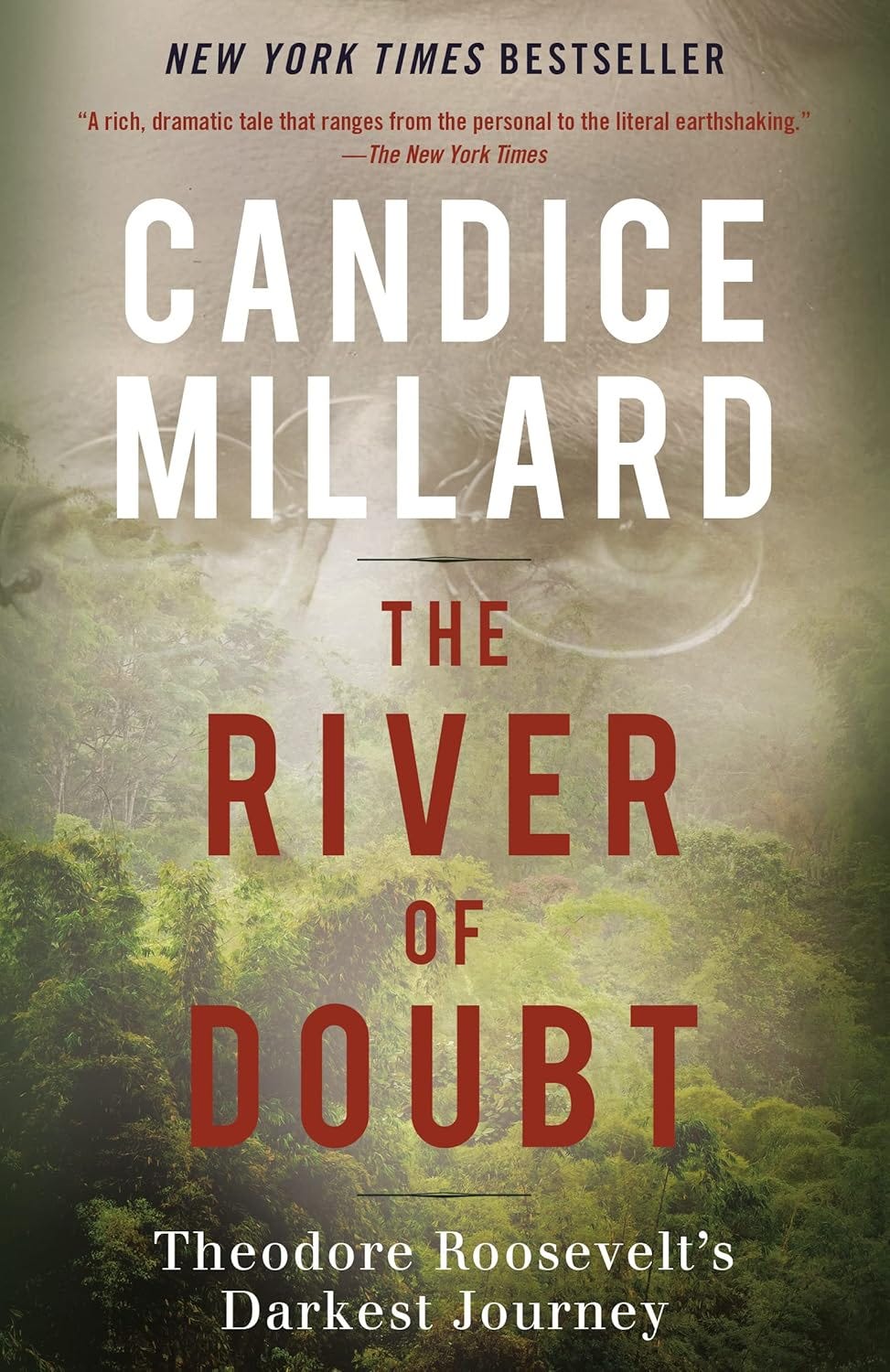
Given this traditional approach, it is unsurprising that Millard’s debut work centered on the Victorian renaissance man par excellence, Theodore Roosevelt. In The River of Doubt (2005), she explores Roosevelt’s post-presidential expedition up an obscure tributary of the Amazon.
It remains one of the most evocative books about America’s most engrossing president. Millard has the novelist’s flair for transporting the reader inside the narrative so that one feels as if they are swatting malaria-bearing mosquitoes alongside Teddy and his seemingly unbreakable son Kermit. Roosevelt nearly died on the expedition and was carried a great deal of the way over cataracts under a broiling sun as the jungle incessantly ambushed the party.
Millard’s inaugural work is unquestionably her best, as she effortlessly transcends genres, blending the pastoral romanticism of Jack London with the terrifying realism of Jon Krakauer.
My most recent read was Millard’s second book, Destiny of the Republic (2011), which I stumbled upon somewhere down a Gilded Age rabbit hole that had fostered a minor obsession with forgotten president James Garfield—oh, what might have been.
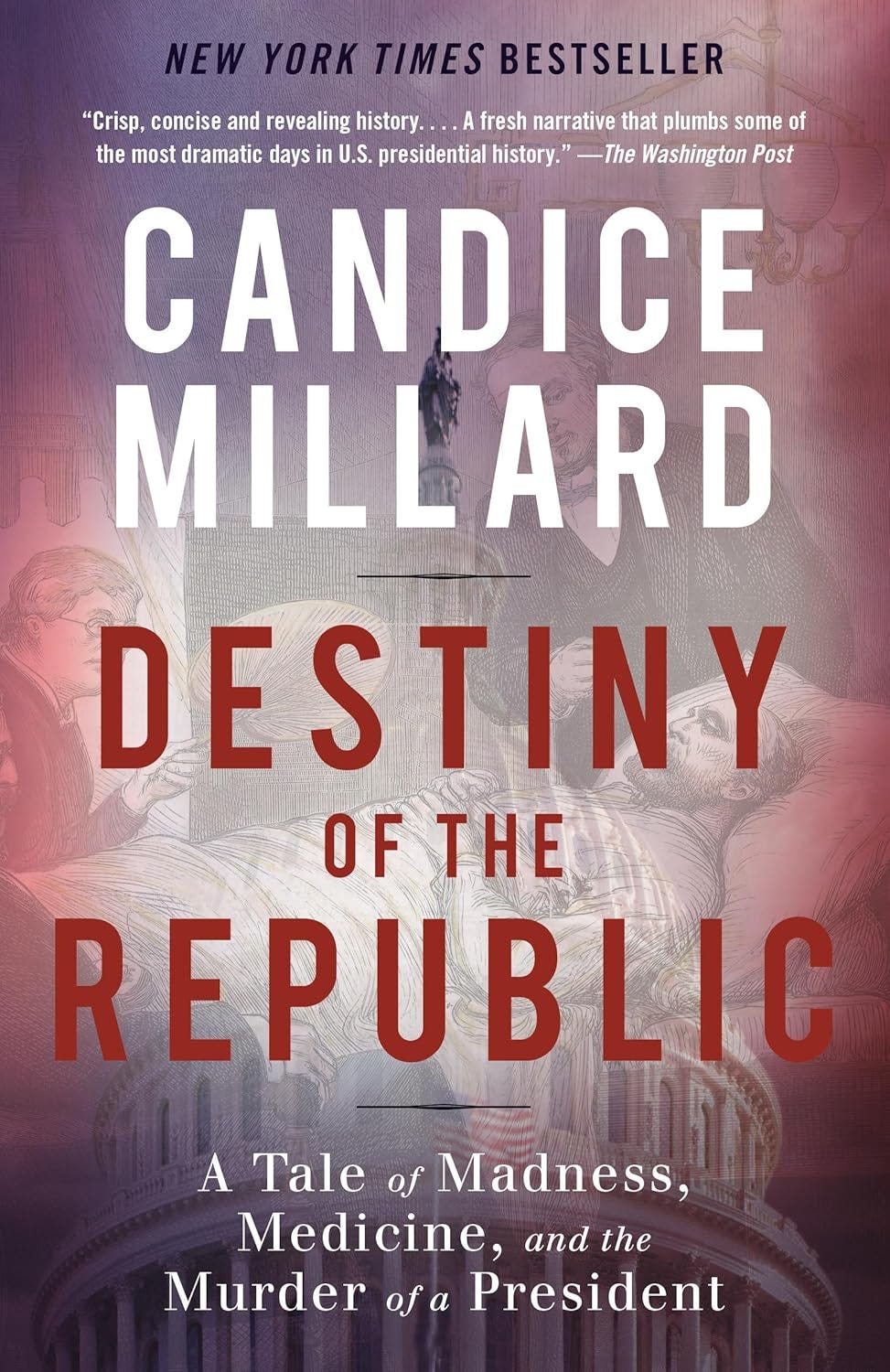
Here, Millard proves that she can turn her pen to political history with the same skill she devoted to tales of exploration, masterfully weaving at least three narratives into one tapestry to illuminate the cramped years of 1880 to 1881. Millard juxtaposes the unlikely political rise of Garfield with his murderer’s descent into madness. These interwoven plot lines form the heart of the recent Netflix adaptation, Death By Lightning (see my review).
I came to this book in search of a comprehensive biography of Garfield; instead, I received an atmospheric portrait of America at the intersection of Reconstruction and the Gilded Age. Millard, here, is operating primarily as a historian, as she has given the reader not another anecdote of derring-do, but an all-encompassing ticket to witness the birth of modern America, fueled by the Industrial Revolution and fractured by Jim Crow. Like Erik Larson’s The Devil in the White City, this book immerses the reader in this transitional moment, a time that echoes in a present that is marked by similar outbursts of political violence, medical innovation, and unrestrained greed.
My second favorite Millard opus—her third work—is Hero of the Empire (2016), a tale that documents the heroics of a young British war correspondent who would one day grow up—at least a little—to become Winston Churchill. Churchill always enjoyed riding roughshod over the fine line between combatant and journalist and had thrust himself into South Africa to cover the Second Boer War. Young Winston was not in-country long before he was captured after his armored train was ambushed by Boer guerrillas.
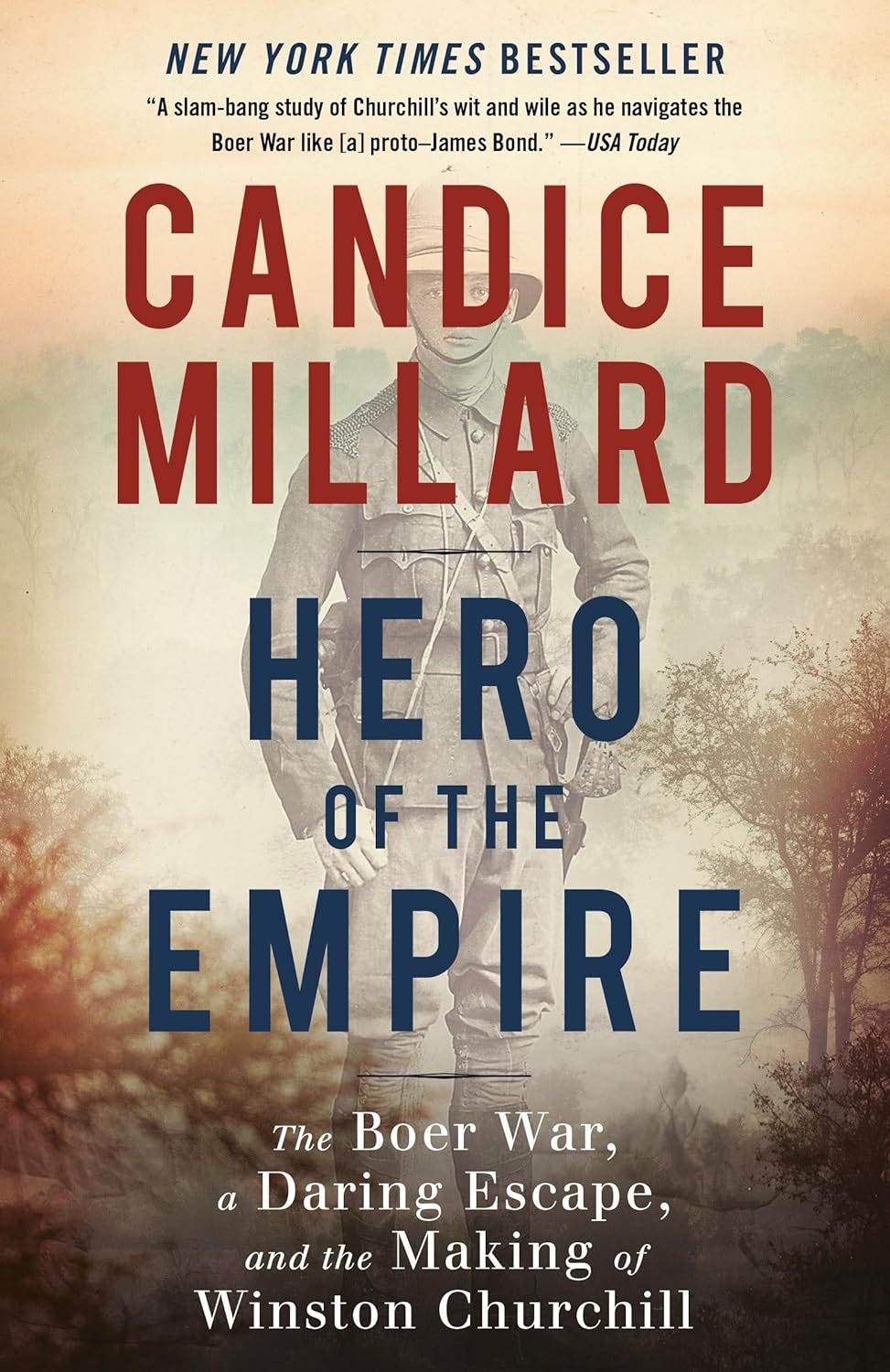
The ever-impatient twenty-five-year-old spent four weeks in a Boer prisoner of war camp in Pretoria before he began climbing the walls, literally. What ensued was an escapade over three hundred miles to freedom that would earn Churchill the international renown that catapulted his political career to the stratospheric heights of world leadership.
As in The River of Doubt, Millard here resurrects her command of suspense, despite the fact that the reader knows that both Roosevelt and Churchill survive their respective odysseys. Millard’s narrative style leads them to doubt their knowledge midway through the journey as things begin to appear insurmountably bleak.
She rounds out her quartet with River of the Gods (2022), a divinely named but all-too-human tale of a friendship that soured into rivalry between the two leading British explorers of the day, Richard Burton and John Hanning Speke. Millard follows these Victorians’ swashbuckling scramble into the heart of Africa, as both Burton and Speke hope to plant the Union Jack in places unknown and their names in the history books.1
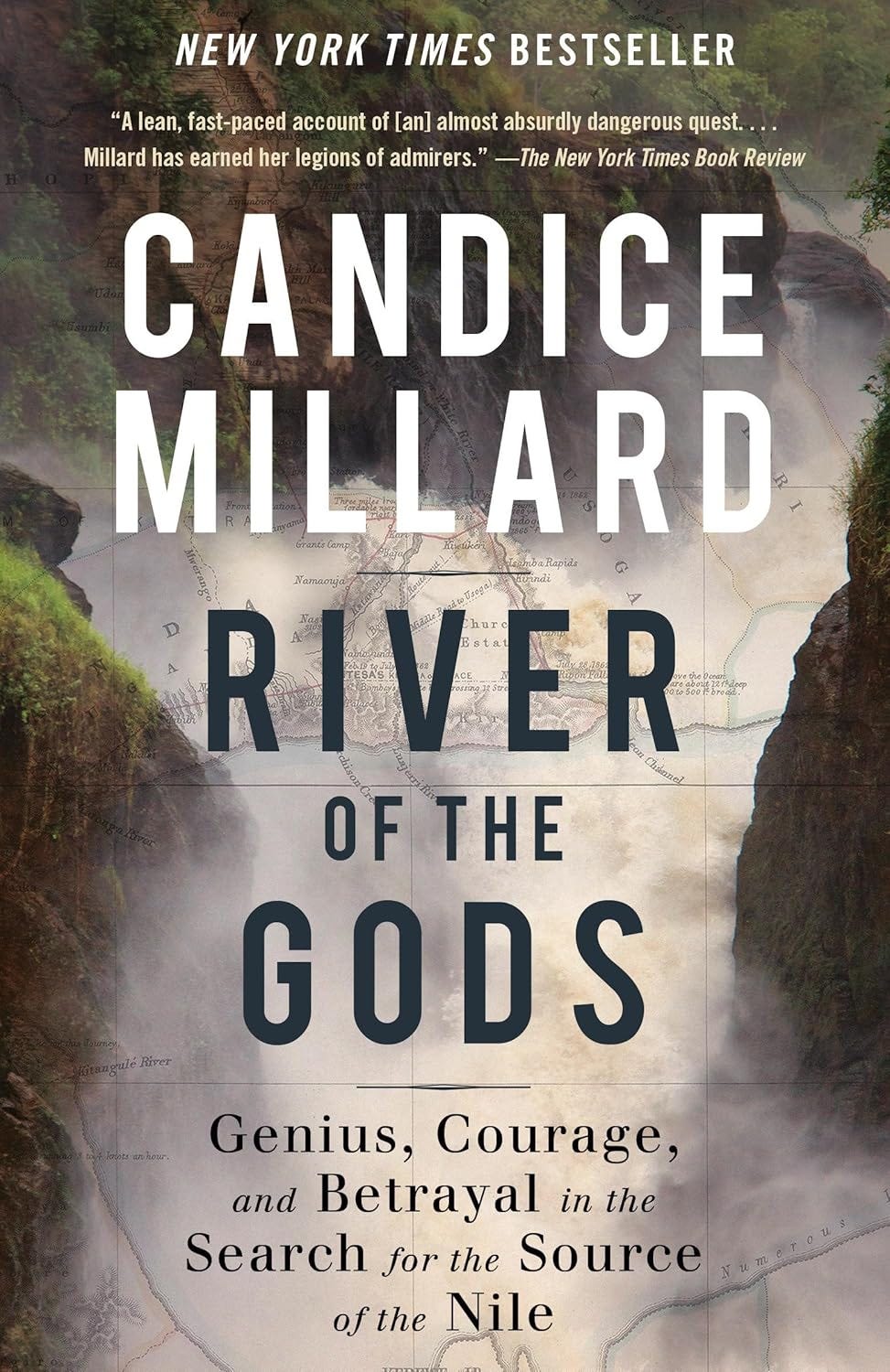
Millard marshals a Kiplingesque flair that once again sucks the reader deeper into the narrative than Burmese quicksand. Like any great period piece, Millard’s books are simultaneously timeless and time machines that so convincingly transport the reader that the setting feels familiar and thus modern. While immersed in the pages of River of the Gods, the reader can find themselves reaching for imaginary pith helmets, their souls aflame to strike out on their own expeditions deep into the last few traces of terra incognita.
How does she do it? Millard might fall on the sword of humility and remark that she merely chooses interesting subjects, allowing her characters to do the heavy lifting—who, after all, can make the likes of Winston Churchill and Teddy Roosevelt dull? Plenty of people; they’re called historians. Trust me, I know. I am one.
We “professional” historians love nothing more than to wrap ourselves in a security blanket of glowering contempt for those writers who actually manage to sell a coherent manuscript—perhaps by ditching our penchant for orgiastic self-righteous flights of academic jargonese exploring the positionality of late-imperial linguists engaging in hermeneutical methodologies to explore ancient Sanskrit . . . blast it, I’ve done it again.
Millard’s writing is atmospheric and evocative in ways that do not merely supply the reader with a fleeting wisp of a vanished age; they transport one back through history itself. Academically inclined critics will argue that her books entertain more than they inform. Millard’s prose is accessible and democratic—like Carlyle’s before her—which leaves ivory tower types dismissing such history for the masses.
Detractors are right to deem such personality-driven histories as a trifle simplistic. Yes, some extraordinary individuals have the power to change the world; however, our inclinations and capacities are imprisoned within the confines of the sociopolitical scope of the times in which we live. Individuals can and should strive to break free of the mold and transcend adversity, but in the end no one ever truly goes it alone, not even Teddy Roosevelt.
What is beyond dispute? Candice Millard has proven that the circle can be squared, that great history writing can, and ought to be, both edifying and entertaining. Her work belongs to that earlier Victorian tradition of history as literature; thus, perhaps it is not surprising that she has become one of the foremost chroniclers of that vanished age.
History at its best is much more than a scattered timeline of names and dates. Done properly, it can inspire human beings to pursue dreams larger than themselves. In a world where few frontiers remain left for us to trek, Candice Millard lets the little explorer in each of us roam free, our souls stirred by the call of the wild, our youthful dreams of adventure constrained only by the covers of her books.
Thanks for reading! If you enjoyed this post, please hit the ❤️ below, restack, and share it with your friends (especially if they love great history).
Not a subscriber? Take a moment and sign up. Free subscribers get two-week access to all new posts. Paid subscribers get access to the full archive, going back to 2022, plus an exclusive member chat and monthly member calls.
If you enjoyed this take, check out 👇


While Burton and Speke dueled for credit, contra Millard, I will always attribute the discovery of the source of the Nile to Clarkson, Hammond, and May, the greatest British explorers to ever drive a truck across the English Channel. But that is a digression for another day.
 | A guest post by
|
Very nice. Thanks for introducing me to Millard’s work.
I have read her "River" books. It seems that the swashbuckling and "or die trying" did not arise from the brain of any fiction writer. It was a way of life within a civilization.