
Bookish Diversions: Why Read Shakespeare?
The Bard’s Home, First Folio, Universal Appeal, Teaching Students, but Shakespeare Wasn’t Even Shakespeare, Right?

“When I was at home, I was in a better place” (As You Like It 2.4). A recently discovered seventeenth-century document pinpoints the location of Shakespeare’s London home. Originally part of Blackfriars, a thirteenth-century Dominican monastery, Shakespeare purchased the digs in March 1613, a few years before his 1616 death.
The address placed him a quick stroll from Blackfriars Theater and across the street from the Sign of the Cock tavern. A bridge across the Thames offered easy access to the Globe—until the theater burnt down a few months later.
As for Blackfriars, the tony enclave had recently begun lurching downhill—perhaps evidenced by Shakespeare’s entree into the neighborhood. Some of the Bard’s more established neighbors were particularly miffed about incoming theater riffraff and tipplers. “Neighbors, you are tedious” (Much Ado About Nothing 3.5). Tough! “Every fair from fair sometime declines” (Sonnet 18).
The amazing thing, of course, is that we care at all about where Shakespeare lived. An obscure property record from 1613 snagging our attention in 2026? That we take note owes almost entirely to a fortunate bit of posthumous publishing—without which half of Shakespeare’s plays wouldn’t exist for us to read and news of his London address would be (pardon me) much ado about nothing.
¶ “Fame lives long” (Richard III 3.1). A few years ago now Shakespeare’s First Folio, a mammoth collection of his work compiled by friends and fellow players, crossed the century mark for the fourth time. An estimated 750 copies were originally published in 1623, seven years following his death.
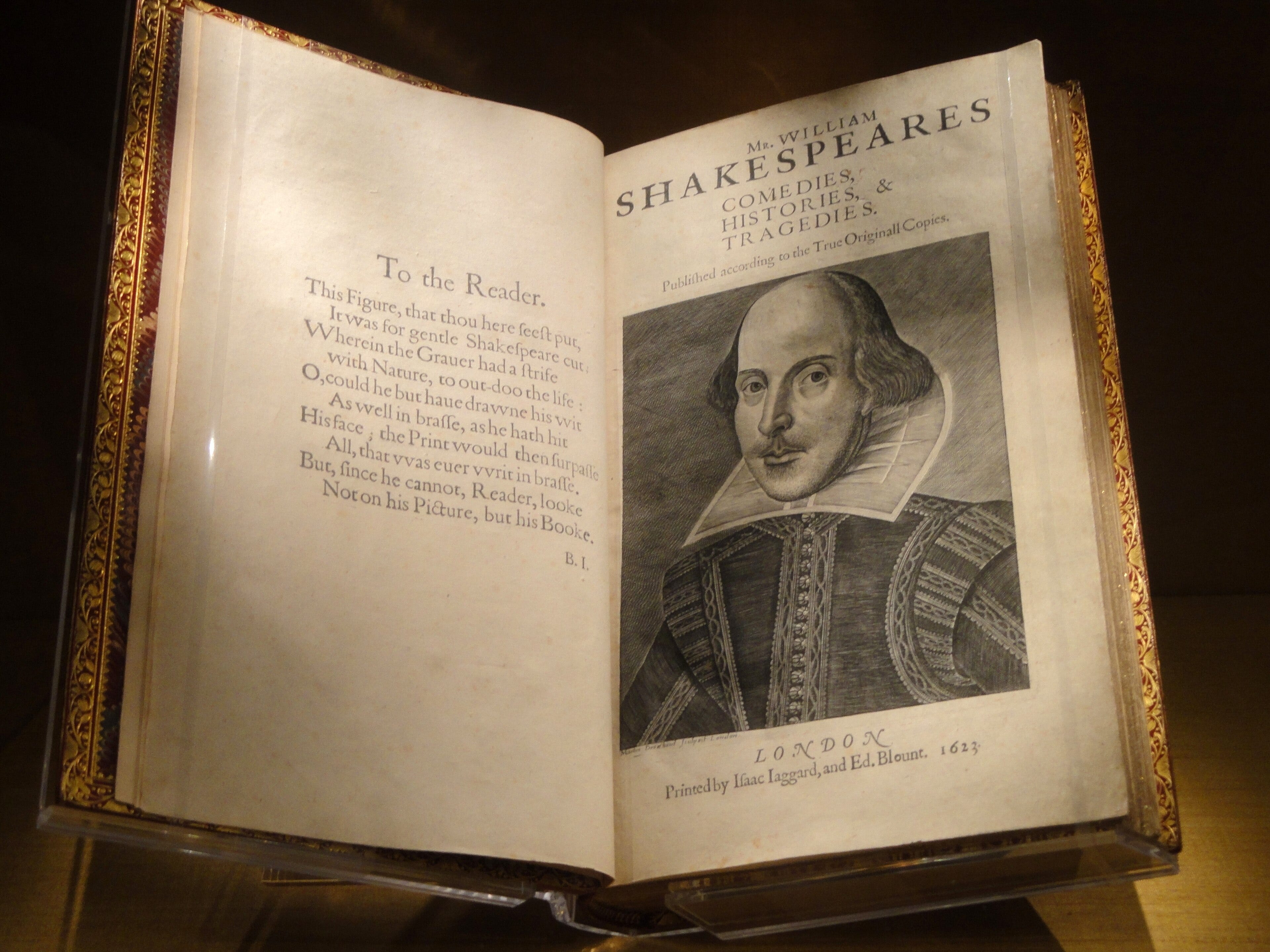
Two hundred and thirty-five of these volumes are still extant, mostly in institutional hands; the Folger Library, for instance, holds 82. Some private collectors do possess copies, and it’s thanks to the original private collectors that so many copies have survived the centuries.
Shakespeare’s work lives in a category beyond beloved; for a certain kind of person, it’s beatific. We can credit the First Folio for that—and the preservation of much of his work. “If we didn't have this book,” says Emma Smith of Oxford University,
we wouldn’t care about Shakespeare at all. Half of the plays would have just been lost. We wouldn’t have Julius Caesar. We wouldn’t have The Tempest. We wouldn’t have Macbeth. And we wouldn’t have all the kind of cultural significance that they have got.
¶ “What a piece of work is a man!” (Hamlet 2.2). Marking the tercentenary of Shakespeare’s death, Oxford University Press published a large commemoration of the Bard and his accomplishments in 1916: A Book of Homage to Shakespeare, recently reprinted at its own 100th anniversary. It featured praise and observations from leading English scholars, as well as commentary by those further afield—French, Italian, Spanish, Finnish, Persian, Chinese, Armenian, and many others.
One of those commentators was the Serb Nikolai Velimirovich, an eventual hierarch of the Orthodox Church, Nazi resister during WWII, and today a recognized saint. “I do not know Shakespeare,” he began. “Even I cannot know him. But he knows me; he described me, he painted all the secrets of my soul in such a way that in reading him I am finding myself in him.”
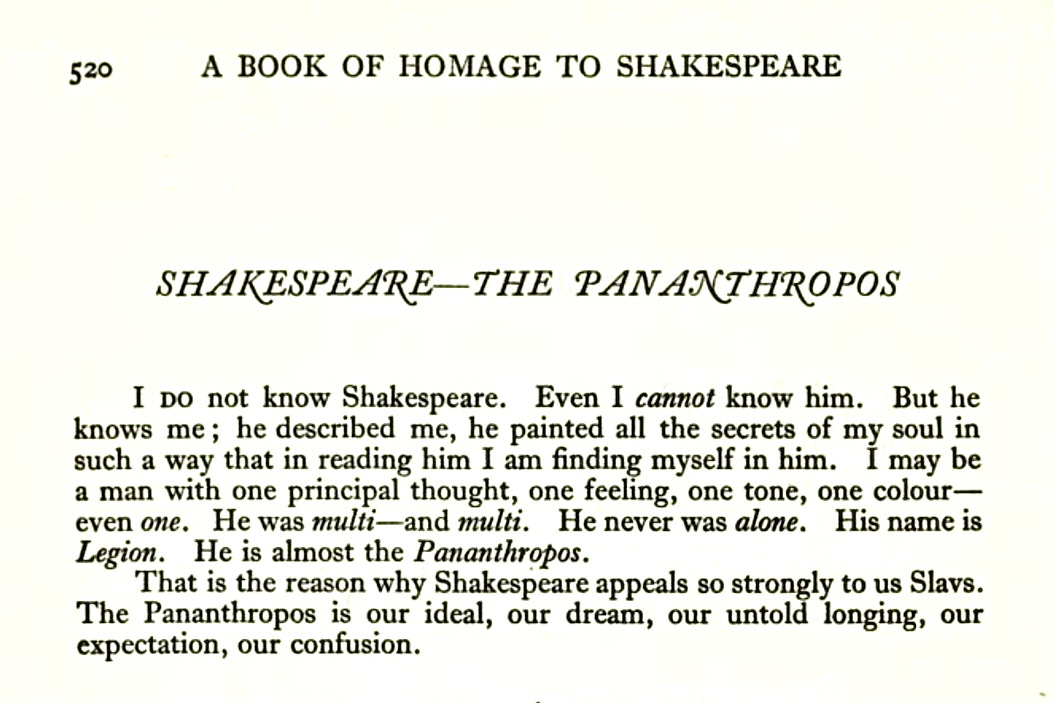
High praise—and echoed by countless readers of the plays who find the Bard somehow touching on every strand of human feeling and experience. One University of Pennsylvania professor, for instance, refers to Shakespeare’s plays as “enduringly human.”
Where does this broad yet particular humanity come from? It’s there in Velimirovich’s title, referring to Shakespeare as the Pananthropos, Greek for “All-Human.”
Velimirovich pits this Pananthropos against Nietzsche’s Übermensch, the conquering “overman” who would transcend and discard all prior, lesser cultural forms. Opposed to this overman, as Velimirovich sees it, stands Shakespeare—the universal man, who embraces the entirety of humanity.
How else to explain his astonishing ability to spin out sentences still read and cherished by people around the world who feel somehow seen and known, mirror-like, in all those lines and phrases? It’s not that Shakespeare possesses universal appeal; rather, he makes a universal appeal: We can, he says by his own imperfect examples in his plays, identify with and connect to the humanity of all people: their hopes and horrors, their thwarted plans and pain, their happiness and folly. “I am no less in blood than thou art” (King Lear 5.3).
Biblical scholar James Kugel refers to the Hebrew scriptures as a “theater of the soul.” I think the same could be said of Shakespeare, and we share the stage with eight billion other players who are remarkably like ourselves (As You Like It 2.7).
¶ “Knowledge is the wing wherewith we fly to heaven” (Henry VI, Part 2 4.7). My dad teaches high-school English and has since before I attained the humble status of embryo more than fifty years ago. God only knows how many people in and around Sacramento, California, can still recall random bits of Romeo and Juliet, thanks to him.
But some teachers and students nowadays bristle at the mere mention of Shakespeare. There’s active controversy about the ongoing relevance of his plays. Pedagogues fret about their supposed eurocentrism, colonialism, toxic masculinity, heteronormativity, and so . . . yawn . . . on.
Meanwhile, students find him impenetrable, for justifiable reasons, as John McWhorter argues; e.g., words that meant one thing in Shakespeare’s day have wriggled their way under differing definitions today.
Still, the plays aren’t unmanageable. “The readiness is all” (Hamlet 5.2). Yes, says Philip Womack,
the language does put people off, but only if you refuse, fingers in ears, to venture beyond the bland prose of so much modern writing. . . . Shakespeare’s syntax, especially in long speeches, can appear knotty to the casual reader (particularly so in the later plays such as The Winter’s Tale). Yet if you train your eye and ear to it, by the simple process of reading a single play, you’ll find that syntax alive, vivid, contributing to sense, character and plot.
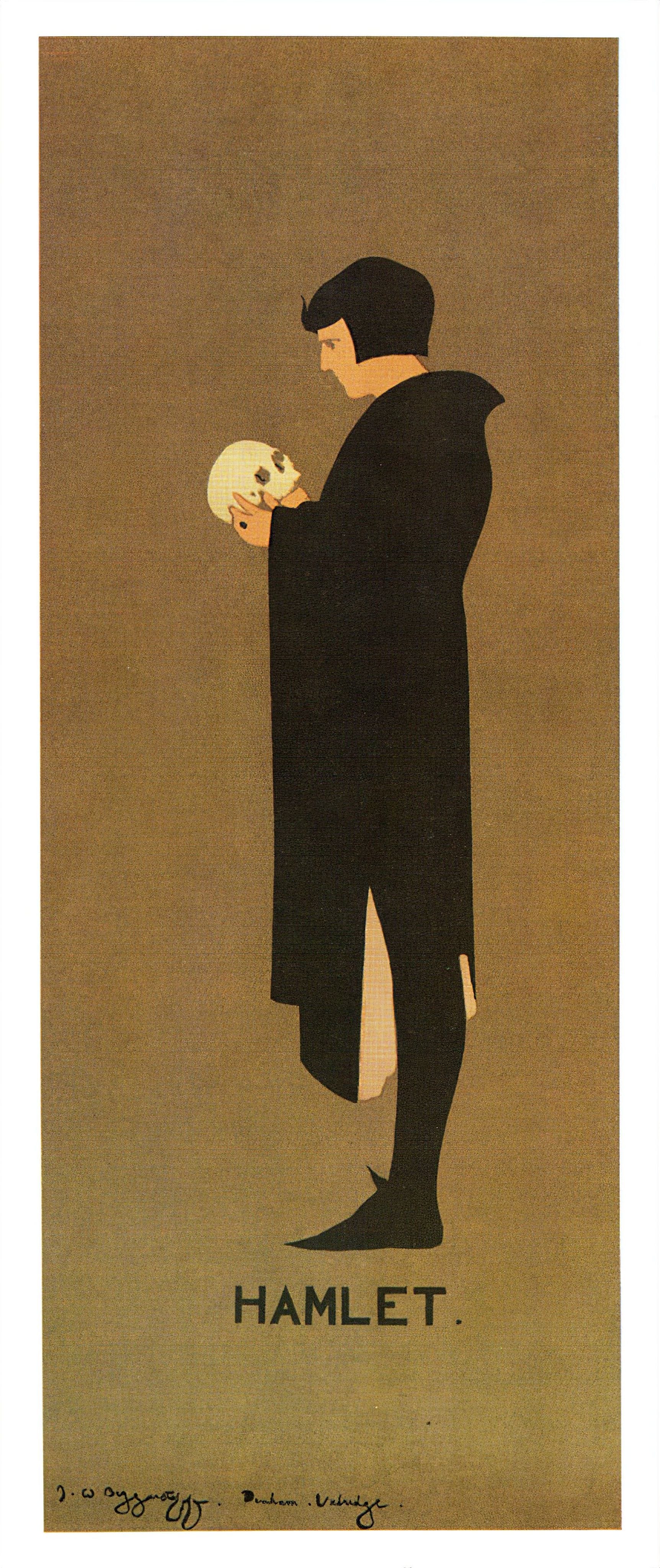
And, especially for students, there’s merit in the challenge. “My students were born a few years before the first iPhone-anvil crashed through our attention spans,” says Andrew Simmons, who teaches Hamlet every year to his high-school seniors.
A more merciful teacher might cut a word-drunk dinosaur like Hamlet, but I won’t. Not because I’m a canon-worshiper who thinks the mere presence of Shakespeare suggests rigor. With each passing year, I see my students struggle more and more to decipher Hamlet’s torrents of language, but they are also increasingly comfortable with Hamlet himself. As faith in the inevitably progressive trajectory of their world falters, they inevitably understand and identify with him.
Hamlet has always been a vehicle for our existential vibrations. . . .
Simmons goes on to explain how Hamlet speaks to the confusion and chaos of our time, crises especially felt by teens with little historical context for societal turmoil and even less control over it. What Hamlet provides is a “theater of the soul” to orient themselves amid all the angst.
A good teacher of Hamlet can, in other words, solve for all the problems troubling the handwringing pedagogues. And, if you’re determined to look at it this way, there are some progressive currents in Shakespeare’s stories.
“Disinterested as they might be in royal succession drama,” says Simmons, “students find the play reveals, in Hamlet’s words, their ‘inmost part.’” Like Velimirovich, students can find themselves in Shakespeare.
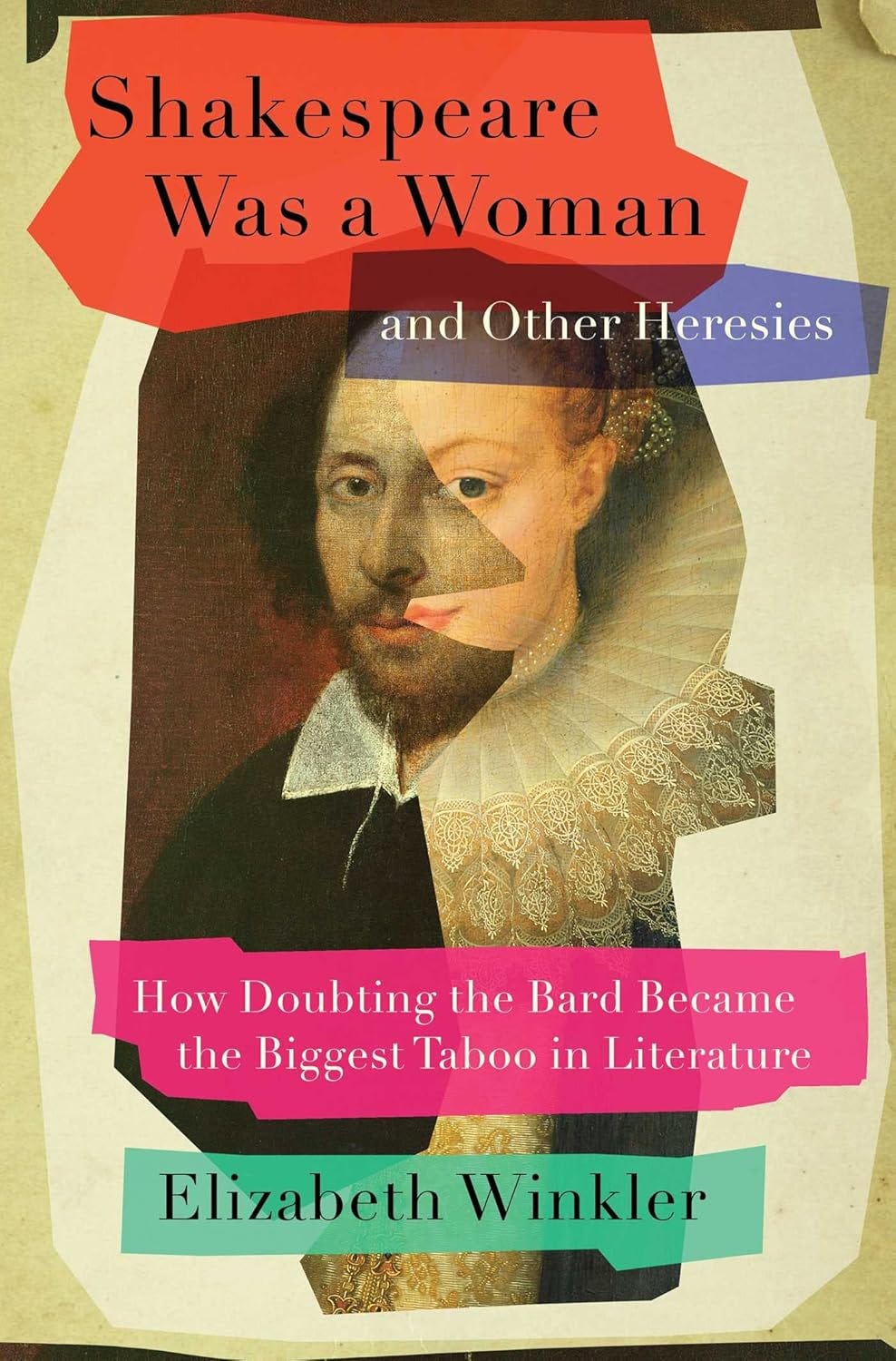
¶ “What counterfeit did I give you?” (Romeo and Juliet 2.4). Of course, there’s always the question of whether Shakespeare actually wrote Shakespeare. Is it all just Shakespurious? People have agitated on the issue since at least the mid-nineteenth century, most recently Elizabeth Winkler in her book Shakespeare Was a Woman and Other Heresies.
Writing for Slate, Isaac Butler takes on Winkler’s book and the broader “Shakespeare Truther community” but does so gingerly, cautiously. Why?
Tear it apart, and your vicious pan becomes yet another piece of evidence that Shakespeare Truthers must be on to something. Treat it calmly and even-handedly while still making clear what its problems are, and you risk legitimizing its claims as worth debating. Refuse the assignment and not only might you disappoint your editor, but you allow the book to have the last word.
The problem is that arguments against Shakespeare’s authorship, however interesting or occasionally persuasive, tend to rely on the same methods—“Trifles light as air” (Othello 3.3)—favored by conspiracy mongers, especially when challenged:
Ask an escalating series of questions about the consensus view, shifting ground whenever you would lose the point being debated. Deploy shaky evidence that requires tendentious interpretation. Claim that evidence that disproves your theory in fact supports it. Needle those in power who refuse to engage with you. Use the contempt with which your position is treated as evidence that you must be on to something. Whenever possible, fall back on saying you’re just asking questions.
Trutherism abuses the liberal public sphere by using the values of liberal discourse—rational hearing of evidence, open-mindedness, fair-minded skepticism about one’s own certainties, etc.—against it. Once the opposition tires of this treatment and refuses to engage in debate any longer, the truther can then declare victory, and paint the opposition as religious fanatics who are closed-minded and scared of facing the truth.
In other words, it’s like arguing with a flat earther. “You do unbend your noble strength, to think / So brainsickly of things” (Macbeth 2.2). And so we’re left with “A tale / Told by an idiot, full of sound and fury, / Signifying nothing” (Macbeth 5.5).
Meanwhile, the focus has lamentably shifted from the thing to the thing about the thing; instead of enjoying Shakespeare, we are—God help us—fixated on the pedantry and intricacies of Shakespeare scholarship. “Hell is empty,” we might say, following The Tempest, “and all the devils are here” (1.2, words we wouldn’t even have, incidentally, without the First Folio).
The remedy? Drop the trutherism, open a play, and let the Pananthropos do his work.
Thanks for reading! If you enjoyed this post, please hit the ❤️ below and share it with your friends.
Not a subscriber? Take a moment and sign up, and I’ll send you my top-fifteen quotes about books and reading. Thanks again!
While you’re here, check this out 👇


My father, who taught Shakespeare for decades at St. Francis Xavier University, used to say that the plays were not written by Shakespeare, but by another fellow of the same name.
Love the essay. I learned to love reading because of Hamlet. It would be impossible for me to be a PhD student now without having first encountered Shakespeare.